

Most wheelchair travel packing guides read like they were written by someone who's never left the house with a chair. Vague advice about "comfortable clothing" and "a small bag". Nothing about what goes in your carry-on versus your checked luggage, nothing about what happens to your cushion, and nothing about what you can't afford to forget.
So we wrote our own. We're Mike and Gem, both wheelchair users who travel a lot. Mike is a T10 paraplegic with more than a decade of trips behind him. This is the packing list we actually use.
Quick answer: When you travel with a wheelchair, pack your medications and catheter or bowel supplies in your carry-on, with at least two extra days' supply. Keep your wheelchair cushion with you on the plane. Use a bumbag for quick-access items, a crossbody bag for documents and a backpack for bigger things. Tell the airline you need assistance at least 48 hours before you fly, and check its rules for carrying mobility equipment free of charge.
Watch Gem pack for a trip.
Carry-on or checked luggage? Our one rule.
Everything that matters goes in your carry-on.
Checked bags get delayed and lost. Your carry-on stays with you the whole time. Don't risk your medications and medical supplies on the baggage system.
What goes in your carry-on.
All your medications.
Keep them in their original packaging, and pack at least two extra days' worth on top of what the trip needs. Delays happen, and you want a margin.
Catheter or bowel supplies.
Work out your usual daily use and add two days. These aren't things you want to be hunting for in an unfamiliar city.
Your wheelchair cushion.
This one's non-negotiable if you manage your skin or posture every day. Take the cushion off your chair at the aircraft door and bring it on the plane with you. Don't let it go in the hold.
Documents.
Pack copies of any prescriptions and a doctor's letter covering your equipment and medications, along with your passport, visa and insurance documents.
What can go in checked luggage: clothing, toiletries and anything you won't need mid-flight or if your bag turns up a day late.
What to have with you in your seat.
Once you're on the plane, a few things make a long flight much easier.
- Your wheelchair cushion. Sit on it for the whole flight.
- A neck pillow. Essential on anything over four hours. Find one that suits your posture and how your head sits in the seat.
- Compression socks. Sitting still on a long flight raises the risk of blood clots (DVT) for anyone, and the risk is higher if you have limited movement in your legs. Put them on before you board, and check with your doctor about what's right for you.
- Charging cables and a power bank. Power banks have to travel in your carry-on, never in checked luggage, so check your airline's limits.
- An up-to-date medical ID on your phone. If your injury or medications would change how emergency responders treat you, make that information accessible without unlocking your phone.
Pack a wheelchair repair kit.
Airlines damage wheelchairs more often than most people realise. US airlines alone report mishandling more than 10,000 wheelchairs and scooters a year in the Department of Transportation's Air Travel Consumer Report. Even if your chair arrives in one piece, any trip long enough to need a packing list is long enough for something to work loose, wear down or break.
A basic kit doesn't take much space:
- Allen keys in the sizes your chair uses
- A small screwdriver
- Zip ties, the universal fix for everything
- Duct tape
- Any spare parts you can reasonably carry, such as tyre patches, an inner tube or a spare wheel nut
Keep the kit in your checked luggage, because some tools can be refused at security.
For more on protecting your chair in the hold, read Flying with a wheelchair: our complete guide to stress-free air travel.
Know your rights before you pack.
- UK and EU: you can carry up to two pieces of mobility equipment free of charge, on top of your normal baggage allowance.
- US: assistive devices don't count towards your carry-on limit, and airlines can't charge to carry your wheelchair.
- Everywhere else: rules vary, so check your airline's policy before you book.
If your equipment goes over the allowance, a doctor's letter listing the items is usually enough at check-in. Airlines and customs can also ask for a medical certificate if you're carrying a large quantity of medication. If you're travelling internationally, check whether your destination restricts any of your medications and what paperwork you need to bring them through customs.
The full packing list at a glance.
| Where | What to pack |
|---|---|
| Carry-on | Medications in original packaging (plus two days), catheter or bowel supplies (plus two days), wheelchair cushion, prescriptions and doctor's letters, insurance documents, charging cables and power bank, neck pillow, compression socks, snacks |
| Personal bag | Phone, wallet, headphones, passport, boarding pass, quick-access medications, documents you need in transit |
| Checked luggage | Clothing, toiletries, repair kit, anything that can wait |
| On your phone | Photo of your passport, photo of your disability parking permit, up-to-date medical ID, photos of how your wheelchair folds or stows |
How to carry it all through the airport.
Now you know what to pack, the next question is how you carry it. The airport is where it gets real: you're pushing your chair through check-in, security and the gate, and you can't just throw a bag over your shoulder like someone walking.
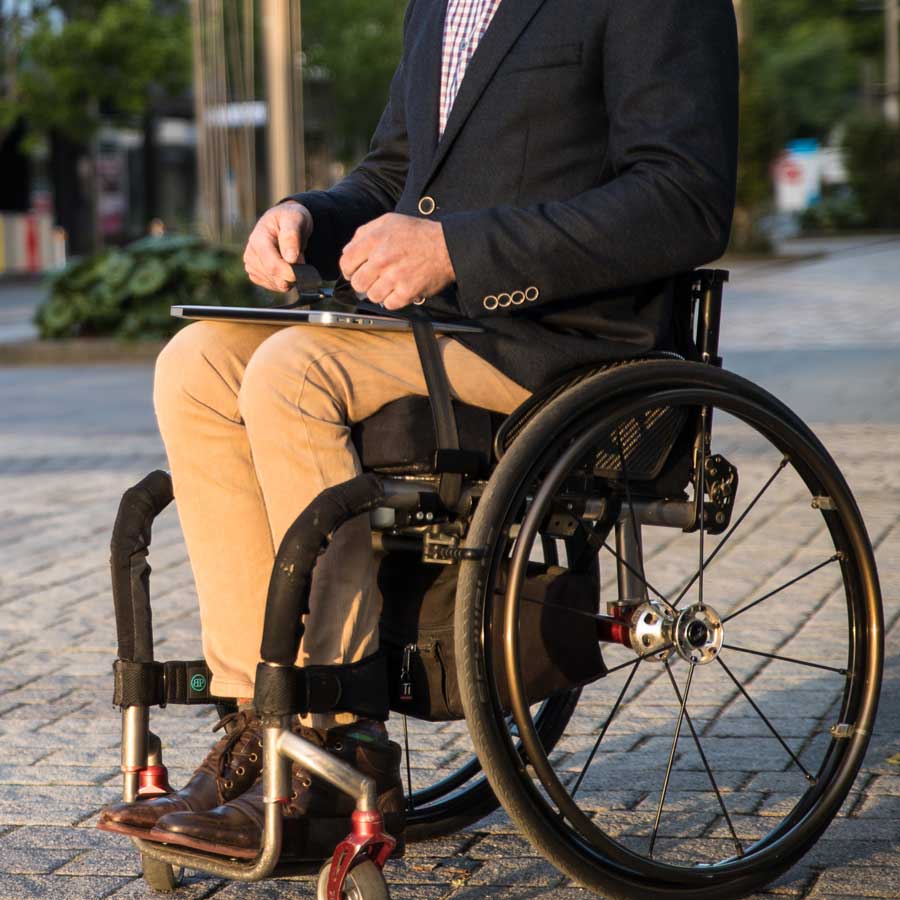
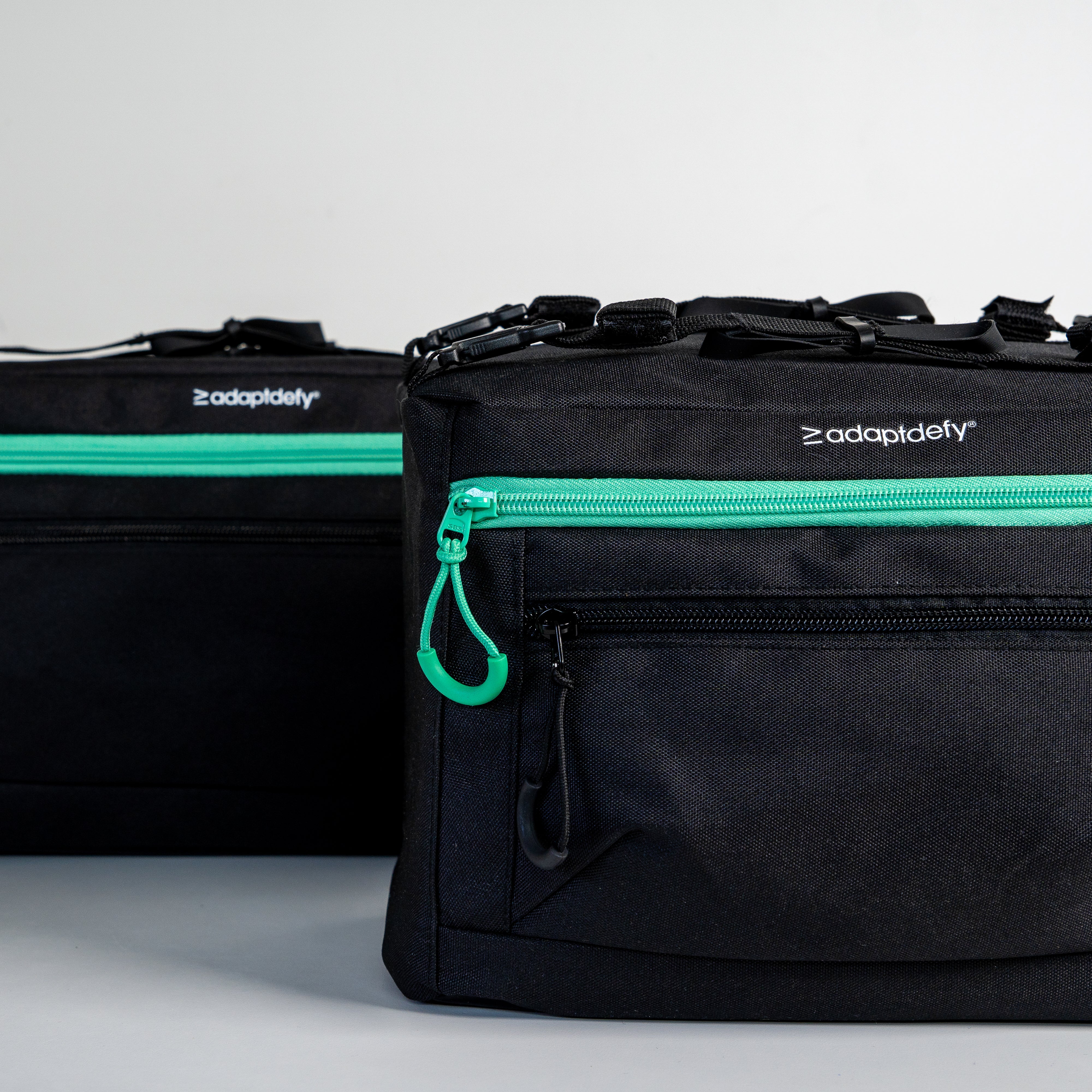
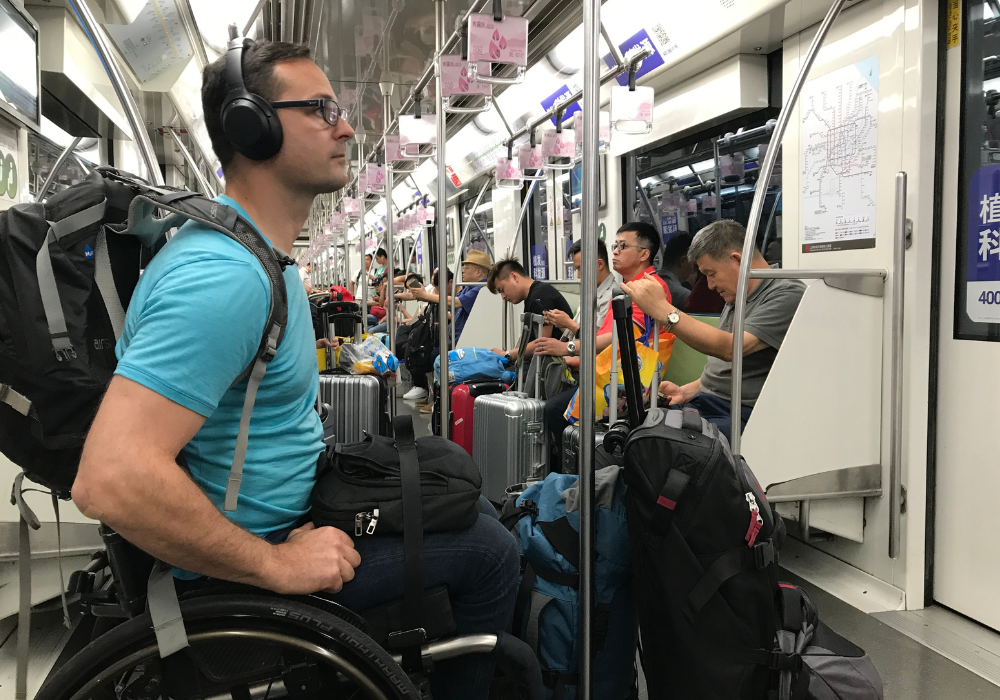
We split everything across three bags: a bumbag for quick-access items, a crossbody bag for documents and a backpack for the bigger things. LapStacker holds the backpack or your duty-free on your lap while you roll, so your hands stay free for pushing. On a rigid chair, the Adaptdefy Underseat Bag keeps smaller essentials off your lap.
Read the full system in How to carry things in a wheelchair at the airport: a practical guide.
Frequently asked questions about packing for wheelchair travel.
How much medical equipment can I bring on a flight?
In the UK and EU, you can bring up to two pieces of mobility equipment free of charge, on top of your normal baggage allowance. In the US, assistive devices don't count towards your carry-on limit. If your equipment goes over the allowance, a doctor's letter listing the items is usually enough at check-in. Check your airline's policy if you're unsure.
Do I need a doctor's letter to fly with my medication?
Not always, but it's worth having. Airlines may ask for a medical certificate if you're carrying a large quantity of medication, and some countries restrict certain medications at customs. It's better to have the letter ready than to argue with border security.
Can I keep my wheelchair cushion on the plane?
Yes, and you should. Take it off your chair at the aircraft door, bring it on board and sit on it for the whole flight. Don't let it be checked with your wheelchair. If staff push back, tell them it's medical equipment.
How many days of medication should I pack in my carry-on?
At least two extra days on top of what you need for the trip. Delays, missed connections and unexpected overnight stays happen, and a buffer in your carry-on stops them turning into a medical problem.
What should I do if my wheelchair is damaged on the flight?
Check your chair as soon as it's returned to you, before you leave the airport. If it's damaged, report it to the airline straight away, take photos and get a written record of the report.
Read more of our travel series.
About the author.
Mike Brown is a T10 complete paraplegic, co-founder of Adaptdefy and a well-travelled wheelchair user. Since his spinal cord injury in 2012, he has taken his chair to destinations around the world and shared what worked with the Adaptdefy community. You can follow Mike's travels across China here.
Alongside Gem they create Adaptdefy's videos and guides, covering everything from flying with a manual chair to accessible road trips, with the kind of practical detail that only comes from doing it.
Happy Adaptdefying.

Leave a comment
All comments are moderated before being published.
This site is protected by hCaptcha and the hCaptcha Privacy Policy and Terms of Service apply.