


I've been working it out since 2012. Some of these I stumbled across. Some came from other wheelchair users. One I invented because nothing else was good enough.
Here's every method I know of, ranked from the most purpose-built to the most creative.
Quick answer: Wheelchair users carry things using purpose-built strap systems (LapStacker), under-seat bags, backpacks, crossbody bags, cup holders, push-handle hooks, armrest pouches, lap trays (indoors only), carabiners, and on footrests. For most self-propellers, the most practical combination is LapStacker for active carrying and an under-seat bag for daily essentials.
| # | Method | Best for | Watch out for |
|---|---|---|---|
| 1 | LapStacker | Active carrying while moving groceries, errands, room to room | Heavy items may be uncomfortable for long periods. |
| 2 | Under-seat bag | All-day essentials: keys, phone, wallet, meds | Have to pause to access contents. |
| 3 | Backrest backpack | Bulkier items you won't need mid-trip | Shifts centre of gravity back to keep it light |
| 4 | Crossbody | Transfers when you're off the chair | Asymmetric load on one shoulder over time |
| 5 | Side pouch / armrest bag | Things you reach for constantly | Check it doesn't sit in your push stroke |
| 6 | Cup holder | Your drink | One item only |
| 7 | Push-handle hook | One light bag, short distance | Swinging load affects handling not a daily system |
| 8 | Lap tray | Eating, working, indoor stationary tasks | Blocks wheel access, can't self-propel |
| 9 | Carabiners + reusable bag | Quick improvised carries | Bags swing during propulsion |
| 10 | Footrests | Large or bulky items, short distance | No security over bumps or turns |
1. LapStacker: built specifically for carrying items
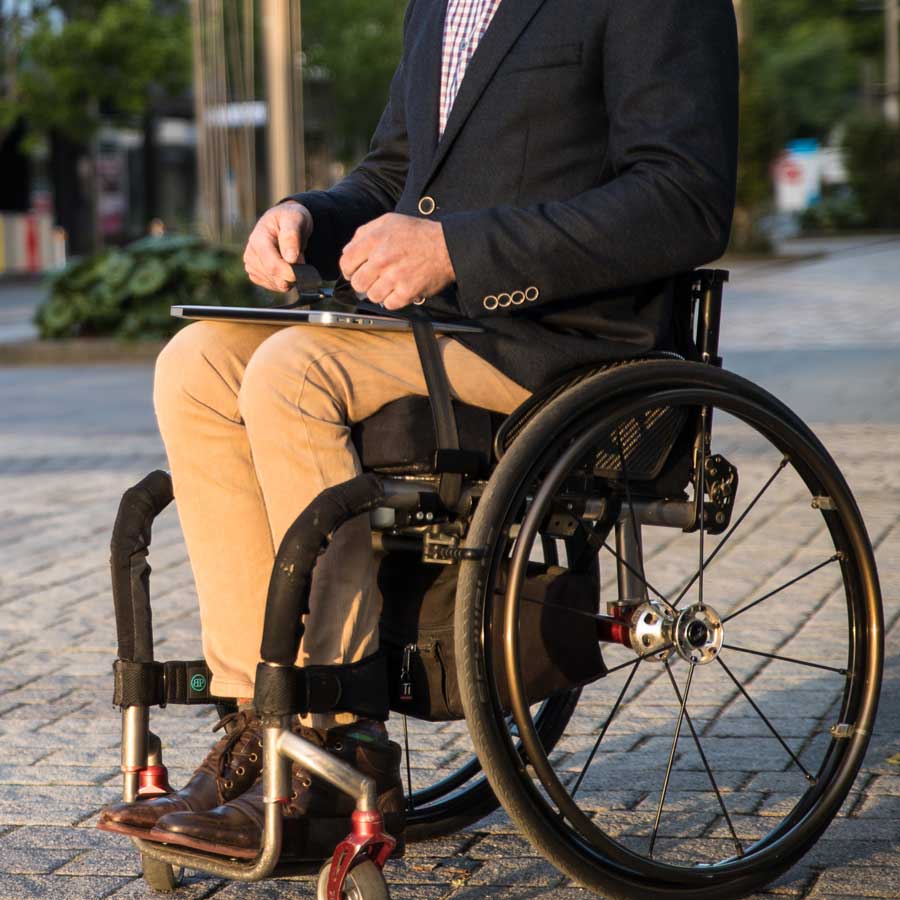
LapStacker is the world's first and only retractable carry system for wheelchairs. Retractable straps sit on each side of your chair, pull out when you need them, and clip together across your lap with magnetic buckles. Load your items, clip, roll.
That's it. Hands on the wheels. Load on your lap. Secure.
Best for: Any active carrying while you're moving. Grocery runs, errands, room to room at home, anything you'd otherwise be balancing on your knees and hoping doesn't slide off the second you hit a doorway.
What makes it different from everything else on this list: It solves the actual problem, items sliding off your lap during propulsion. Everything else either avoids the lap entirely or just ignores that problem. LapStacker holds items down. That's the job.
LapStacker Flex is for manual chairs. LapStacker XD is for power chairs with a T-slot rail. Both use the same magnetic buckle system, weigh 300g, and install in under five minutes with no tools.
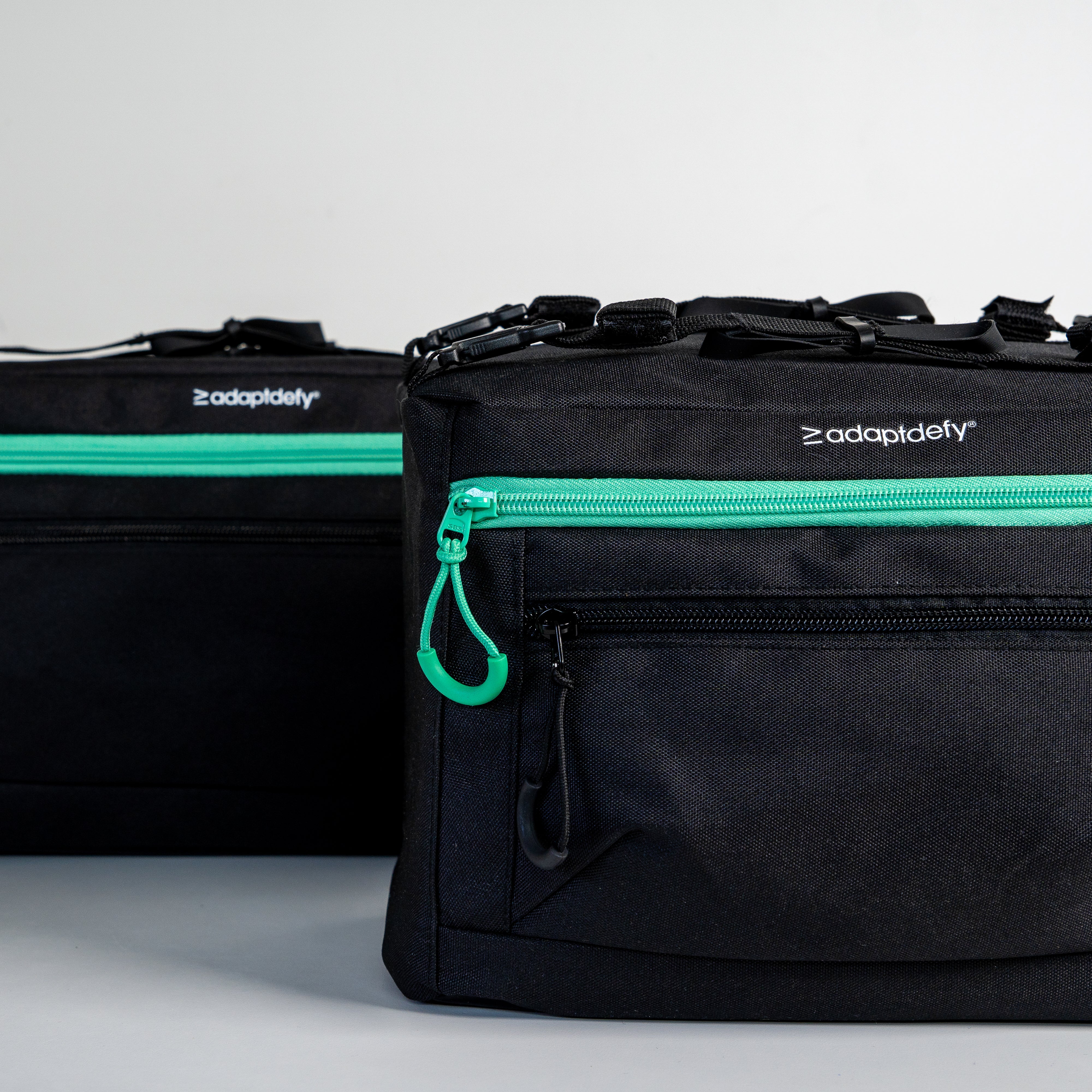
2. Under-seat bag: essentials storage that doesn't fight your balance.
A bag that mounts beneath your seat frame, out of the way, hidden from view, keeping weight low and centred where it belongs.
Best for: The things you need all day but don't want on your lap. Keys, phone, wallet, medication, headphones, and a snack. The daily kit.
Weight distribution matters more than most people realise. An under-seat bag keeps the load centred under the frame, where it barely registers in your chair's handling. A backpack on your push handles does the opposite, pulling your centre of gravity back and up, which means more effort on every uphill push and higher tip-risk on inclines.
Pair it with LapStacker, and you've covered both problems: active carrying and essentials storage. That's most of what a typical day asks of you.
3. Backrest backpack: capacity when you actually need it.
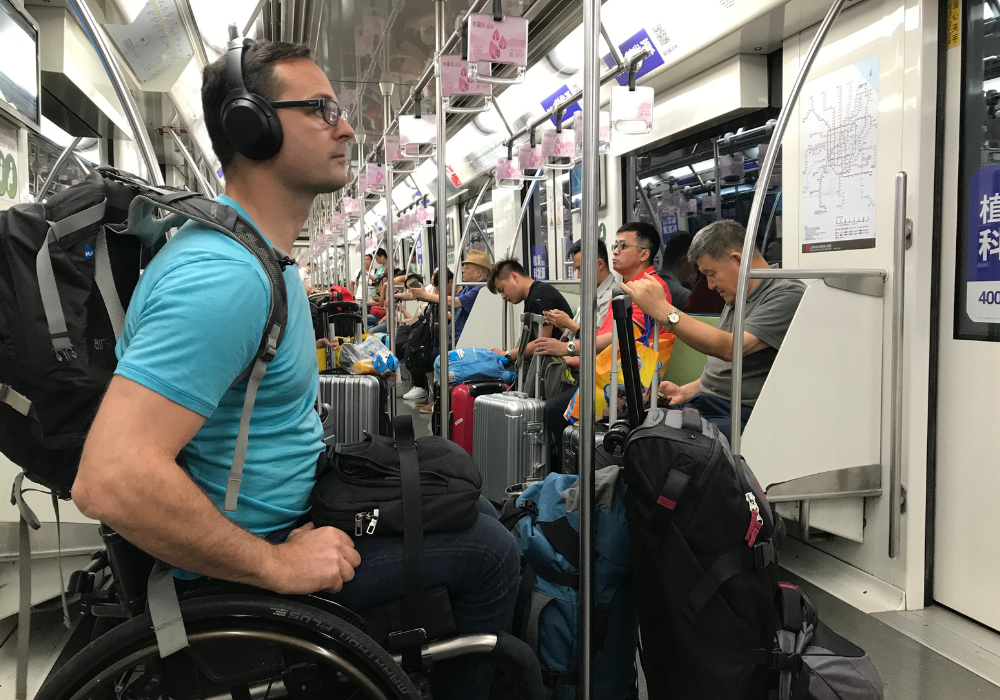
A pack that attaches to the push handles or backrest frame. Available everywhere, in every size, style, and price range, this is genuinely useful in a world where most disability equipment costs three times what it should.
Best for: Bulkier items you won't need to access mid-trip. Change of clothes, a laptop, a rain jacket, and medications for a long day out.
The trade-off for self-propellers: A loaded backpack shifts your centre of gravity backwards. Heavier load, more tip-risk, especially on inclines. Keep it light. If you're frequently loading it with anything substantial, consider using LapStacker for the heavy lifting instead.
One practical tip worth passing on: strap ends can catch in your rear wheels and create a braking effect. Cut off the folded-over strap tabs before using any pack on your chair.
4. Crossbody bag or waist pack: the carry solution that survives a transfer.
Everything else on this list lives on the chair. This one comes with you.
Best for: Transfers. Getting in and out of a car, moving between chairs, any stretch where you're not in your chair but still need access to your things.
A waist pack sits across your hips and stays put. A crossbody hangs from a shoulder strap and crosses the body.
One watch-out: A crossbody on one side adds asymmetric load, and over long periods, that builds up strain in your shoulder. Keep it light, and if you wear one regularly for hours at a stretch, swap sides occasionally. Your shoulders are doing enough work already.
5. Side pouch or armrest bag: phone, wallet, keys, done.
Attaches to the side of the frame or armrest. Small, fast, and there when you need it.
Best for: The things you reach for constantly. Phone. Cards. A pen. Lip balm. The stuff you're pulling out 15 times a day.
Check your chair geometry before buying one. Some side pouches position themselves right in your push stroke, or close enough that they interfere with transfers. Arm clearance varies by chair. Worth confirming before you commit.
6. Cup holders: one job, done properly.
Holds your drink. That's the job. It does it well.
Best for: Coffee, a water bottle, a can. Anything you'd otherwise balance between your thighs and guard nervously through every doorway.
Most decent cup holders mount to the frame or armrest and handle standard cups and bottles without issue. A few brands (FFORA among them) make versions specifically designed for manual chair users that stay clear of the push stroke.
The honest limitation: One item. If you need to carry anything beyond a drink, you need something else too.
7. Push-handle hooks: fine for a single bag, short trip.
A hook that clips to your push handle. Slip a bag handle over it and go.
Best for: One light bag, short distance. Picking up takeaway. Carrying a single tote from the car to the door.
Two things to keep in mind. First, anything more than a few kilograms will pull your centre of gravity backwards, the same problem as an overloaded backpack. Second, a swinging bag affects how the chair handles, especially when turning. Use hooks for quick, light carries and not as a daily system.
8. Lap tray: indoors, stationary, genuinely useful.
A flat surface that mounts across the armrests, turning your lap into a proper table.
Best for: Eating, working on a laptop, reading, and carrying multiple small flat items from room to room at home. Stationary, indoor tasks.
It's genuinely good at what it does. The limitation is hard: a rigid tray across your lap blocks access to your wheels. You cannot self-propel with one mounted. That rules it out for anything outdoors or on the move.
A lap tray at the desk, yes. A lap tray at the supermarket, no.
9. Carabiners and reusable bags: cheap, flexible, and genuinely useful.
A small climbing carabiner, the kind that costs a couple of dollars at any outdoor shop, clips to almost any point on your chair frame. Loop a reusable bag through it and you have an instant carry point.
Best for: Light loads, short trips, situations where you're improvising. A few items from the corner shop, carrying something out to the car, a situation where setting up a full system isn't worth it.
The practical version: keep two or three small carabiners permanently clipped to your push frame or side rail. When you need to carry something quickly, a reusable bag loops through in seconds. So does a tote handle, a stuff sack, or the strap of a dry bag.
Be realistic about the limits. Bags hanging from carabiners swing during propulsion and shift your balance in ways LapStacker doesn't. For anything that needs to stay properly secure, use a strap system. But for a quick improvised carry? Carabiners are hard to beat for the cost.
10. Footrests: the surface you already have.
Your footrests are a flat, stable platform that most wheelchair users underuse. Shopping bags, boxes, or a backpack can all be rested on the footrests, and for some added security, items can be wedged between your legs or knees to stop them shifting.
Best for: Larger items, or anything too bulky to sit comfortably on your lap. Carrying something for a short distance, from the car boot to the door.
The limit is obvious: this only works for items stable enough to balance on a flat surface without tipping, and it gives you no security against bumps or turns. And with your fee ton your footplate already, it limits what you can carry and for how long.
What actually covers most situations.
LapStacker for active carrying. Under-seat bag for daily essentials. That combination handles roughly 90% of what a typical day throws at you.
Everything else fills specific gaps. A crossbody for transfers. Carabiners when you're improvising. A hook for one light bag, short distance. A lap tray at the desk.
You don't need all of these. Start with the two that solve the most common problems and add from there only when a real gap shows up.
Frequently asked questions.
What is the best way for a wheelchair user to carry things?
For active carrying while self-propelling, LapStacker is the most practical solution. It holds items securely on your lap with retractable straps and magnetic buckles, keeping your hands free and your balance stable. For everyday essentials, an under-seat bag is the better choice; it keeps weight low and centred without affecting your chair's handling. Those two together cover most situations.
How do wheelchair users carry groceries?
The most common approaches are LapStacker (holds bags and loose items directly on your lap while you roll), a basket placed on the lap and secured between the knees, or a shopping bag looped over a push-handle hook for short distances. For a big shop, an accessible shopping trolley that clips to the front of your chair is worth knowing about. The right choice depends on the size of the shop and how much you're carrying.
Read more about groceries in our Guide to How to carry groceries in a wheelchair without dropping them.
Can wheelchair users use backpacks?
Yes, but with caveats for self-propellers. A backpack on the push handles or backrest shifts your centre of gravity backwards, which adds tip-risk on inclines and extra resistance on every uphill push. Light loads are manageable; heavy loads aren't a good idea. Under-seat bags handle weight better for daily use. Backpacks are most useful for bulkier items on specific trips, not as an everyday carry system.
How do you stop things sliding off your lap in a wheelchair?
That's the problem LapStacker was built to solve. The retractable straps clip across your lap and hold items in place during propulsion, so bumps, turns, and slopes don't send your groceries onto the floor. Before LapStacker, most wheelchair users relied on friction, their knees, or wedging items against their body. None of those work reliably.
Is a lap tray useful for wheelchair users?
Yes, for specific tasks. A lap tray is good for eating, working on a laptop, paperwork, or moving small flat items around the house. Where it falls short is outdoors: a rigid tray across your lap blocks your push stroke, so you can't self-propel while it's mounted. It's an indoor, stationary tool. For carrying things while you're on the move, LapStacker is the better option.
What do wheelchair users use for cup holders?
Most wheelchair users add a frame-mounted cup holder that clips to the armrest or side rail. There are versions specifically designed for manual chairs that stay clear of the push stroke. A cup holder does one thing well; it's not a carry system, but for keeping a drink accessible without it going on your lap, it works.
About the Author
Mike Brown is a T10 complete paraplegic and co-founder of Adaptdefy, a company helping wheelchair users adapt, defy, and thrive. He sustained his spinal cord injury in 2012 and built LapStacker after getting tired of carrying options that didn't work.
LapStacker is the world's first and only retractable carry system for wheelchairs, used by wheelchair users across the world.
Mike writes about wheelchair skills, independent living, and adaptive fitness at adaptdefy.com/blogs/wheelchair.

Leave a comment
All comments are moderated before being published.
This site is protected by hCaptcha and the hCaptcha Privacy Policy and Terms of Service apply.