

Inspired by the challenges of wheelchair travel, which can be as complex as the world of manufacturing, here are four essential tips that will not only help you navigate the intricacies of wheelchair travel but also enhance your overall wheelchair life. Let's dive in and explore these practical hacks now.
I've been travelling in a wheelchair for over three decades. Across continents. Navigating airports with a gate-checked chair and a lap full of things sliding off in every direction. I've had trips go brilliantly wrong, and I've had complete access failures turn into the best stories I have.
1. Access isn't always the end of the road.
The biggest trap wheelchair travellers fall into is treating inaccessibility as a dead end. Steps at the entrance. No lift. A beach with no hardened path. So you turn around.
Don't.
There's almost always another way. A side entrance that isn't signed. A ramp hidden around the corner. A staff member who knows the access route if you just ask. I've accessed places I was told were completely off-limits by being curious and persistent rather than accepting the first "no."
Sometimes there genuinely isn't a way through. That happens. But the view on the other side is usually worth the extra five minutes of problem-solving. Be proactive. Make the call. Ask the question. You'll be surprised how often a solution exists and nobody thought to mention it.
2. Accidents will happen. Let them go.
Something will go wrong on every trip. A transfer that doesn't go to plan. A bag that tips over in the middle of a crowded terminal. A kerb that appeared from nowhere. This isn't a failure of planning; it's just travel.
The wheelchair travel hacks that nobody puts in lists are the mental ones. And the most useful is this: when something goes wrong, find your way through it, then mentally release it. Holding onto a bad moment sours everything that follows. I've rolled out of a frustrating airport experience still tense and furious and missed the first hour of wherever I'd arrived.
The trip is happening now. So is the enjoyment.
3. Ask for help the right way.
Asking for help is a skill. Most wheelchair users learn this eventually; some of us take longer than we should.
When you need assistance, be specific. Not "can you help me?" but "can you take the left side of the chair and lift it over this step?" Clear instructions get better results. Vague requests get well-meaning people grabbing the wrong thing and creating more confusion for both of you.
Be kindly assertive. You know your body, your chair, and your needs better than anyone helping you. Saying "actually, could you hold it here instead" isn't rude. It's useful information that makes the whole thing work.
And show real gratitude. People respond to it, and it makes the interaction easier for everyone involved.
Normalise asking. Asking for what you need precisely and unapologetically is self-knowledge, not limitation. There's a difference.
4. Find the local wheelchair users.
If you see wheelchair users in the place you're visiting, talk to them.
This is one of the most underrated tips for travelling in a wheelchair I can give you. Local wheelchair users carry information that no travel guide contains. The accessible entrance that isn't on any map. The restaurant with a step that staff will quietly sort if you ring ahead. The route that looks fine on paper but has a camber that will exhaust you within a block.
Swap details if it feels right. I've ended up with contacts in cities around the world this way, people I can message when I return or when wheelchair-using friends are heading there. That network is genuinely valuable.
Building those connections doesn't just make the trip easier. It makes it richer.
5. Have the right gear.
This is the one most wheelchair travel guides skip entirely.
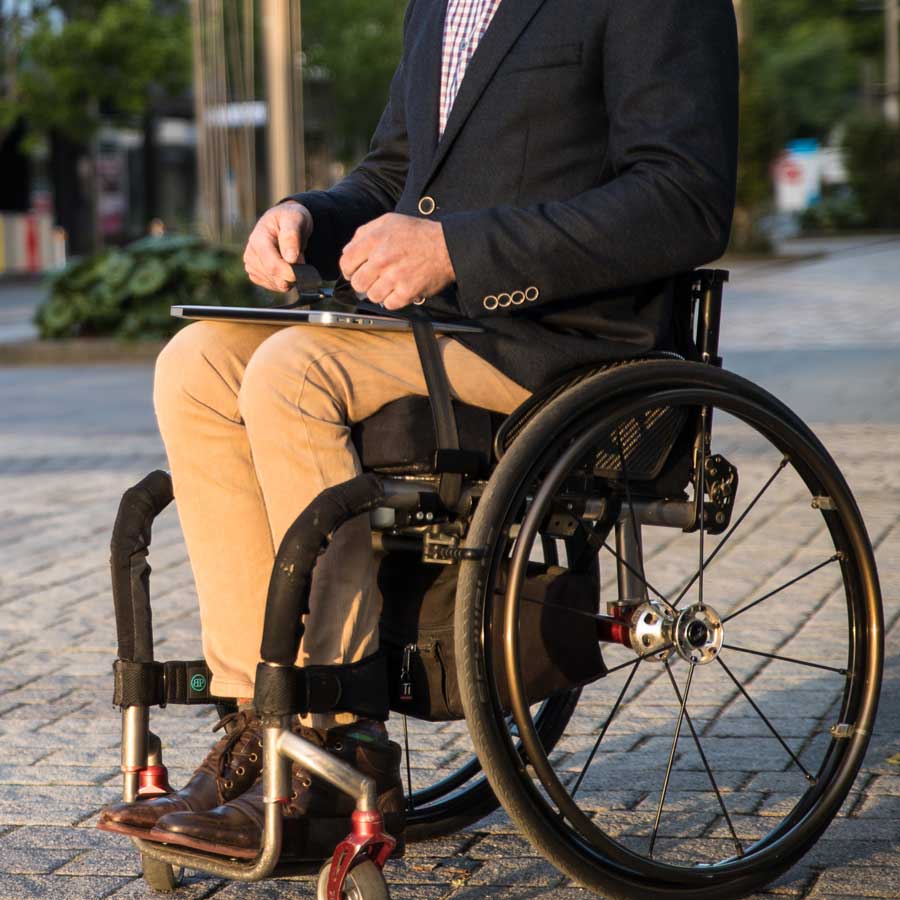
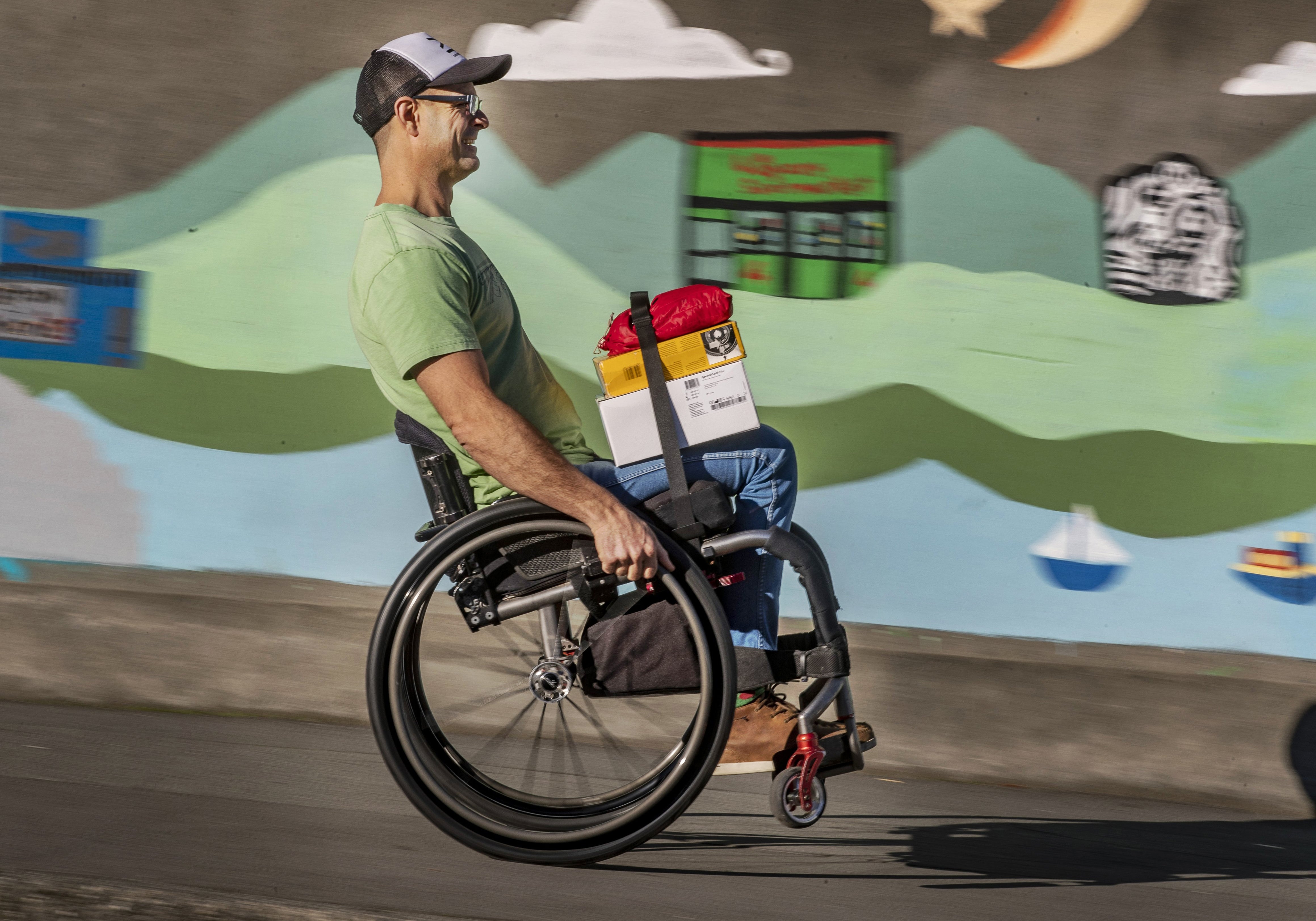
Everyone tells you what to pack. Nobody talks about what happens once you're actually moving. You're in an airport. Your chair is gate-checked. You've got a carry-on, a boarding pass on your phone, and you need your hands to push. Or you're out for the day at a market, and you've bought a few things and have no way to carry them home without asking someone to hold them for you every thirty seconds.
The carry setup matters as much as the packing list.
Three pieces of wheelchair travel gear I always have:
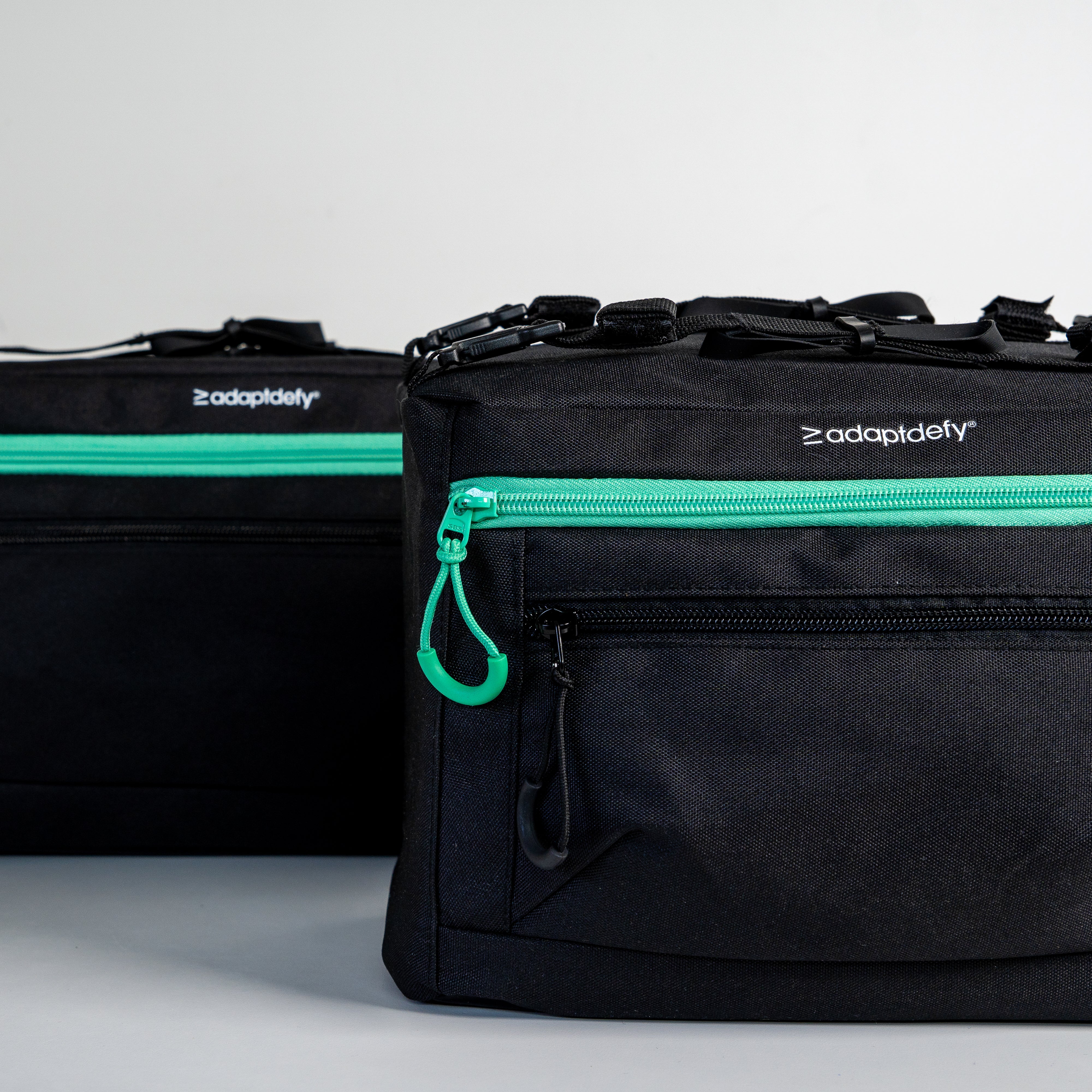
1. The underseat wheelchair bag.
It sits under your seat, out of the way, and secure. Nothing sliding off your lap. Because it sits under your chair, it maintains your centre of gravity and balances your chair. Great when moving around uneven terrain or popping wheelies over curbs.
2. LapStacker.
Once you're moving, LapStacker holds your shopping, your maps, your souvenir haul, your jacket. Hands-free, properly secured.
3. Cross-body bag.
This is where your essentials live. Wallet, phone, travel documents, medication, anything you need immediate access to without stopping and searching.
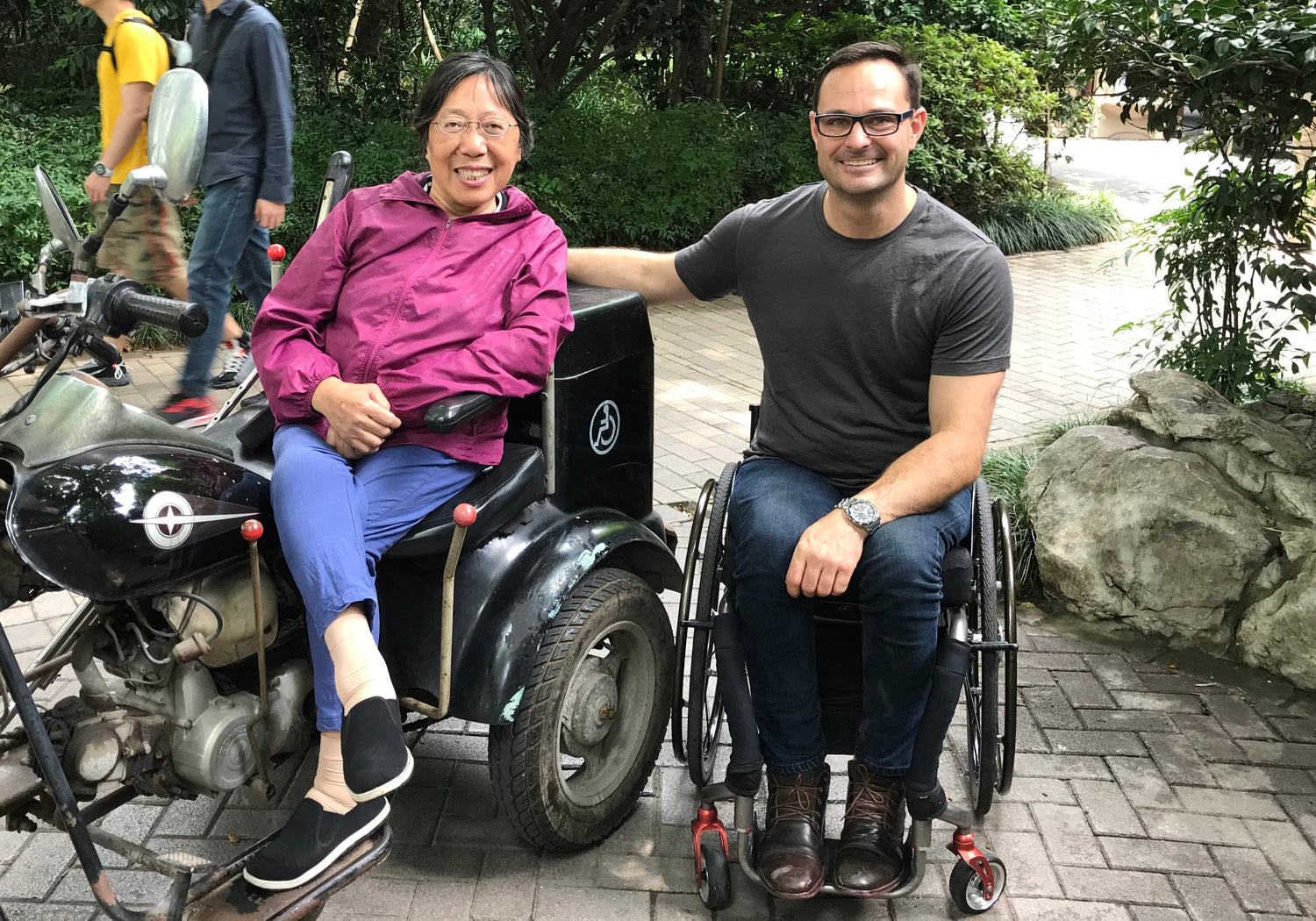
During our trip to China (see video below) to source manufacturing partners for LapStacker, we saw firsthand how these principles and a strong mindset can make a significant difference. Remember, it's not just about the destination but also the journey and the connections you make along the way.
I had the chance to test it across some genuinely difficult terrain: busy street markets, uneven pavements, crowded spaces. It does exactly what it's supposed to. Your hands are for pushing. LapStacker holds the rest.
FAQ: wheelchair travel tips
How do I travel with a wheelchair on a plane?
Contact the airline at least 48 hours before you fly to confirm your wheelchair dimensions and request any assistance you need, including an aisle chair for boarding. Gate-check your chair rather than checking it at the desk; it stays with you longer and reduces handling time. Before you board, remove anything that could be lost or damaged in the hold: joystick, headrest, removable cushion. Keep your essentials in a carry-on that's accessible from your seat.
Read more of our travel tips, and how to prepare your wheelchair for flying here: Flying with a wheelchair: our complete guide to stress-free air travel.
What should I carry when travelling in a wheelchair?
One for essentials you need constant access to, an underseat bag works well here for wallet, phone, medication, and travel documents. One for everything you pick up during the day, LapStacker holds bags, shopping, maps, and anything else hands-free while you push. Splitting these two jobs between two pieces of gear means you're not digging through everything every time you need something quickly.
Get my packing list for wheelchair travel here: What to pack for wheelchair travel: My complete packing list.
What if a venue isn't wheelchair accessible?
Ask before assuming it's impossible. There's often an alternative entrance, a staff workaround, or a solution that isn't visible from the front door. Be direct and specific about what you need. If access genuinely isn't possible after checking, that's a real limitation worth noting and sharing with others. But it's always worth asking first.
Is it safe to travel alone in a wheelchair?
Yes, with preparation. Research your destination's accessibility before you go; Wheelmap is a solid tool for this. Know where accessible facilities are along your route. Build buffer time into airports and transport hubs. And look for local wheelchair users when you arrive; they'll know things no app does.
Do airlines have to accommodate wheelchairs?
In the US, the Air Carrier Access Act requires airlines to assist with boarding, deplaning, and connections, and prohibits discrimination based on disability. Airlines cannot charge extra for wheelchair assistance. Know your rights before you fly, and don't hesitate to reference them if you need to.
About the author
Mike Brown is a T10 complete paraplegic, co-founder of Adaptdefy, and a well-travelled wheelchair user. Since his spinal cord injury in 2012, he has taken his chair to destinations across the world, sharing the experience with the Adaptdefy community exactly what worked.
His videos and guides cover everything from flying with a manual chair to accessible road trips, with the kind of practical detail that only comes from doing it.
Read more of our travel series:
Flying with a wheelchair: our complete guide to stress-free air travel.
What to pack for wheelchair travel: My complete packing list.
How to carry things in a wheelchair at the airport: a practical guide.
Happy Adaptdefying. – Mike


Leave a comment
All comments are moderated before being published.
This site is protected by hCaptcha and the hCaptcha Privacy Policy and Terms of Service apply.