

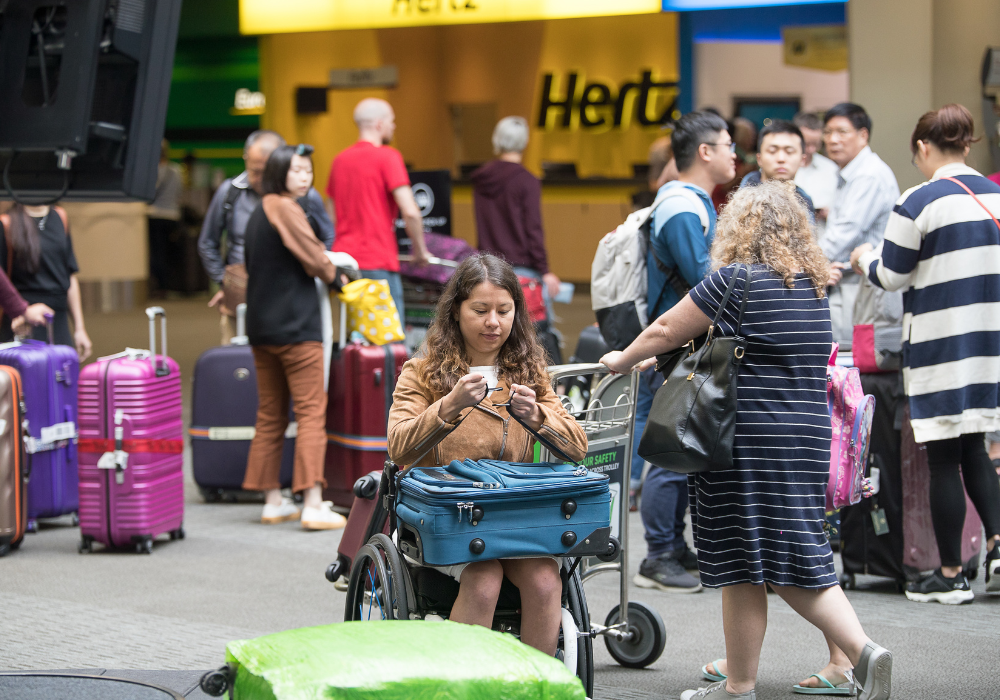
There are so many wheelchair travel guides that tell you what to pack. But none of them tells you how to carry it once you're actually moving.
A bag on your lap is at risk of sliding off or catching on doors, and that's if you can fit your bag on your lap. What about your carry-on? What if you have a large suitcase, or multiple large suitcases?
I've been travelling in a manual wheelchair for over 12 years. Here's my tried and tested system:
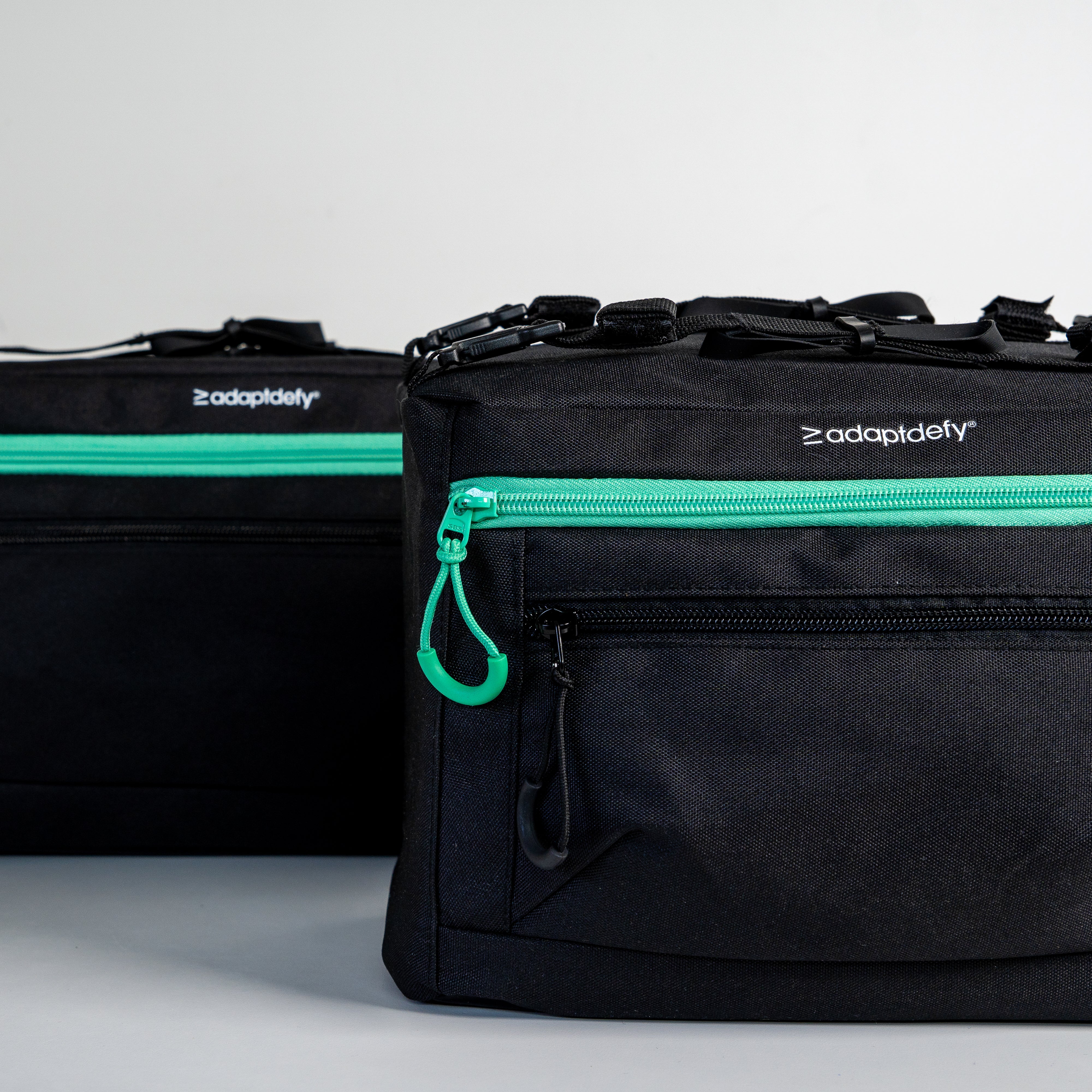
- Underseat bag - my Essentials, remove it from your frame and take it with me.
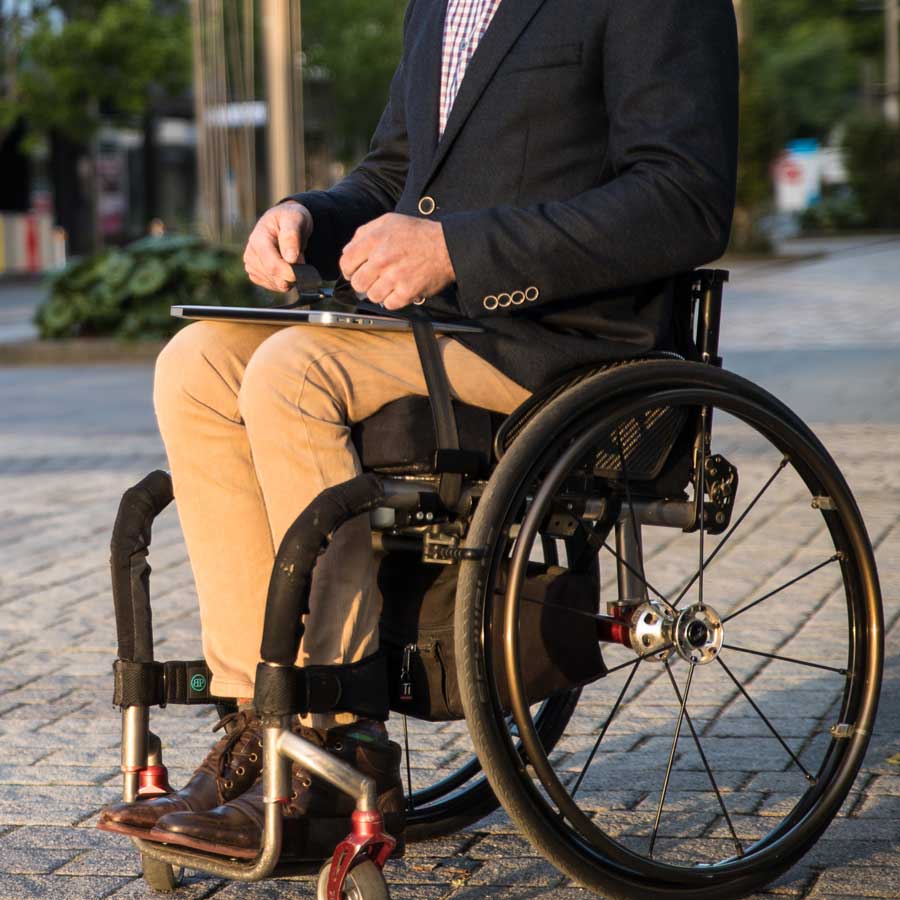
- Loose items secured on my lap, with LapStacker so I can push hands free.
- Backpack - on the back of my chair holds bulkier items, but make sure it’s not too heavy and doesn't risk tipping.
The problem with wheelchair travel: your hands are already taken.
For wheelchair users travelling, carrying your luggage at the same time is a juggling act.
Your hands are your wheels. Everything you carry needs to be secured, balanced, and accessible without compromising your ability to push.
But that’s easier said than done. The question I kept coming back to every time was “Do I carry my luggage when travelling in a wheelchair?”
The answer, it turns out, depends on what you've packed and how many bags you're juggling.
A day trip needs a different setup from a week away. And a month-long adventure is a different problem again.
With the right setup, carrying things can stop being a logistics problem. Get it wrong, and it's a headache that can spoil the beginning of your journey.
My three-piece system: consistent across all trips.
For every trip, there's two things that don’t change, whether you're out for an afternoon or gone for a month.
Three pieces of gear that travel with me every time.
Cross-body bag.
The most useful thing I travel with, find something that keeps your essentials close by and is comfortable for you. Keep your passport, boarding pass, and any medications and anything else you need quick access to without stopping. It stays on your person through security, check-in, and boarding.
The underseat wheelchair bag.
Larger items, snacks, water bottle, catheters and medications. It sits below your seat, fixed to the frame, out of the way. Nothing sliding off your lap or hanging from behind my chair, compromising balance.
The beauty of Adaptdefy’s underseat bags is that they are easily detachable. Instead of moving everything from one bag to another, simply remove the bag itself and take it with you.
My trusty LapStacker.
This handles everything else. My jacket, shopping, a coffee, maps, even my phone. LapStacker holds your items to the chair with retractable straps, so my hands stay on the wheels.
These three pieces are your baseline. They don't change regardless of trip length. The three scenarios below are about how you handle your luggage, not your personal carry.
Scenario 1: day trips and carry-on travel.
This is how I travel in my wheelchair when I have a day out, a work trip, or any adventure where everything fits in a smaller day bag.
Setup: My three-piece essentials + a day bag.
The essentials above cover your essentials, but you might need a larger carry-on as well. Use it for a change of clothes, your laptop, and any of the other bulky items you may need on the trip. Some good options for day bags for wheelchair users travelling.
Option 1. Backpack
Some may find a backpack made specifically for wheelchair users helpful, but I often find that a standard backpack is larger and can easily hang off the back of your chair.
Option 2. Duffle or tote bag
Again, hold this on your lap, or get a hook to hold the bag on the back of your chair.
Scenario 2: multi-day trips with a carry-on suitcase.
How do wheelchair users hold luggage when travelling longer than a weekend, but still keeping everything in carry-on luggage? The options above may work depending on your packing style. But here's how to carry a suitcase in a wheelchair.
There are a few ways to carry a suitcase as a wheelchair user. All have pros and cons.
Option 1. On your lap.
Some wheelchair users find it easiest to place the suitcase on their laps and secure it with LapStacker. Reduce the chances of your luggage hitting someone, or even worse, getting stolen or pickpocketed. Holding items on your lap is a great way to keep an eye on them.
Your lap is also more stable than hanging something off the back of your chair, which affects your balance and centre of gravity. Having this weight on your lap will help you to maintain balance and roll smoothly across the airport.
Option 2. Towing behind you.
Others have found that towing a suitcase works better for them. You can use a variety of systems to secure a suitcase to the back of your chair to pull along with you, such as hooks or tying the handle to your chair.
This is great if you are a heavy packer and can not have that weight on your lap for extended periods.
The cons: Towing items increases your length and changes the turning and handling of your chair. Meaning you may be more likely to hit someone or struggle with corners
The weight distribution also changes; it can also be difficult to stop as the moment of the case may continue and crash into your back.
It is also difficult to access when behind you, and you may require someone to help you. worst of all, having items out of sight behind you can increase your risk of theft or pickpocketing in busy crowds.
Option 3. In front of your chair.
Other wheelchair users have found that placing the suitcase in front of them is a better solution. For this method, a four-wheel spinner is significantly easier to manage than a two-wheel roller.
You can rest it upright in front of your footrest and push it forward with one hand for short stretches. For anything longer, secure the suitcase rather than hold it. A bungee cord looped around your case and connected to your frame keeps it in front of you on smooth floors.
One thing worth flagging is that adding any weight to your chair changes the weight distribution. On flat ground, it's manageable. On a ramp or rough surface, you'll feel the difference. Be cautious of tipping, especially for rear-mounted luggage.
|
|
Pros |
Cons |
|
On your Lap |
Keeps luggage visible and secure. Most stable option - secure with LapStacker Maintains balance and centre of gravity. |
Weight on the lap for extended periods isn't comfortable for everyone. |
|
Tow behind |
Good for heavy loads. Frees up your lap entirely. Great for long distances or wide open terminals DIY option for tow system (eg: hooks) |
Harder to turn and navigate crowds. Luggage momentum can crash into your back when stopping. Items out of sight: higher theft risk. Hard to access independently. |
|
In front |
Luggage stays visible and accessible. Works well on smooth flat floors. Easiest a four-wheel spinner. |
Only practical for short distances without securing. Affects handling on ramps and rough surfaces. Increases the weight you are required to push. |
Scenario 3: long adventures and checked luggage.
A longer trip means more bags and bigger bags, and a different approach. Here's how to carry a suitcase with a wheelchair.
You're almost certainly checking in luggage for these trips. That changes the airport logistics. Luckily, you’ll only have to carry your luggage a short distance to the baggage drop-off.
Option 1. Large suitcases.
You could use a two-wheeler and hook the handle of the suitcase over your push handles, or a separate hook at the back of your chair and tow it along behind you.
A four-wheel spinner in front of your footrest is still a good option for short distances, secured with a bungee cord or LapStacker straps if you need your hands free. But once you're covering any real distance, carrying a large bag solo in a manual chair is tiring.
Option 2. The Phoenix wheelchair bag: a worthwhile investment?
If you travel long-haul regularly, the Phoenix system is worth looking at. It attaches to the rear of your chair frame and creates a hitch point so a bag trails behind you rather than sitting in front. Dispute adding weight to the back of your chair; the positioning and angle of it make it stable and reduce the risk of tipping mentioned earlier.
The trade-off is turning radius: a trailing bag adds length and can make it tricky when weaving through a crowded terminal. Fine for straight or open airport runs; more challenging in tight spaces and busy crowds.
3. Baggage trolleys: the honest answer.
Pushing a manual wheelchair while managing bags, let alone a baggage trolley, is genuinely difficult. It’s not impossible, but it is certainly tricky and tiring.
My honest best piece of advice: ask for help. Lean on your travel buddy or use the services available to you. Most airports will arrange a porter if you request one ahead of time. Hotels the same. Plan for it in advance rather than improvising on arrival. The independence that matters is getting where you're going. Let someone push the trolley.
In all scenarios, your chair is likely getting gate-checked.
For most adventures, your wheelchair will be gate-checked at the aircraft door, and you will be transferred onto the aircraft. At this stage, remove your underseat bag and take it with you onto the plane.
Read our guide on preparing for travel and how to protect your chair from damage.
Getting the weight balance right.
Weight is always a consideration when flying, but for wheelchair users there’s another layer to it. Any weight you add to a manual wheelchair affects how it handles, so where you put things matters.
Weight at the back, hanging off the push handles or a rear bag, makes the chair rear-tippy. Fine on level ground, but on a ramp or uneven surface, you're fighting the physics. It also changes your wheelie point, which matters if you use wheelies to navigate kerbs or descend ramps.
Quick reference: How to carry things in a wheelchair while travelling.
|
Short trip (day bag only) |
Week-long (carry-on suitcase) |
Long holidays (checked luggage) |
|
|
Cross-body bag |
Phone, travel documents and passport |
Same |
Same |
|
Underseat bag |
Wallet, keys, water bottle, medication. |
Same + snacks for a longer flight. |
Same, plus make sure you have essential medication and medical devices in your carry-on. |
|
LapStacker |
Shopping, jacket, anything you need to keep your hands free. |
Secure your bag on your lap in busy crowds. |
Same. |
|
Main luggage |
Backpack, laptop bag or a day bag |
Larger backpack, or a carry-on suitcase |
Checked bag. Usually a suitcase. |
|
Large item |
Not usually needed |
LapStacker strap to carry your carry-on. |
Phoenix trolley system for regular long-haul; bungee for occasional use |
|
Baggage trolley |
Not applicable |
Avoid where possible; you should be able to manage without a trolley. |
Pre-book assistance at airports and hotels. |
|
Gate-check |
Your chair. Make sure you check for damage before leaving the aircraft door |
Transfer the underseat bag to the carry-on before the chair is gate-checked; check the chair on return |
Same + your luggage. Staff should assist you with baggage claim. |
FAQ: carrying things in a wheelchair when travelling
How do wheelchair users carry luggage through airports?
It depends on the trip. For carry-on-only travel, an underseat bag handles your essentials, and LapStacker holds loose items securely in your lap, leaving you hands free to push. For a carry-on suitcase, a four-wheel spinner in front of the footrest works for short distances; bungee cord or LapStacker straps secure it for longer stretches. For checked luggage on extended trips, the Phoenix wheelchair trolley system creates a rear hitch for a trailing bag, and pre-booking porter assistance is worth doing for anything more complicated.
What is the way to carry things in a wheelchair?
LapStacker holds everything hands-free while you push. From loose items like your jacket, to large items like shopping bags LapStacker holds it all. Stop the balancing act trying to hold items on your lap and start securing them so you can continue on your journey with independence and confidence.
How do you keep things from falling off your lap in a wheelchair?
Stop balancing things and start securing them. Laps are unstable, especially on anything other than perfectly smooth ground. LapStacker attaches to your chairs frame and uses retractable straps to hold your items securely. Your hands stay free to push.
Does a heavy bag on the back of a wheelchair cause problems?
Yes, if it's heavy enough. Weight attached to the back of a manual wheelchair raises the centre of gravity and can make the chair rear-tippy, which affects ramp navigation and your wheelie point. Keep heavy items low and forward where possible. The underseat bag and LapStacker are positioned low and central for exactly this reason.
Can you carry a suitcase with a wheelchair?
Yes. Wheelchair users find that four-wheel spinner cases are easiest. Rest it upright in front of your footrest and push it with one hand for short distances. For hands-free movement, bungee-cord it to your push frame or use LapStacker's straps around the handle. For trailing a bag behind you rather than pushing it in front, the Phoenix wheelchair trolley system attaches to the rear frame and creates a hitch point. For genuinely complex multi-bag situations, pre-booking porter assistance is the most practical solution.
About the author
Mike Brown is a T10 complete paraplegic, co-founder of Adaptdefy, and a well-travelled wheelchair user. Since his spinal cord injury in 2012, he has taken his chair to destinations across the world, sharing the experience with the Adaptdefy community exactly what worked.His videos and guides cover everything from flying with a manual chair to accessible road trips, with the kind of practical detail that only comes from doing it.
Read more of our travel series:
Flying with a wheelchair: our complete guide to stress-free air travel.
What to pack for wheelchair travel: My complete packing list.
Mastering wheelchair travel - 5 tips for a smoother journey.


Leave a comment
All comments are moderated before being published.
This site is protected by hCaptcha and the hCaptcha Privacy Policy and Terms of Service apply.