


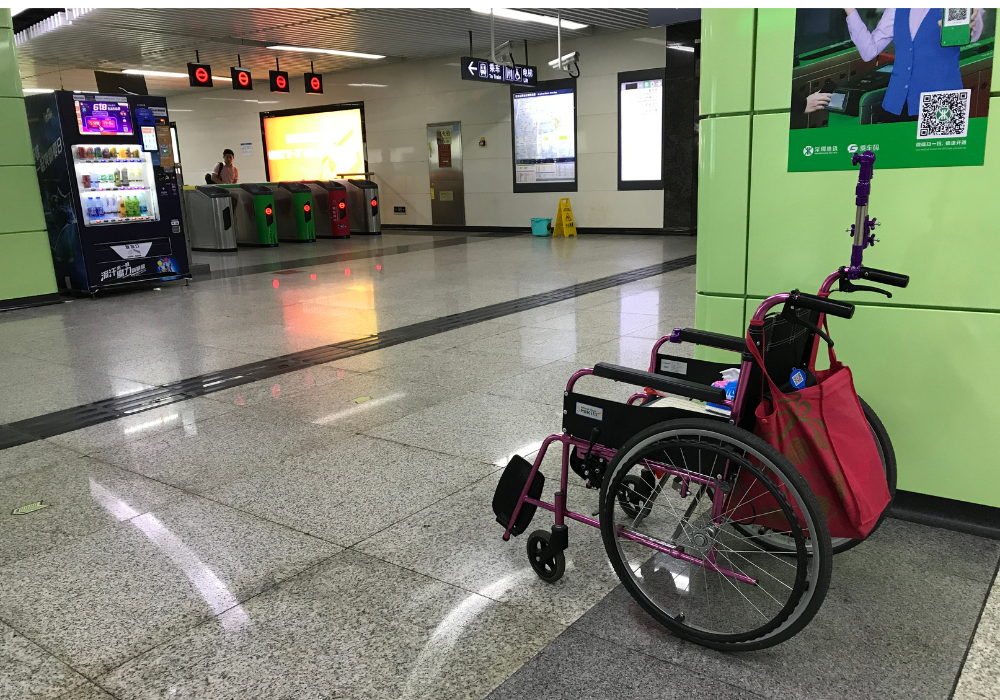
I'll be honest: the first time I flew after my injury, I spent more time worrying about the airport than the destination. This guide has everything I wish someone had handed me before that first trip.
Top travel tips from wheelchair users.
- Prepare and protect your equipment before you travel.
- Use an AirTag to track where your chair is.
- Communicate clearly and early at every stage.
- Keep your wheelchair and cushion with you for as long as possible.
- Don't hesitate to ask for help.
- Take your time and let airport staff guide the process where they can.
- The more you know about how it works, the less intimidating it becomes.
Before booking, check your airline's requirements
Check your airline's requirements for travelling with a wheelchair, both how you and your chair will be transported on and off the flight, and check their safety requirements for emergency evacuation.
You will also need to check requirements for your wheelchair and other medical devices if they use batteries. Most airlines have requirements around different types of batteries and where they must be carried on the plane.
It’s also good to get an understanding of what amenities and services will be available to you on board so you can plan around them.
Book your airport assistance early.
Airports can be a lot. The good news: most airports and airlines offer free assistance programs, and knowing how to use them makes the whole experience a lot smoother.
These services cover a wide range of needs, and as a wheelchair user, you're entitled to this support.
Get an idea about what programs are available at the airport, check both your departing and arriving terminals, and check the assistance provided by your airline.
- The key rule: arrange this at least 48 hours before your flight. Same-day requests at the airport can work, but they're not guaranteed.
- At booking, look for the Special Requests or Accessibility section and select what you need from the drop-down. Book it early and it means staff will be waiting for you.
- Already booked? Call your airline's accessibility or customer care team directly, or email them. See what is available and how to book.
- A few days before your flight, call or email to double-check that assistance will be available for you and where to locate the services within the airport.
- At the airport, terminal ambassadors at information desks can help on the day, but treat that as a backup, not a plan.
Preparing your wheelchair.
Clean your chair before the trip. Not just because it looks better, but because a clean chair is easier to inspect for damage when you collect it on arrival. Wipe down the frame, wheels, and push rims with a warm cloth and gentle detergent, then clean off any soap residue and dry.
Once it's clean, protect it. Wrap the push rims to prevent scratches. Install foam plumbing pipe around the vulnerable parts of the frame. Use tape to cover any visible screws, particularly those with downward-facing heads like footplate fasteners. Vibration during transit in the cargo hold can cause these small components to loosen and fall out. Attach a clearly visible luggage label so your chair is identifiable
Remove any accessories or add-ons that are not fixed to your chair. This reduces the number of things that may break as your chair is handled.
Keep your wheelchair's measurements and photos of how to fold your chair saved on your phone. Staff will ask, often at the worst possible moment.
We’ve all heard horror stories about airline damage. Even if you take all the precautions, there may be damage to your chair. Take photos all around your chair. Both wide shots and close-ups of components that may be prone to breakage.
Quick steps: How to prepare your wheelchair for a flight.
- Wipe down the frame, wheels, and push rims with warm water and gentle detergent.
- Wrap the push rims to prevent transit scratches.
- Wrap foam piping around vulnerable sections of the frame.
- Cover any exposed screws with tape to prevent vibration in the cargo hold from loosening them.
- Remove accessories and anything not fixed to your chair.
- Attach a luggage label with your name and contact number somewhere clearly visible.
- Save your wheelchair's exact measurements (width, length, folded dimensions, and weight) to your phone
- Take images of your chair at all angles
At the Airport
Check-in.
It's best practice to arrive early for flights, and it's especially important for wheelchair users. Arrive early, and be prepared.
Head straight to the priority check-in line when you've booked special assistance. Be explicit with check-in staff: your wheelchair is staying with you all the way to the aircraft door. Say it clearly, get confirmation, and if it helps, note down who you spoke to.
Security.
Let security personnel know about your chair and any special requirements before you reach the scanner. Be prepared for additional screening. Stay calm and organised, and let the process work.
Waiting and boarding.
While waiting, prepare your chair, ensure accessories on your chair are removed and packed into your carry-on.
At some stage, you will be asked to transfer out of your chair so they can gate-check your wheelchair. The timeline and method of transfer vary between aircraft and airlines.
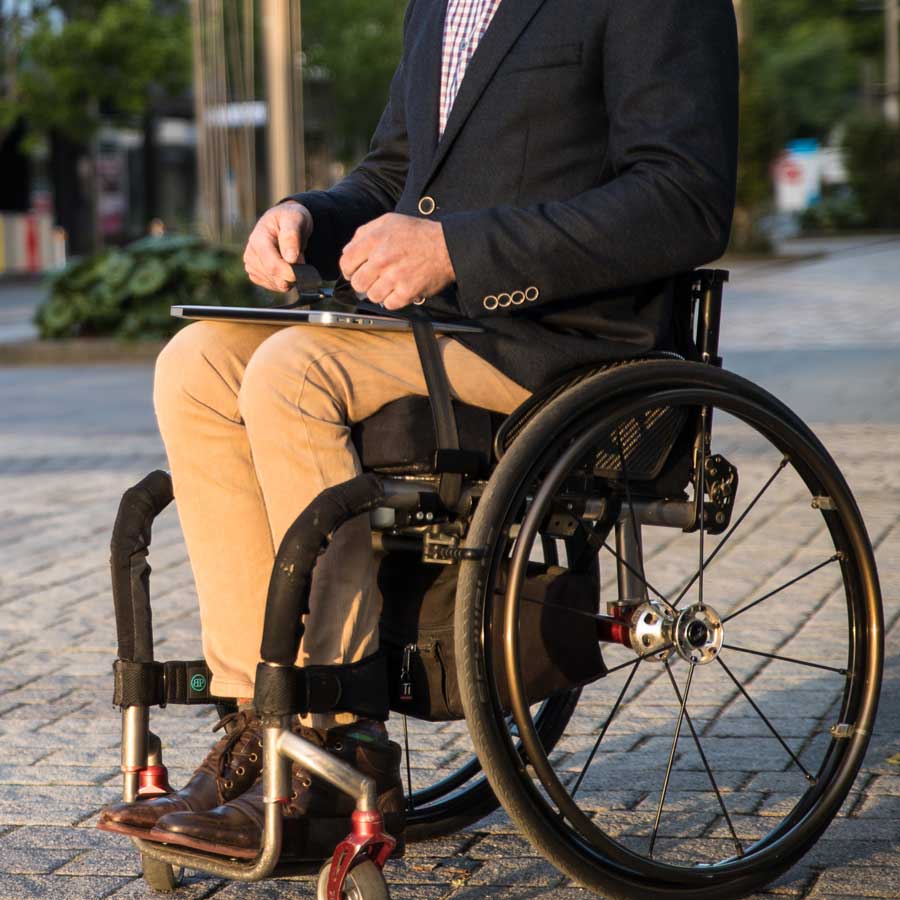
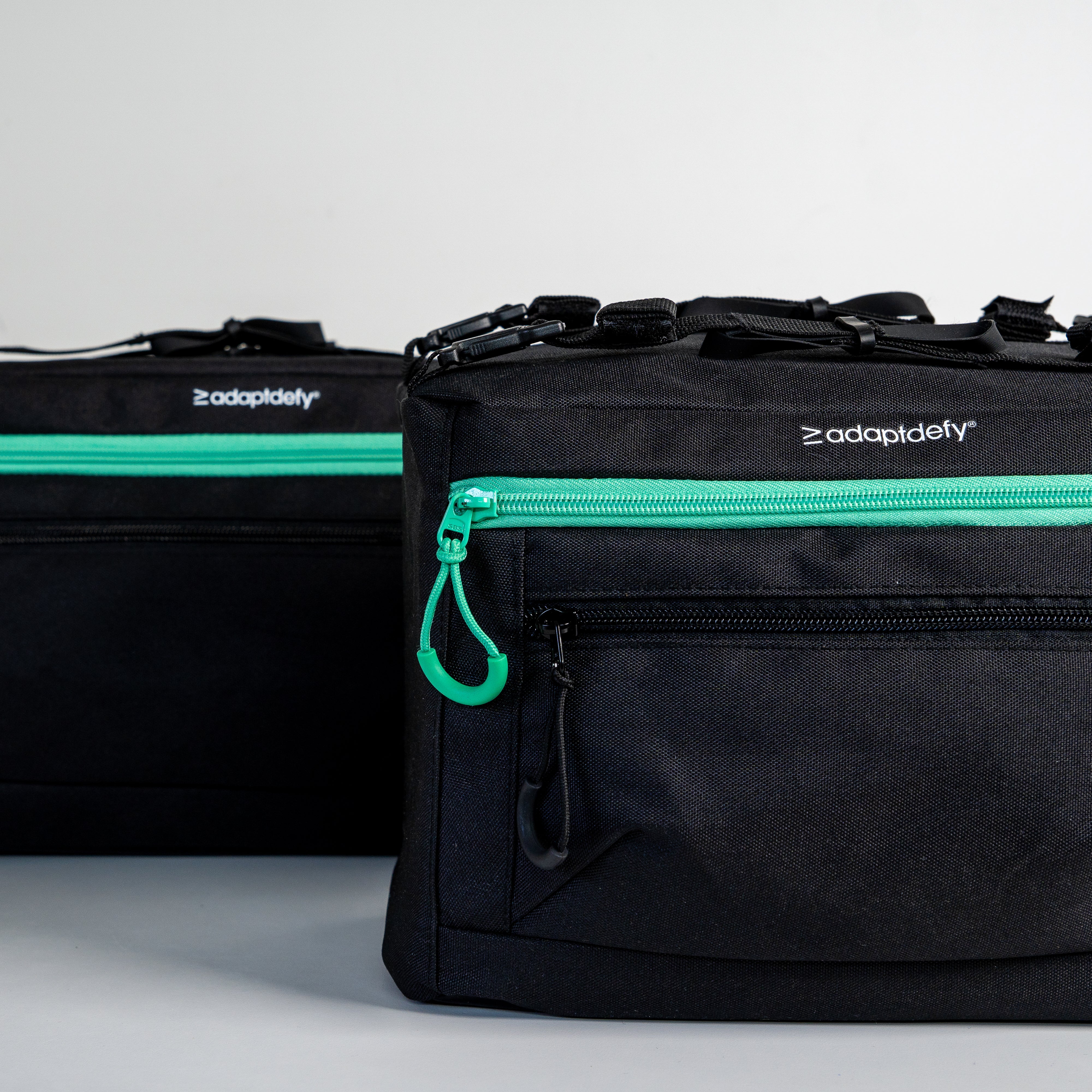
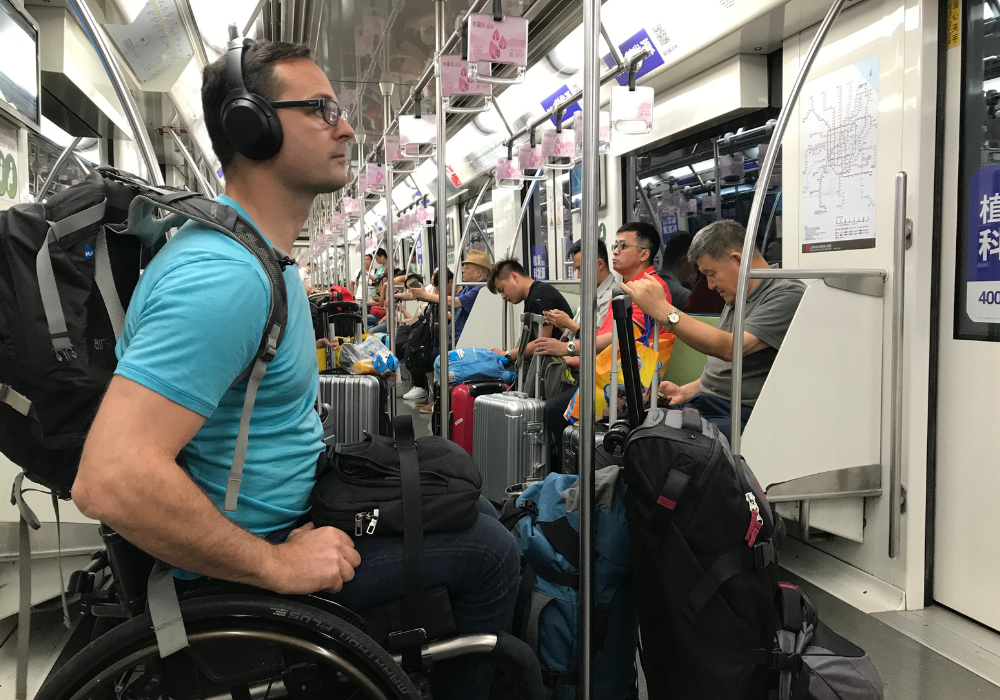
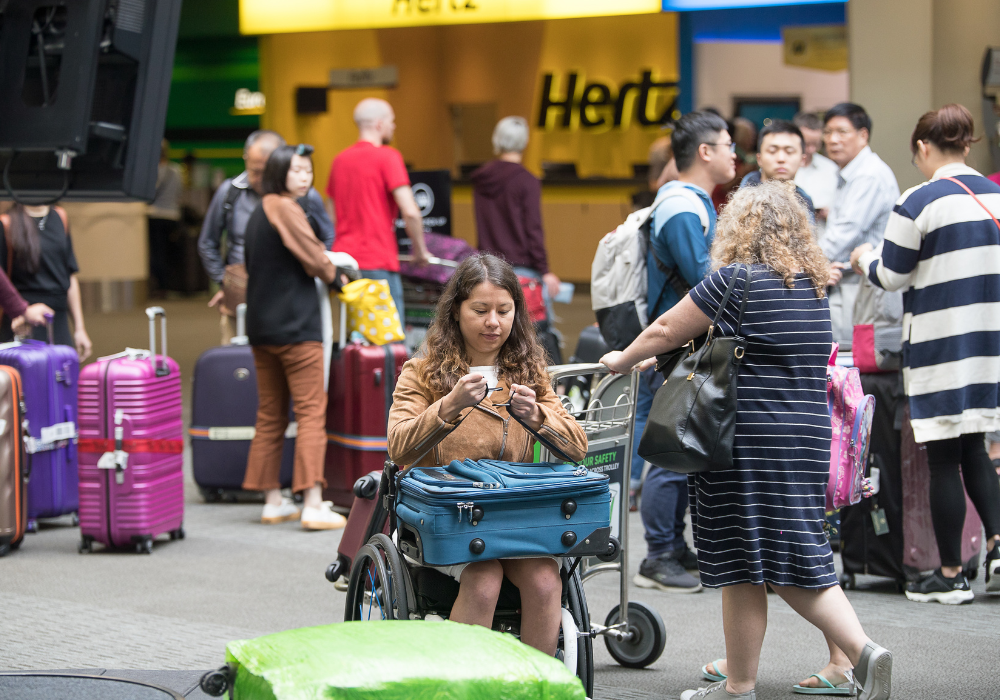
Use a cross-body bag to keep your essentials close and on your person, for example, passport, boarding pass and phone.
Staff will also ask how to fold your chair; it pays to have images of how your chair folds and how it can be stored, ready to advise.
While on board
If your cushion is part of how you manage skin integrity and posture every day, it goes on the plane with you and stays there for the duration of the flight. This is especially important for anyone with a spinal cord injury or at risk of pressure sores.
Now’s the time to relax and enjoy the flight - right? But there are a few more considerations. One big question for long flights: how to use the toilet?
It varies greatly between aircraft, airlines and staff members. Some airlines have many accessible features and offer great training to their staff. Others have strict policies that prohibit their staff from assisting with anything outside of their regular scope. For long flights, it pays to check your airline's policies and contact them with any questions.
Landing.
Stay on the plane until you confirm your wheelchair has arrived. If your chair went into the hold, do not leave the aircraft until you know it is there. If there is damage, resolve or document any issue before you leave the airport. Special assistance teams will come on board to help you disembark and help you to baggage claim.
Enjoying your trip.
Your airport adventure is over, and now the real adventure has begun. There are a lot of tips on how to enjoy the local area and get the most out of your trip.
Read my guide to getting around at your destination for more. Mastering wheelchair travel - 5 tips for a smoother journey.
Frequently asked questions.
Do I need to book special assistance in advance?
Yes, and as far in advance as possible. Most airlines require you to notify them at least 48 hours before departure, but earlier is always better. Book it at the same time as your flight and confirm it again when you check in online.
Can my wheelchair go on the airplane with me?
Sometimes, if it's compact enough to fit in the onboard storage cupboard. It's not guaranteed, but it's always worth asking at the gate.
What happens if my wheelchair is damaged during the flight?
If there is damage, report it immediately before leaving the airport. Document everything with photos. Airlines are liable for damage to mobility equipment during transit, so don't accept "we'll look into it" get it in writing at the airport.
Can I keep my wheelchair cushion on the plane?
Yes, and you should. Your cushion is medical equipment, not an optional extra. Transfer it from your chair at the aircraft door and use it in your seat for the entire flight. Do not let it go into the hold. If a crew member questions it, be clear that it is part of your medical care.
What is an aisle chair?
An aisle chair is a narrow, purpose-built transfer chair that fits down the aircraft aisle. It's used to move you from the aircraft door to your seat on boarding, and to transfer you to the accessible toilet during the flight. On long-haul routes you should have access to one throughout the flight. Ask cabin crew early if you're unsure.
How early should I arrive at the airport as a wheelchair user?
Give yourself at least an extra hour on top of the airline's recommended arrival time. Special assistance, security, and boarding all take longer than standard processes. The extra time reduces stress and gives you margin if anything doesn't go to plan.
Will the airport provide a wheelchair if I need one?
Yes. Airports are required to provide mobility assistance, including a manual wheelchair or buggy, to anyone who has requested special assistance. This is separate from your own chair, which stays with you. If you need a push from the special assistance area to the gate, ask for it.
Read more of our travel series:
What to pack for wheelchair travel: My complete packing list.
Mastering wheelchair travel - 5 tips for a smoother journey.
How to carry things in a wheelchair at the airport: a practical guide.

Leave a comment
All comments are moderated before being published.
This site is protected by hCaptcha and the hCaptcha Privacy Policy and Terms of Service apply.