

I push a wheelchair all day, every day. My shoulders don't get a day off, so recovery has to be part of the routine, not something I get to when they start hurting and it’s too far gone.
Strength work builds my shoulders up. Recovery is how I let them settle back down. This is my shoulder recovery routine as a wheelchair user: a foam roller, a hot water bottle, sauna and cold plunge sessions, and the odd massage.
This is part of our series on Shoulder health for wheelchair users: strengthen, protect and recover
My recovery routine at a glance.
|
When |
What |
Why I do it |
|
Every few days, when it feels tight |
Foam roller |
Loosens the upper back and shoulders after a day of pushing |
|
Evenings, or whenever I need it |
Hot water bottle |
Easy heat for tight shoulders, no trip required |
|
At least once a week |
Sauna and cold plunge |
Takes the tension out and gives my head space to reset |
|
Once in a while |
Massage |
A proper reset when things are really tight |
Foam roller.
I reach for the foam roller every few days, whenever my upper back and shoulders feel tight.
Pushing rounds you forward. A foam roller under or behind your upper back is one of the simplest ways to open it up. Roll slowly through the area between your shoulder blades and pause on the tight spots.
Keep it to the muscles of the upper back. Don't roll directly on the shoulder joint or your neck.
Hot water bottle.
The lowest-effort recovery tool I use. A hot water bottle across the tops of my shoulders in the evening, or whenever I need it, helps me relax and takes the edge off the tightness that builds up from pushing.
Skin check: if you have reduced sensation anywhere, keep heat off those areas. Wrap the bottle in a cover, never use boiling water, and don't fall asleep with it on you. Burns can happen without you feeling them.
Sauna as a mindful practice.
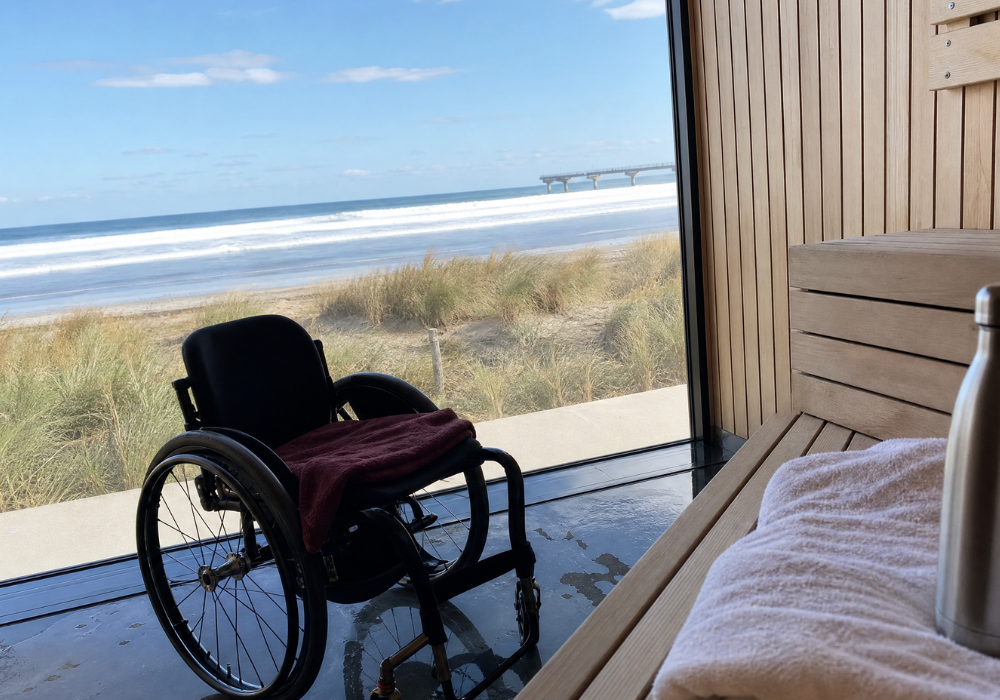
This is my favourite. There's a new sauna and hot pools at New Brighton here in Christchurch, and the view out over the beach doesn't hurt either. I go at least once a week, and I'd go more if I could.
The heat helps me stretch and takes the tension out of my muscles, especially when I've been pushing all day, every day. But the bigger thing for me is what happens in my head.
It's a chance to close your eyes and feel all the emotions running through your mind. Just check in. It's become a kind of mindfulness practice for me. And usually I find some sort of insight that I miss during a busy workday and life with family and friends.
How I do a sauna in my wheelchair.
Most places have a waterproof wheelchair you can use. I bring my own chair in and take the cushion off so it doesn't get wet.
For the sauna bench itself, I use a really nice little soft air cushion. My mate pointed it out to me; he takes his travelling. It protects my skin from the hot, hard bench, and because its rubber, it's water- and sweat-proof.
Cold plunge.
After the sauna, there's a cold plunge pool that cools you right down. I also have a DIY set-up at home.
I've written about cold plunging before, in cold plunging for spinal cord injury recovery and resilience. The short version:
- Choosing discomfort on purpose builds the mental resilience you need for the discomfort you don't choose. Not going to lie, it is uncomfortable, but therein lies the medicine.
- It helps muscles recover. Cold water is widely used to ease muscle soreness after hard physical work, and for me, pushing all day counts.
- It lifts my mood. I come out calmer and clearer, every time.
- Start gradually. Short dips in cool water first, then work your way colder as your body allows.
My sauna and cold plunge routine.
I’ve been going for a while, if you are new to sauna, start with a shorter time. Eyes closed, check in.
- 20 minutes in the sauna.
- A short break in the cold plunge pool. Just long enough to cool right down.
- Back into the sauna.
- Repeat for three rounds.
It's a good way to de-stress, unwind and check in with yourself.
Massage, once in a while.
I don't get massages often, but when my shoulders are really tight, a good sports or remedial massage does what the foam roller can't.
Heat and cold safety with a spinal cord injury.
This bit matters. A spinal cord injury can change how your body controls its temperature.
- You may not sweat below your injury level, so you can overheat faster than someone without an SCI.
- Start with shorter sauna sessions than mine and build up.
- Reduced sensation means you can burn or get cold injuries without feeling it.
- Protect your skin, check it afterwards, and keep heat packs and hot surfaces off areas you can't feel.
- Drink plenty of water before and after the sauna.
- Check with your doctor or spinal team first if you have heart or blood pressure issues.
Recovery is half the job.
Recovery works best alongside the strength and technique that protect your shoulders in the first place:
- Shoulder health for wheelchair users: strengthen, protect and recover
- Neck health: Gem’s desk setup tips and 3 daily exercises
- Dead hangs for shoulder health: my DIY hanging bars
- Shoulder exercises for wheelchair users: a 4-move strength routine
- Wheelchair pushing technique and chair setup for healthy shoulders
FAQ.
How can wheelchair users help their shoulders recover?
Mix simple daily habits with bigger resets. A foam roller and a hot water bottle ease day-to-day tightness from pushing, sauna and cold plunge sessions help your muscles and mind unwind, and an occasional massage deals with stubborn tightness.
Can wheelchair users use a sauna?
Yes. Many facilities have a waterproof wheelchair, or you can bring your own and remove the cushion. Use a soft cushion on the bench to protect your skin, start with short sessions, and talk to your doctor first if your injury affects how you sweat or regulate temperature.
Is cold plunging safe with a spinal cord injury?
It can be, with care. Start with short dips in cool water, protect areas with reduced sensation, and check with your doctor first, especially if your injury is at T6 or above because of the risk of autonomic dysreflexia.
Should I use heat or cold for sore shoulders?
Both have a place. Heat, like a hot water bottle or sauna, helps loosen tight muscles. Cold helps muscles recover after hard work. If a shoulder is injured, swollen or painful for more than a few days, see a physio.
About the author.
Mike Brown is a T10 complete paraplegic and has pushed a manual wheelchair every day since a spinal cord injury in 2012. He’s the co-founder and CEO of Adaptdefy, a company that designs products for wheelchair users, built from lived experience. He co-created LapStacker, the world’s first retractable carry system for wheelchairs.
Mike writes from more than a decade of pushing, transferring and training in a chair. Since his spinal cord injury in 2012, Mike has spent 14 years working out what actually helps in daily wheelchair life. The tips he shares on Adaptdefy's blog and social media come from real trial and error, conversations with the Adaptdefy community, and a commitment to passing on the knowledge.
Mike isn’t a medical professional. His posts share lived experience, not medical advice, so check with your physio or medical team before trying something new.

Leave a comment
All comments are moderated before being published.
This site is protected by hCaptcha and the hCaptcha Privacy Policy and Terms of Service apply.