



After my high transfers video, a lot of you asked about my shoulders. Fair question. I lift my whole body with them every day, and I push thousands of strokes on top of that.
Pushing builds the front of your shoulders. These four shoulder exercises for wheelchair users build the back, and that balance is what keeps them healthy.
Four moves. You can do them at the gym or at home.
This is part of our series on shoulder health for wheelchair users: strengthen, protect and recover.
The routine at a glance.
- Seated rows. Pull your elbows back and squeeze your shoulder blades together.
- Pull-downs. Bar to the front of your chest, never behind your neck.
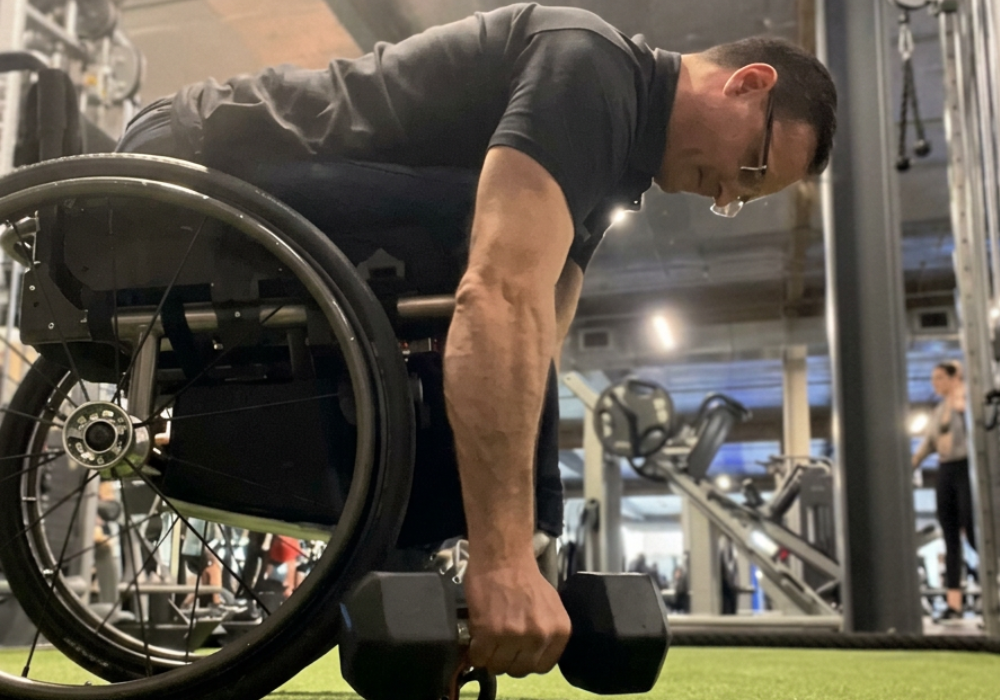
- One-arm dumbbell rows. One side at a time. Keep your back steady and drive the elbow back.
- Broom stretch. Finish with this. Wide grip, slow and easy, only as far as feels good.
|
Move |
What it works |
Home option |
|
Seated row |
Upper back, shoulder blades |
Resistance band looped around a pole or door anchor |
|
Pull-down |
Lats, upper back |
Band anchored high on a door |
|
One-arm dumbbell row |
Upper back, back of shoulder |
Dumbbell, band or a full water bottle |
|
Broom stretch |
Chest, front of shoulder |
A broom or any long stick |
Why pulling exercises matter most for wheelchair users.
Think about what your shoulders do all day. Push forward on the rims. Push down to transfer. Push up to reach. Almost every big movement in a chair is a push.
So the muscles at the front of your shoulders and chest get strong and tight, and the ones at the back, between your shoulder blades, get left behind. Over time that pulls your shoulders forward and rounds your upper back. Your shoulder joint ends up working from a worse position on every push.
Pulling exercises fix the imbalance. Rows and pull-downs train the muscles that hold your shoulder blades back and down, which gives the joint a stable base to work from.
Before you start.
- Brakes on. Every exercise here is done from your chair. Lock it down first.
- Warm up. A few slow shoulder roll-backs and arm circles.
- Gem’s neck health exercises also make a good warm-up.
- Start light. The goal is control, not weight. If you can’t hold good form for the last few reps, go lighter.
1. Seated rows.
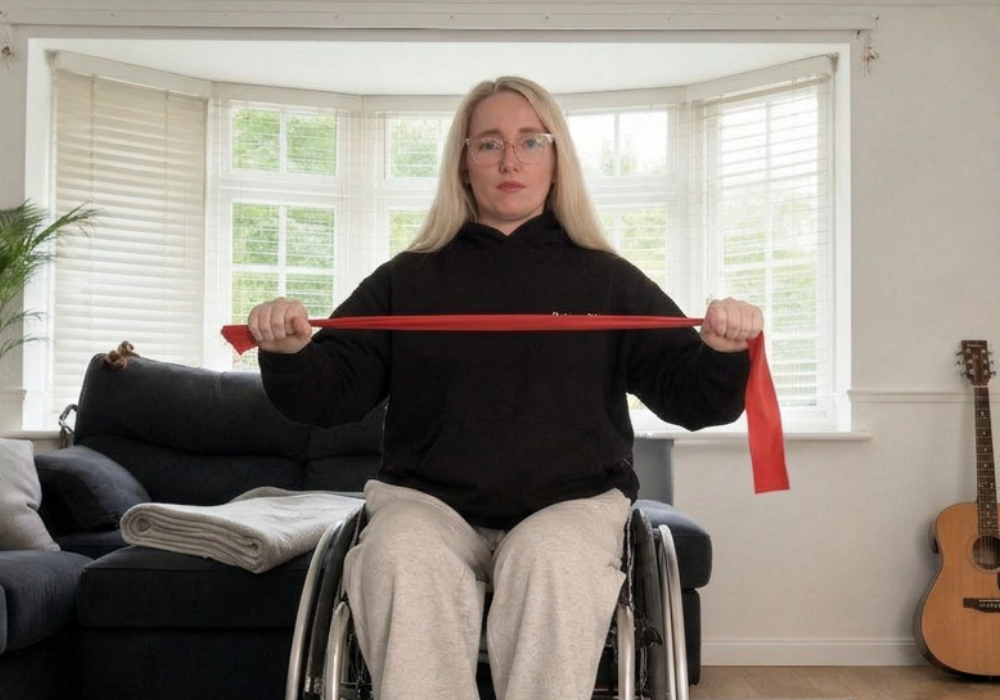
Sit tall, facing the cable machine or band. Grab the handles with your arms out straight.
Pull your elbows back past your body and squeeze your shoulder blades together, like you’re trying to hold a pencil between them. Pause. Then let your arms go back out slowly.
Common mistake. Leaning back to move the weight. Keep your chest up and still, and let your back muscles do the pulling.
At home. Loop a resistance band around a pole, a table leg or a door anchor at chest height.
2. Pull-downs.
Grab the bar a bit wider than your shoulders. Pull it down to the front of your chest, leading with your elbows, then let it rise back up under control.
Keep the bar in front of your chest, never behind your neck. Pulling behind your neck forces your shoulder into an awkward, twisted position under load and strains your neck. Your shoulders already have enough to deal with.
Common mistake. Yanking the bar down with momentum. Slow down. Two seconds down, two seconds up.
At home. Anchor a band high on a door and pull down the same way.
3. One-arm dumbbell rows.
One side at a time. Brace your free hand on your knee, thigh or wheel so your trunk stays put; this matters a lot if your core balance is limited. Lean forward slightly, let the dumbbell hang, then drive your elbow back towards your hip.
Keep your back steady. The only thing moving is your arm.
Common mistake. Twisting your body to lift the weight. If you’re twisting, the dumbbell is too heavy.
At home. Any dumbbell works, or a band under your foot plate, or a full water bottle to start.
4. Broom stretch.
Finish with this. It opens up the chest and the front of the shoulders, the bits that get tight from all that pushing.
Hold a broom with a wide grip, hands well past shoulder width. Slowly lift it up and back, slow and easy, only as far as feels good. Hold for 30 or so seconds, then lower it down.
Common mistake. Forcing the range. This should feel like a stretch, never a pinch. Widen your grip if it’s too much.
How often should you train?
A good starting point is 2–3 sessions a week, with a rest day in between. Start with 2–3 sets of 10–15 reps on each move, and add weight only when the last few reps feel easy and your form stays clean.
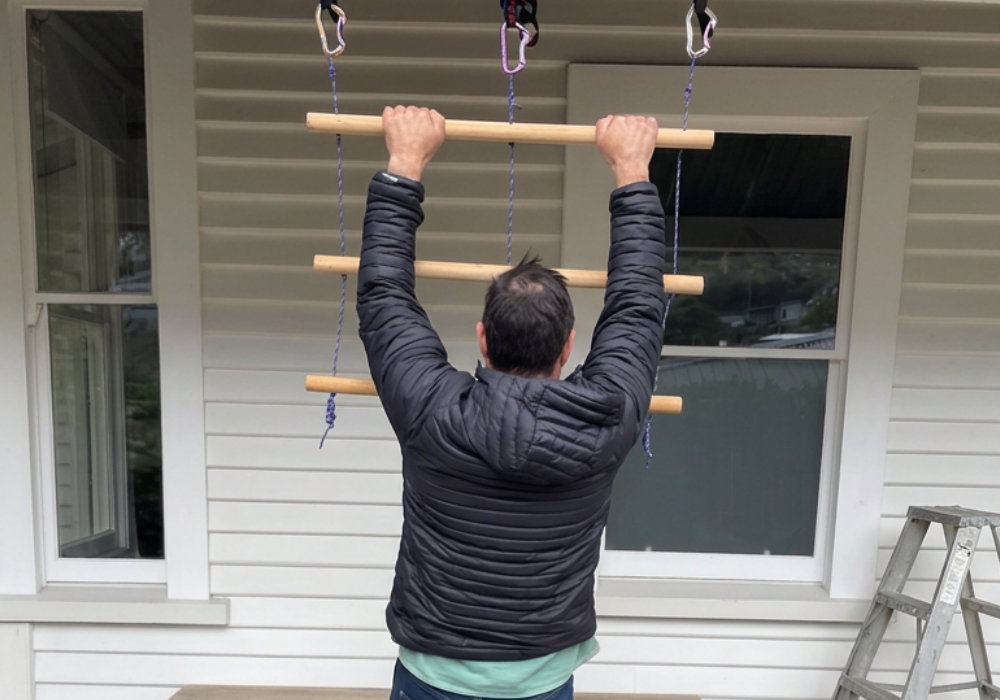
Pair it with dead hangs, recovery and good pushing.
Strength is one part of looking after your shoulders. The others:
- Shoulder health for wheelchair users: strengthen, protect and recover
- Neck health: Gem’s desk setup tips and 3 daily exercises
- Dead hangs for shoulder health: my DIY hanging bars
- Shoulder recovery for wheelchair users: my weekly routine
- Wheelchair pushing technique and chair setup for healthy shoulders
FAQ.
What are the best shoulder exercises for wheelchair users?
Pulling exercises that work the back of the shoulders and the upper back: seated rows, pull-downs and one-arm dumbbell rows. Pushing a chair already works the front of your shoulders, so training the back keeps them balanced. Finish with a stretch for the chest and front of the shoulders.
How often should wheelchair users do shoulder exercises?
Two to three times a week is a good starting point, with a rest day between sessions. Consistency matters more than heavy weights.
Can I do these exercises at home without a gym?
Yes. A resistance band and a door anchor cover rows and pull-downs, a dumbbell or water bottle covers the one-arm row, and a broom is all you need for the stretch.
Why shouldn’t you do pull-downs behind your neck?
Pulling the bar behind your neck twists your shoulder into an awkward position under load and strains your neck. Pulling to the front of your chest works the same muscles without the risk.
Should I exercise if my shoulder hurts?
Talk to a physio first. Gentle strengthening often helps, but the right exercises and load depend on what’s causing the pain. Stop any move that gives you sharp or pinching pain.
About the author.
Mike Brown is a T10 complete paraplegic and has pushed a manual wheelchair every day since a spinal cord injury in 2012. He’s the co-founder and CEO of Adaptdefy, a company that designs products for wheelchair users, built from lived experience. He co-created LapStacker, the world’s first retractable carry system for wheelchairs.
Mike writes from more than a decade of pushing, transferring and training in a chair. Since his spinal cord injury in 2012, Mike has spent 14 years working out what actually helps in daily wheelchair life. The tips he shares on Adaptdefy's blog and social media come from real trial and error, conversations with the Adaptdefy community, and a commitment to passing on the knowledge.
Mike isn’t a medical professional. His posts share lived experience, not medical advice, so check with your physio or medical team before trying something new.

Leave a comment
All comments are moderated before being published.
This site is protected by hCaptcha and the hCaptcha Privacy Policy and Terms of Service apply.