



I read a couple of articles, The Guardian’s “The dead hang delight” and TIME’s “What hanging from a bar for 30 seconds can do for your body”, about how good hanging is for your shoulders. Lengthening them out, opening them up. So I built a rig at home to try dead hangs for shoulder health, every single day.
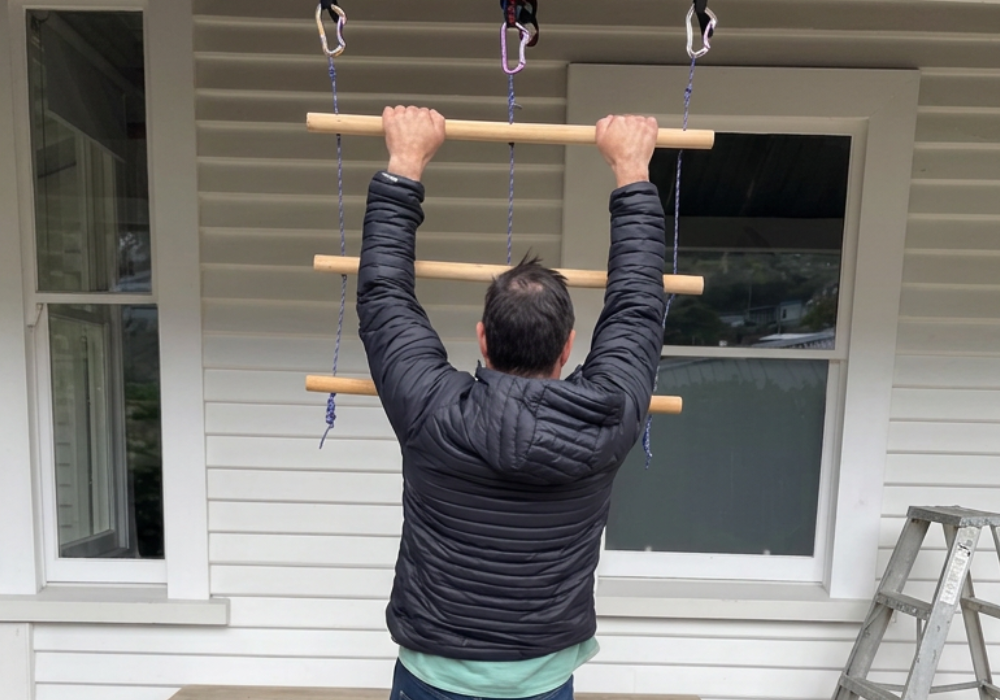
Most dead hang advice starts with “step off a box and grab the bar.” That doesn’t work for me and my wheelchair. So I built my own: a rope, three bars and a carabiner on a beam. I hoist myself up, hang free, then lower myself back down into my chair.
Here’s how it works, how I built it, and how to try dead hangs safely if you want to give it a go.
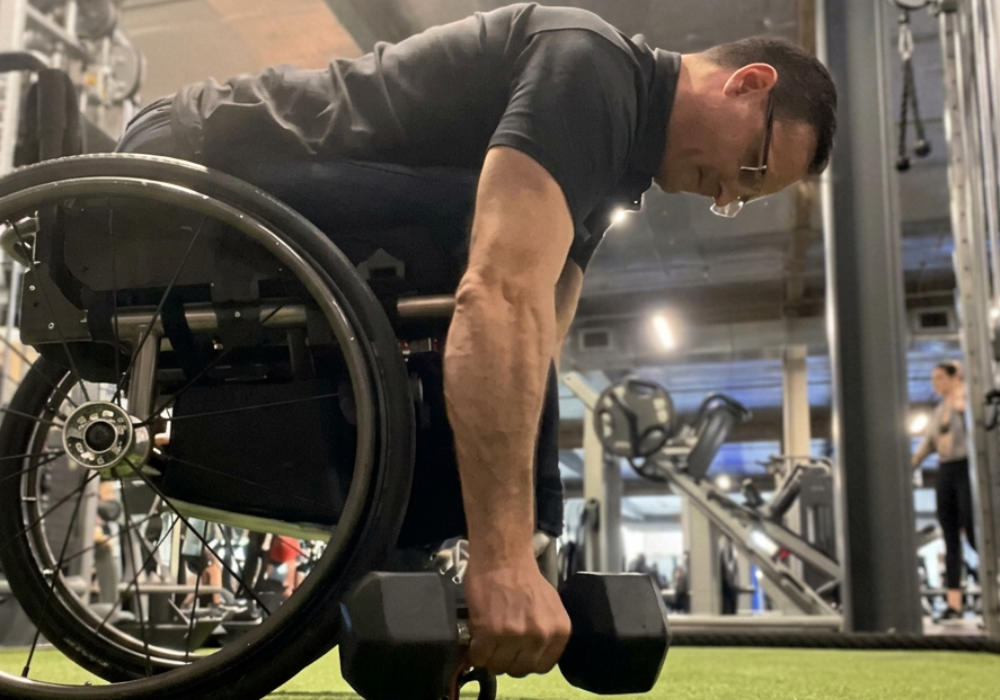
This is part of our series on Shoulder health for wheelchair users: strengthen, protect and recover
What is a dead hang?
A dead hang is simply hanging from a bar with your arms straight and your body weight pulling down. No pull-up, no swinging. Just hanging.
What I can tell you is why it made sense to me. My shoulders spend all day pushing forward and pressing down. Hanging is the one position I never get into otherwise. If my strength routine builds the back of my shoulders, hanging is the bit that stretches everything out at the end.
What dead hangs might do for your shoulders.
Here's what stuck with me from The Guardian and TIME articles:
Mobility and stability.
A lot of people find that dead hangs increase their shoulder mobility and stability, which can help prevent injuries.
Posture.
Hanging also works the back muscles, which helps with the posture problems that come from sitting all day. Sound familiar?
Pulling, not pushing.
Two kinds of dead hangs. A passive hang is where you just hang. An active hang is where you pull your shoulders back and down, which works the pulling muscles. For wheelchair users who push all day, that's exactly the balance we need.
Consistency beats one big effort.
One-off 60-second hang does very little. Hanging several times a day for a month is where the shoulder benefits come from.
The evidence.
Let's be straight about the evidence, though. Many of the results are anecdotal; more research is needed, and I couldn't find any on Dead hangs for wheelchair users.
So I'm treating this as an experiment. I'm doing it daily, and I'll let you know how it goes.
My DIY hanging bars.
The rig is simple. A length of rope hangs from a beam, clipped on with a carabiner. Three bars are tied along the rope at different heights, like a short ladder.
Before my injury, I did a lot of rock climbing, so I know how to set this up with the right equipment. I used some rope and carabiners from my rock climbing days, and anchored it to a structural beam.
- The bottom bar is low enough to reach from my chair.
- The middle bar is the step up.
- The top bar is where I hang from.
I grab the lower bars and hoist myself up hand over hand until I can reach the top bar and hang free. When I’m done, I work my way back down the bars and lower myself onto my wheelchair.
How I do a dead hang from my wheelchair.
- Set up the chair. Park under the rig, brakes on. Position the chair so you can get back into it safely.
- Climb up. Grab the bottom bar, then hoist yourself up the bars until you can reach the top one.
- Hang. Grip the top bar about shoulder width and let your body hang free. Keep a little tension in your shoulders; don’t just flop.
- Try one-arm hangs. Once two-arm hangs feel easy, I shift weight onto one arm at a time. This is advanced. Build up to it.
- Lower back down. Work your way down the bars under control and lower yourself onto your wheelchair.
How to start safely.
- Start with 10 seconds or less. Add time slowly, a few seconds at a time.
- Stop before you’re fatigued. A tired shoulder is a less stable shoulder.
- Keep some tone in your shoulders. Hanging completely limp puts more stress on the joint.
- Have someone with you the first few times, especially for getting back into your chair.
- Skip it if your shoulders are unstable. If your shoulder has dislocated before, feels loose, or you’re hypermobile, dead hangs probably aren’t for you. Talk to a physio first.
Who shouldn’t do dead hangs?
If you’ve had a shoulder dislocation, have a loose or unstable shoulder, are recovering from a shoulder injury or surgery, or get sharp pain or pins and needles when your arms are overhead, check with a physio before trying this. The same goes if getting in and out of the rig isn’t safe for your level of function.
Pair it with strength and recovery.
Hanging is one piece of my routine. I’ve written about the rest of my shoulder routine:
- Shoulder health for wheelchair users: strengthen, protect and recover
- Neck health: Gem’s desk setup tips and 3 daily exercises
- Shoulder recovery for wheelchair users: my weekly routine
- Shoulder exercises for wheelchair users: a 4-move strength routine
- Wheelchair pushing technique and chair setup for healthy shoulders
FAQ.
Are dead hangs good for your shoulders?
They can help open up tight shoulders and build grip strength, and many people find them a good counter to sitting and pushing all day. The research on shoulder health specifically is limited, and they’re not a good fit for people with unstable or hypermobile shoulders.
Can wheelchair users do dead hangs?
Yes, if you have the upper-body strength to get on and off the bar safely. A rig with lower bars you can reach from your seat, like mine, lets you climb up and lower yourself back into your chair.
How long should you dead hang?
Start with 10 seconds or less and build up slowly. Stop before your grip or shoulders get tired.
How do you make a DIY dead hang bar?
Hang a rated rope from a structural beam with a rated carabiner, and tie or fix bars along it at different heights. Make sure every part is rated well above your body weight.
About the author.
Mike Brown is a T10 complete paraplegic and has pushed a manual wheelchair every day since a spinal cord injury in 2012. He’s the co-founder and CEO of Adaptdefy, a company that designs products for wheelchair users, built from lived experience. He co-created LapStacker, the world’s first retractable carry system for wheelchairs.
Mike writes from more than a decade of pushing, transferring and training in a chair. Since his spinal cord injury in 2012, Mike has spent 14 years working out what actually helps in daily wheelchair life. The tips he shares on Adaptdefy's blog and social media come from real trial and error, conversations with the Adaptdefy community, and a commitment to passing on the knowledge.
Mike isn’t a medical professional. His posts share lived experience, not medical advice, so check with your physio or medical team before trying something new.

Leave a comment
All comments are moderated before being published.
This site is protected by hCaptcha and the hCaptcha Privacy Policy and Terms of Service apply.