




A wheelie is not a trick. It's one of the most practical, freeing skills you can develop as a wheelchair user, and once it's in your toolkit, you'll use it constantly: on hills, at curbs, carrying lunch, navigating grass. The payoff is real.
A wheelie is not a trick.
It's one of the most practical skills you can learn as a wheelchair user.
This is the complete guide. Use it as a starting point, then follow the links into whichever topic you need.
What is a wheelchair wheelie?
A wheelchair wheelie is the skill of balancing a manual wheelchair on its two rear wheels, with the front casters completely off the ground. It's achieved by pushing the rear wheels forward sharply to shift your centre of gravity over the rear axle.
There are three distinct types. A quick pop to clear an obstacle. A bigger lift for kerbs and drops. A sustained hold for slopes, rough ground, and carrying things with both hands free. Each one builds on the last, and all three have genuine daily use.
Why it matters more than you think.
|
Benefit |
What it gives you |
|
Hill safety |
Shifts centre of gravity back, prevents forward tipping on descents |
|
Carrying capacity |
Creates a level, stable lap platform for hands-free carrying |
|
Confidence and perception |
Challenges assumptions about wheelchair users, builds real self-assurance |
Most people start learning wheelchair wheelies for one reason and discover the other two along the way. The hill safety benefit is the one that surprises people most. A skill that looks like showing off turns out to be the thing keeping you in your chair on a steep descent.
Read more: Why you should master the wheelchair wheelie
The 3 types of wheelchair wheelies.
|
Type |
Level |
Best for |
|
Bunny hop |
Beginner |
Cracks, thresholds, small bumps, low obstacles |
|
High wheelie |
Intermediate |
Standard kerbs, drops, back decompression |
|
Back-wheel balance |
Advanced |
Slopes, rough grass, carrying items, resting |
Work through them in that order. The bunny hop teaches you the pop, the high wheelie teaches you the height, the back-wheel balance teaches you the hold. Each one is useful on its own. Together they cover almost any terrain.
Read more: The 3 types of wheelchair wheelie and how to use them
Before you start learning a wheelie.
|
What to check |
Why it matters |
|
Anti-tip devices on |
Stops a backwards overshoot becoming a fall |
|
Spotter behind you |
Safety net and confidence during the learning phase |
|
Flat, clear space |
Grass preferred, more forgiving if you fall |
|
Tyre pressure equal |
Uneven pressure pulls the chair sideways |
The anti-tip devices and spotter in particular: they let you push a little further without fear, and that's exactly when you find the balance point.
How to do a wheelchair wheelie.
The basic technique comes down to five steps.
- Position your hands at 10–11 o'clock on the handrims, fingers under the rim, light grip.
- Use a backward rock. Roll back a few centimetres first, then push forward hard immediately. No pause between the two.
- Let the casters lift. As you push forward, let your weight settle back into the seat.
- Find the balance point. Small hand movements between 12 and 1 o'clock. Tipping forward? Push forward. Tipping back? Pull back.
- Land it. Pull back gently or lean your chest slightly forward. Casters down.
The clock-face analogy is the one that tends to stick: pull back to 10 o'clock, push forward to 2 o'clock. Everything else follows from there.
Read the full beginner's guide to wheelchair wheelies
Common mistakes when popping a wheelie.
|
Mistake |
Fix |
|
Gripping too tight |
Loosen up, the balance point communicates through your hands |
|
Leaning forward on take-off |
Let your weight go back into the seat |
|
Pushing from a dead stop |
Roll back slightly first, then push forward immediately |
|
Overshooting backwards |
Tuck your chin and pull back hard on the rims |
The most common one is gripping too tight. You can't feel the balance point through a white-knuckle grip. Loose hands are the difference between finding it and not.
Read more: common wheelchair wheelie mistakes and how to fix them
Real-world uses.
Once you have the wheelie, here's where it earns its keep.
Up kerbs. Approach at a slow roll, pop the wheelie as the rear wheels reach the kerb face, lean forward gently to lower the casters onto the upper surface. Timing takes a few goes; the technique stays the same.
Down slopes. Get into the back-wheel balance on the flat before the descent, not once you're already on it. Keep your weight back. Small hand movements control speed. Bring the casters down as the ground flattens.
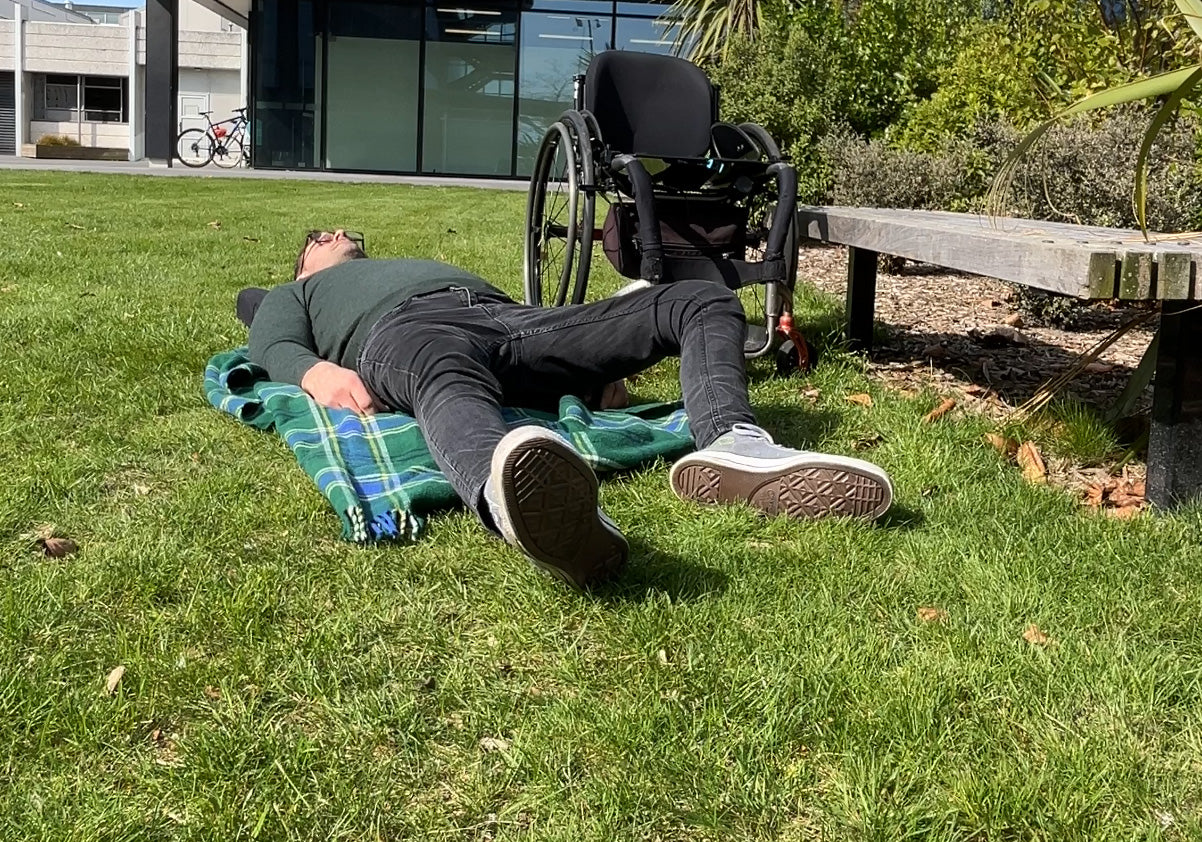
Rough ground and grass. The front casters are the problem on soft terrain. They sink, catch, and drag. In the back-wheel balance, there are no front casters to worry about.
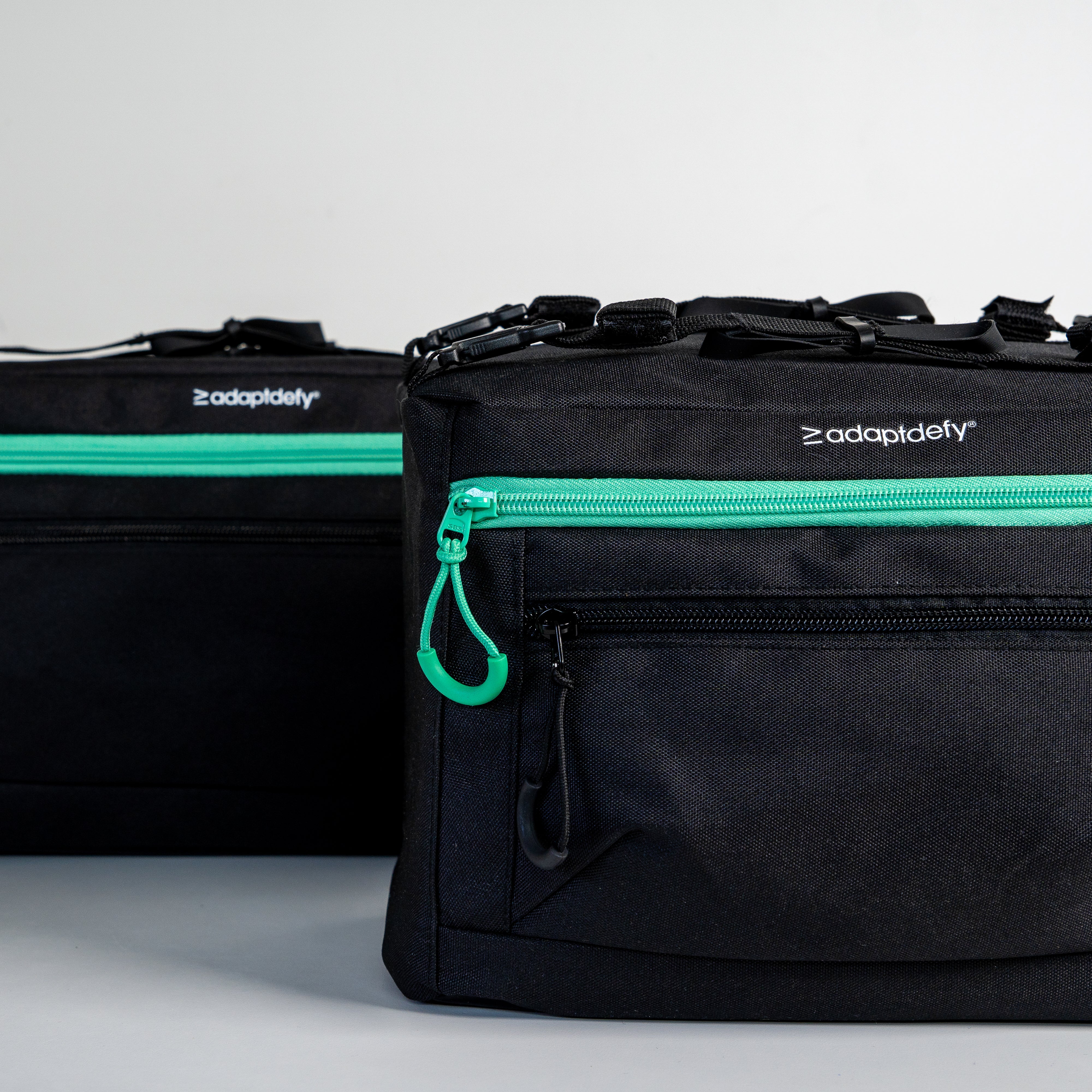
Carrying things. The back-wheel balance levels your lap completely. Combined with LapStacker, you can carry virtually anything hands-free. The retractable straps hold everything in place while you roll.
Read more: The 3 types of wheelchair wheelie and how to use them
Why is a wheelie so important?
Once the balance point starts to click, the back-wheel balance becomes a position you actively choose, not just a skill you're practising. Lock your brakes, lean back, settle in. Hands-free, level, stable.
It stops being something you're learning and starts being part of how you move.
Frequently asked questions.
Can anyone learn to do a wheelchair wheelie?
Most manual wheelchair users with sufficient upper body strength can. How quickly you progress depends on your injury level, core stability, and shoulder function. The technique is the same regardless; the pace of learning varies.
Do I need a special wheelchair to do wheelies?
No. Rigid-frame chairs respond more directly because they have less flex, which makes them easier to learn on. Folding chairs work too. The technique doesn't change.
Is it safe to do wheelies in a wheelchair?
Yes, with the right setup. Anti-tip devices and a spotter for the learning phase. Once you've got the balance point reliably, the risk drops off significantly.
Can I do a wheelie in a power wheelchair?
No. Power wheelchairs are too heavy and the mechanics don't allow it. This guide covers manual chairs only.
What is the hardest part of learning a wheelchair wheelie?
Finding and holding the balance point. Popping the casters is accessible within a few sessions. The sustained hold takes weeks. The key is loose hands and consistent short practice sessions rather than long infrequent ones.
Go deeper read more about wheelies.
This guide covers the essentials. Each spoke article goes further.
How to do a wheelchair wheelie: a beginner's guide Step-by-step technique, setup, and what to do when it's not working.
The 3 types of wheelchair wheelie: techniques and real-world use The bunny hop, high wheelie, and back-wheel balance, plus how to use each one for kerbs, slopes, rough ground, and more.
Why you should master the wheelchair wheelie The daily benefits, the mastery tips, and what this skill gives you beyond the terrain it opens up.
About the Author
Adaptdefy is a wheelchair accessories and education brand founded by wheelchair users to serve wheelchair users. Adaptdefy’s mission is to solve everyday, real-world problems for the adaptive community. We believe that knowledge, innovation and community can help you adapt, defy and thrive, regardless of your situation.
Adaptdey was founded from lived experience after Mike Brown sustained a T10 complete spinal cord injury in 2012. Since then, he has spent over a decade developing practical knowledge of wheelchair skills, adaptive techniques, and the daily realities of wheelchair life.
Adaptdefy's flagship product, LapStacker, is the world's first and only patented retractable carry system for wheelchairs, developed by Mike to solve a problem he encountered daily. It is used by wheelchair users across more than 40 countries.
Mike has formed a team of Adaptdefiers, who write and contribute to the Adaptdefy blog covering wheelchair skills, techniques, gear, and independence, drawing on personal experience and sharing first-hand experience of wheelchair life. All in pursuit of living a greater than life.


Leave a comment
All comments are moderated before being published.
This site is protected by hCaptcha and the hCaptcha Privacy Policy and Terms of Service apply.