

Quick answer: There are three types of wheelchair wheelies. The bunny hop is a quick caster lift for clearing small obstacles. The high wheelie is a bigger lift for kerbs and drops. The back-wheel balance is a sustained hold on the rear wheels, used for slopes, rough terrain, and carrying things hands-free. Work through them in that order.
The 3 types of wheelchair wheelies.
Not all wheelies are the same. Think of these as a progression, each one building on the last.
|
Type |
Level |
Hold duration |
Best used for |
|
Bunny hop |
Beginner |
Instant pop |
Cracks, thresholds, small bumps |
|
High wheelie |
Intermediate |
Instant pop |
Kerbs, drops, back decompression |
|
Back-wheel balance |
Advanced |
Sustained |
Slopes, rough grass, carrying items, resting |
Type 1: the bunny hop.
A quick, small lift of the casters to clear a crack in the pavement, a doorway threshold, or a low curb. You're not holding a balance point; you're popping up and landing back down in one fluid motion.
This is the entry-level skill and the one you learn first. If you've read the beginner's guide to wheelchair wheelies, you'll already know the basic pop.
The bunny hop is that pop applied with purpose.
When to use it: Uneven pavement, door thresholds, small raised edges, stones or twigs that would catch the casters. Anything that needs a brief lift rather than a sustained balance.
Type 2: the high wheelie.
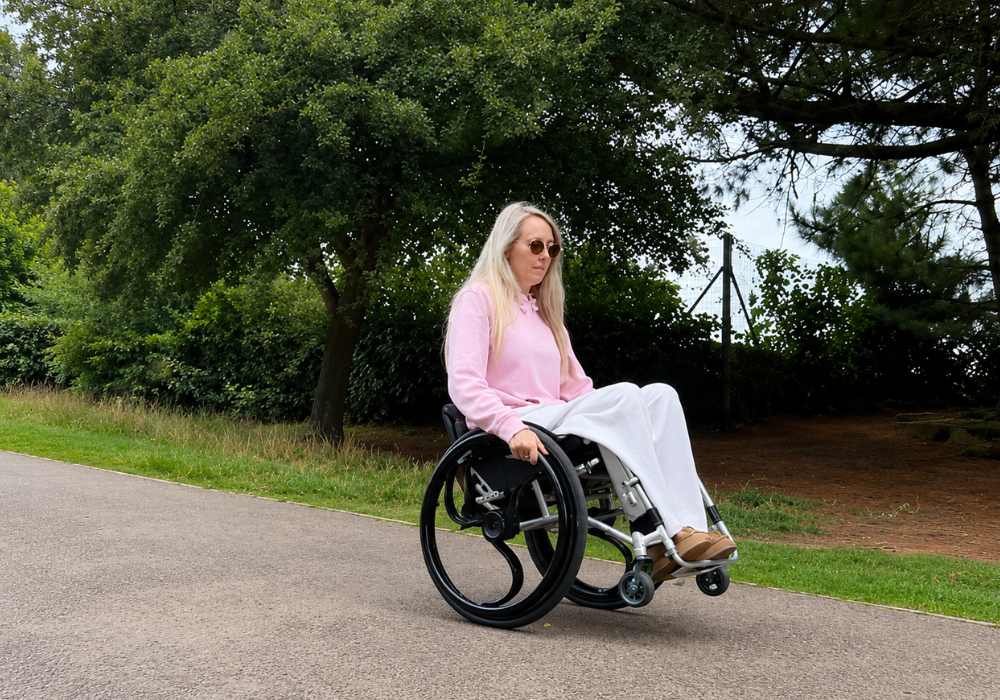
A bigger lean and a harder pull. The technique is the same as the bunny hop, just more of it. More lean, more force, more height. The casters come up higher and you're momentarily airborne at the front before landing back down.
Used to clear standard kerbs, drop down from a raised surface, or decompress the lower back on a long roll. You're still not holding a balance point; this is a pop with more commitment.
When to use it: Standard kerb height, dropping down a step or raised surface, clearing obstacles too high for the bunny hop.
Type 3: the back-wheel balance.
This is the full wheelie. You're balanced on the rear wheels with the casters completely off the ground, and you can hold it. Not for a second, but for as long as you need.
This is what you use for steep grass, rough terrain, long descents, and carrying items on your lap. It takes the most practice and gives the most back. Everything above leads here.
When to use it: Slopes, rough ground, grass, gravel, descending kerbs, carrying items hands-free. Anywhere the front casters would catch, sink, or drag.
Work through them in that order. The bunny hop teaches you the pop, the high wheelie teaches you the height, the back-wheel balance teaches you the hold.
Real-world uses of wheelies.
Once you have mastered three types of wheelies, you will find them invaluable in your everyday life.
How to wheelie up a curb.
This is the bunny hop applied to real terrain.
Approach at a slow roll, not a dead stop. As your front wheels get close to the kerb edge, pop the wheelie so the casters clear it completely. Your rear wheels then meet the curb face and roll up. As they climb, lean forward slightly to bring the casters down gently onto the upper surface.
The timing takes a few goes. Start on very small curbs, 2–3 cm, before moving to standard kerb height. The technique is identical once you've got the pop. The only thing that changes with height is how hard you pull.
One thing that trips people up: popping too early. If the casters come up before your rear wheels are close enough to the kerb, you've got nothing to push off. Get the pop timed to the moment the rear wheels are about to make contact.
How to do a moving wheelie.
A stationary wheelie and a moving wheelie use the same technique, but the feel is different. When you're already rolling, momentum does part of the work. Less force is needed to get the casters up, which also means it's easier to overshoot.
How to do it:
Build up a moderate rolling speed first. Not fast, just steady. Hands start at 11 o'clock, slightly further back than from stationary, because you need less initial force. One firm push from 11 to 2 o'clock. The existing momentum carries the front end up.
Find the balance point the same way as always: small adjustments between 12 and 1 o'clock.
When to use it:
Moving wheelies are particularly useful when you're approaching a curb or rough ground while already rolling. Stopping to set up, then popping from stationary, breaks your rhythm and adds effort. Getting into the wheelie on the roll means you arrive at the obstacle already in the right position.
The same technique applies for transitioning into the back-wheel balance before a slope. Roll toward the descent, pop into the hold while you still have flat ground under you, and arrive at the drop already balanced.
How to wheelie down a slope.
Going downhill is where the back-wheel balance earns its keep.
On a steep slope, if the casters drop, gravity takes over fast. Your weight shifts forward, the chair accelerates, and control goes. The back-wheel balance keeps your centre of gravity over the rear axle. You manage the descent with small hand adjustments rather than fighting the slope.
How to do it:
Get into the back-wheel balance before the slope starts, not once you're already on it. By the time you're rolling downhill, it's much harder to tip back into position.
Once you're in the hold, resist the urge to lean forward as the ground drops away. Keep your weight settled back. Use small hand movements to manage speed: push forward slightly to let the rear wheels roll, pull back slightly to slow. For steeper descents, light brake pressure between adjustments helps.
As the ground flattens at the bottom, lean forward gently to bring the casters down.
The most common mistake: waiting too long to get into the wheelie. Get hold before the slope, not on it.
Steps for a controlled downhill wheelie.
Step 1. Find your entry point. Identify the flat ground just before the slope starts. This is where you get into the hold.
Step 2. Roll at a controlled pace. Don't stop completely. A slow roll into the wheelie is easier than initiating from stationary at the slope edge.
Step 3. Pop into the back-wheel balance on the flat. Get the hold confirmed before you reach the drop.
Step 4.Test the hold. A second or two of small hand adjustments on flat ground before you commit.
Step 5. Roll forward onto the slope. Let the rear wheels move onto the incline while maintaining the balance point.
Step 6. Keep your weight settled back. The slope will pull you forward. Resist it.
Step 7. Use your hands to control speed. Small forward push to let the wheels roll, small pull back to slow. Keep the movements minimal.
Step 8. For steep slopes, use light brake pressure. A brief squeeze between hand movements bleeds speed without disrupting the balance point.
Step 9. Bring the casters down at the bottom. As the ground flattens, lean forward gently. Land the casters, resume normal rolling.
How to wheelie on rough ground and grass.
The front casters are the problem on rough terrain. They catch on divots, sink into soft ground, and get stuck on gravel. In the back-wheel balance, there are no front casters to worry about.
It's harder than on smooth ground because the rear wheels have to work through the surface resistance. But it's far easier than trying to push on all four wheels through grass.
A few things to know:
More push is required. Soft ground adds resistance. You'll feel the extra effort from the first stroke.
Keep the balance point slightly further back than normal. A touch more tip gives the rear wheels more clearance and keeps the casters from brushing the ground when the terrain rises.
Build up distance gradually. Start with short patches, a metre or two, bring the casters down, then go again. Full lawn crossings come later.
Using the wheelie to carry things.
The back-wheel balance creates something genuinely practical: a level platform.
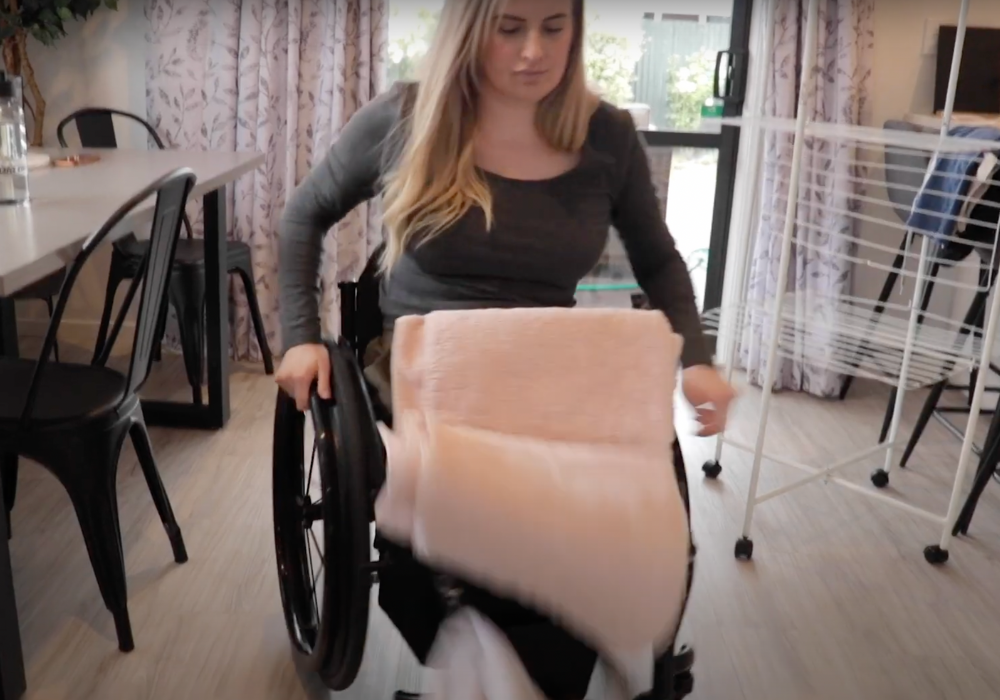
When all four wheels are on the ground, your lap tilts slightly forward. Things slide. Go into the back wheel balance and that surface levels out completely. Bag from the shops, coffee, laptop, anything you'd normally need to juggle becomes manageable.
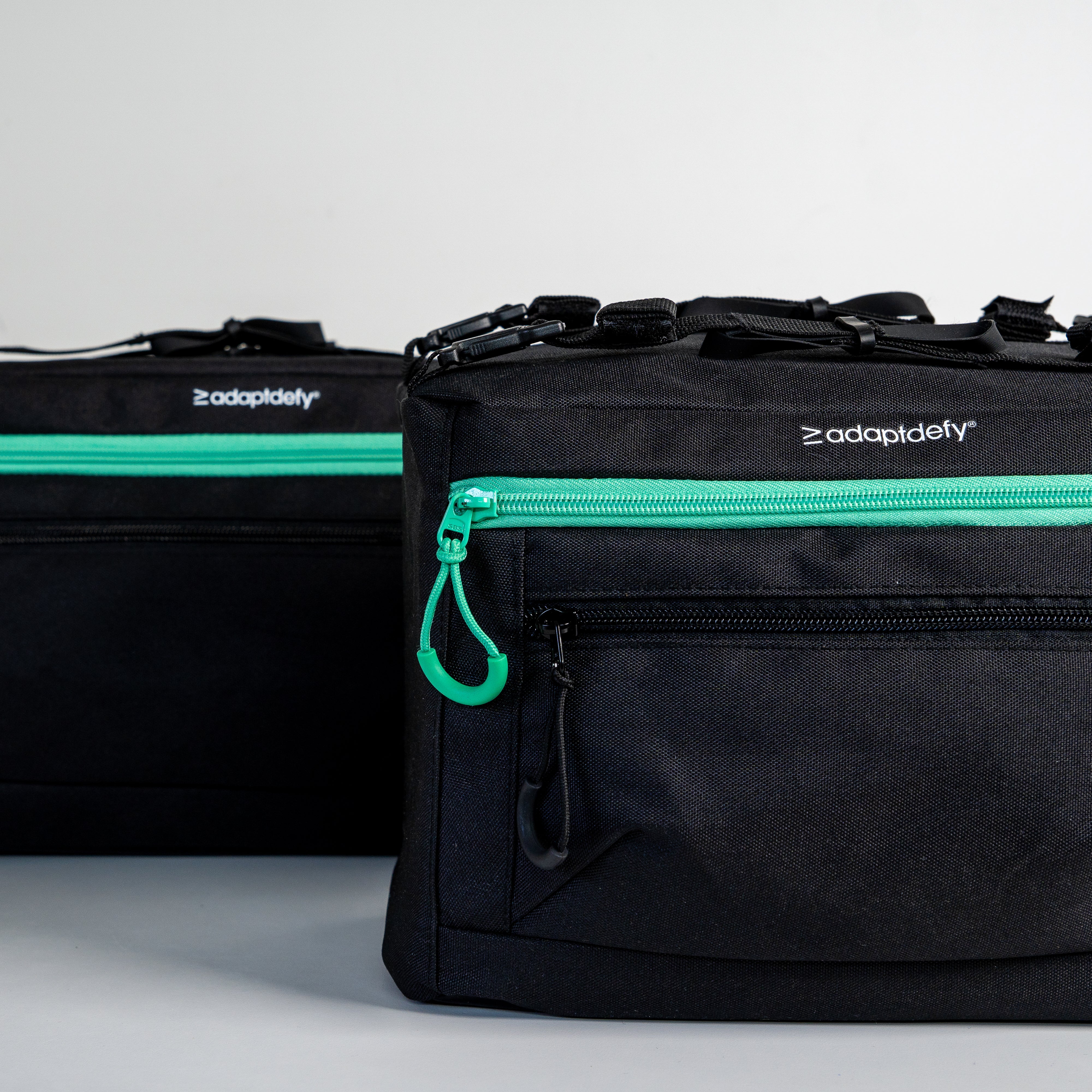
LapStacker makes it even better. The retractable straps hold items securely on your lap while you roll, so your hands stay free for pushing. It's one of those combinations that, once you've tried it, becomes part of how you move through the world.
Which wheelie type should I use?
If you're not sure which wheelie fits the situation, this is the quick reference.
|
Situation |
Type to use |
|
Small crack or uneven pavement |
Bunny hop |
|
Door threshold or low raised edge |
Bunny hop |
|
Standard kerb (rolling up) |
High wheelie |
|
Dropping down a step or kerb |
High wheelie |
|
Descending a slope |
Back-wheel balance |
|
Rough ground or grass |
Back-wheel balance |
|
Carrying items on your lap |
Back-wheel balance |
|
Long descent with speed control needed |
Back-wheel balance |
Ready to go further?
why you should master wheelchair wheelies.
Mastering these wheelchair skills changes more than how you move. It changes what you expect from the world around you and what you expect from yourself. Read 3 reasons you should master a wheelie in your wheelchair.
Frequently asked questions about wheelchair wheelies.
What is the easiest type of wheelchair wheelie to learn?
The bunny hop. It requires the same basic pop as the fundamental wheelie but you don't need to hold a balance point. Most people can get a usable bunny hop within a week of learning the basic technique.
Can I wheelie up a kerb in any wheelchair?
Most manual wheelchairs can manage a kerb wheelie. Rigid-frame chairs respond more directly because of less flex, but folding chairs work too. Tyre pressure, seat position, and your own technique matter more than the chair type.
How do I stop myself from tipping on a slope?
Get into the back-wheel balance before you hit the slope, not on it. Once you're in the hold, keep your weight settled back and resist the instinct to lean forward. Let small hand movements control your speed rather than shifting your body weight.
Is the back-wheel balance safe on steep slopes?
With practice, yes. Start on gentle inclines before anything steep. The back-wheel balance gives you significantly more control on a descent than rolling on all four wheels, but it requires a solid hold before you take it onto serious terrain.
Do I need to learn all three types?
Not immediately. The bunny hop gets you through most everyday obstacles. The high wheelie and back-wheel balance open up more terrain and more freedom. Work through them in order and add each one when you feel ready.
About the Author
Gem, known online as Wheels No Heels, is a wheelchair skills and lifestyle content creator who has been a wheelchair user since childhood. Her content draws on decades of lived experience navigating wheelchair life, from daily skills and technique to the broader realities of mobility and independence.
Gem creates content across YouTube and social media, with her strongest presence on YouTube. She works with AdaptDefy as part of their creator community, producing content on wheelchair skills, technique, and lifestyle for a global audience of wheelchair users.
Her perspective is grounded in lifelong wheelchair experience, peer-to-peer in tone, and focused on practical knowledge that serves the wheelchair community directly.

Leave a comment
All comments are moderated before being published.
This site is protected by hCaptcha and the hCaptcha Privacy Policy and Terms of Service apply.