



Your front wheels are the first thing to hit every crack, kerb and doorway. Get them wrong and a gap in the footpath can stop you dead. Get them right and you hardly think about them.
After 30 years in a wheelchair, here's what I've learned about wheelchair casters (or castors, depending on where you live): what I run, the options, and how to choose.
This is part of our guide to wheelchair wheels: rear wheels, casters, tyres and push rims.
The short answer.
Choose wheelchair casters by size, material and fork. Small casters are light and turn quickly but can catch in cracks. Large casters roll over bumps more easily but are heavier and take up more room. Solid casters never go flat, air-filled ones give a softer ride, and single forks are lighter and easier to swap than double forks.
What your casters do.
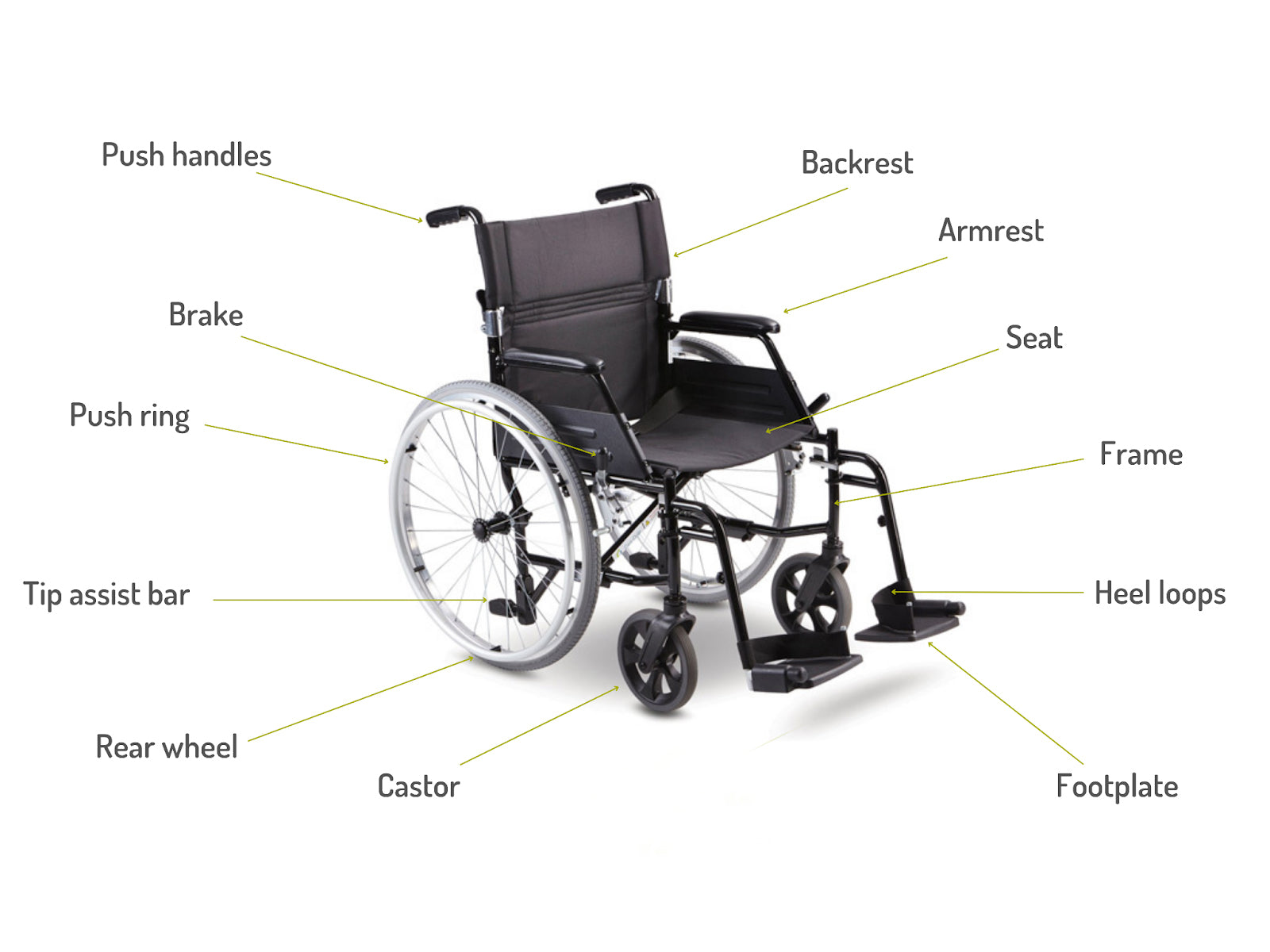
Casters are the two small front wheels on your chair. They swivel, so they steer wherever you push, and they take the first hit from every bump in front of you. Because they're small, they're the part of your chair most likely to catch on a crack or stick in a gap.
My casters.
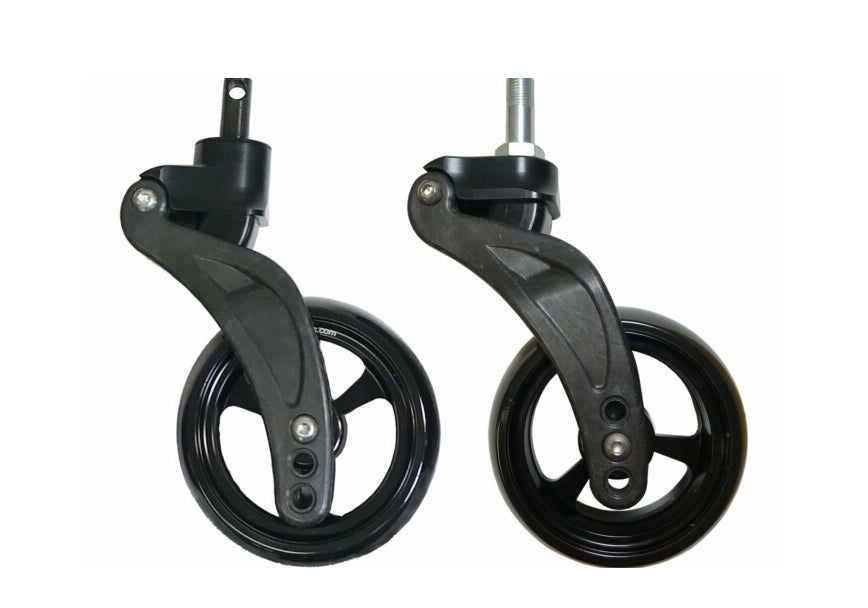
I run 3.5-inch casters, which is a pretty average size. They're small and lightweight, which makes them great for sports and active users. You do have to watch out for cracks and bumps, because they can get caught.
They're single fork, which makes them lighter and cleaner looking. They're easier to swap if I need to do any maintenance, and they're less likely to get caught on doorways.
They're solid, and so far I've never had a problem with them.
Caster types.
|
Type |
The upside |
The trade-off |
|---|---|---|
|
Solid |
Durable, can't go flat, little maintenance |
Firmer ride; you feel more of the bumps |
|
Air-filled (pneumatic) |
Smoother ride, better on uneven or bumpy ground |
Can puncture; needs pumping |
|
Polyurethane |
A middle ground: smooth, some shock absorption, low maintenance |
Can wear faster on rough ground |
|
Soft-roll or shock-absorbing |
Softer material that eases vibration |
Usually cost more |
For most everyday pushing, solid or polyurethane casters do the job with almost no maintenance. If you're often on rough or bumpy ground, air-filled or soft-roll casters can take the edge off.
Caster size.
|
|
Small casters |
Large casters |
|---|---|---|
|
Weight |
Lighter |
Heavier |
|
Turning |
Quick, tight turns |
Slower, wider swing |
|
Bumps and cracks |
More likely to catch |
Roll over more easily |
|
Space |
Tuck in under the footplate |
Can hit your feet or footplate |
|
Good for |
Sports, active users, indoors, smooth pavement |
Rough footpaths, grass, gravel |
Changing caster size also changes the height of the front of your seat, which can change your whole sitting position. Get a seating specialist to check your setup before you swap to a different size.
Single fork vs double fork.
A fork is the bracket that holds the caster wheel.
- Single fork: holds the wheel from one side. It's lighter, looks cleaner and is easier to swap for maintenance. It's also less likely to catch on doorways. This is what I run.
- Double fork: holds the wheel from both sides. It's sturdier, and it's common on standard and heavier-duty chairs.
Do suspension casters and forks help?
Some casters and forks are designed to absorb shock.
A softer caster is worth a try if bumps bother you.
Casters for the beach, snow and rough ground.
Standard casters dig into sand, snow and soft grass. Wider casters help a little. A clip-on front wheel attachment lifts your casters off the ground completely and rolls on one big front wheel instead.
Read more: Wheelchair power add-ons: FreeWheel, SmartDrive, Batec and Bowhead compared
Read more: Off-road wheelchair tyres: what I run on the beach and in the snow
Look after your casters.
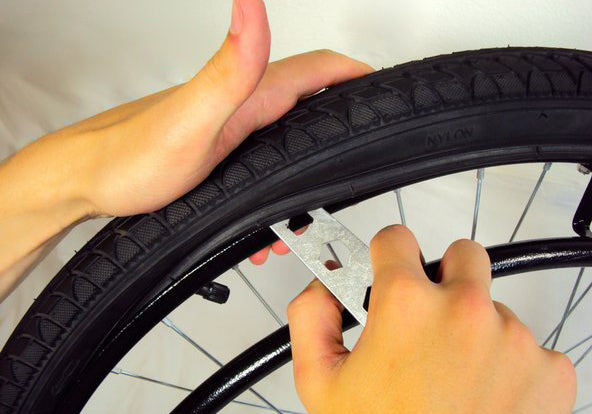
- Clean out hair and thread. It winds around the axle and bearings and stops your casters spinning freely.
- Check for wobble. If your casters shake or flutter at speed, the bearings may be worn or the fork may need adjusting.
- Check they spin and swivel freely. A sticky caster makes every turn harder work.
- Check solid casters for flat spots and cracks, and air-filled ones for pressure.
Read more: How to clean wheelchair castors, and get them rolling smoothly again
How to choose your wheelchair casters.
- Where do you push most? Smooth floors and pavement suit small casters. Rough footpaths, grass and gravel suit larger or softer ones.
- How active are you? Sports and active everyday users usually go smaller and lighter.
- How much do bumps bother you? Try air-filled or soft-roll casters before you pay for suspension.
- How much maintenance do you want? Solid and polyurethane casters need almost none.
- Will it change your seating? A different size changes your front seat height. Check with your seating specialist first.
What casters do you run? Tell us in the comments.
FAQ.
What size casters are best for a wheelchair?
It depends on where you push. Small casters, around 3–4 inches, are light and quick to turn, so they suit active users and smooth surfaces. Larger casters roll over cracks and rough ground more easily but are heavier. I run 3.5-inch casters.
Are solid or air-filled wheelchair casters better?
Solid casters can't go flat and need little maintenance, but give a firmer ride. Air-filled casters are smoother on bumpy ground but can puncture. Polyurethane casters sit in between.
What's the difference between single fork and double fork casters?
A single fork holds the caster from one side, so it's lighter, cleaner looking and easier to swap. A double fork holds it from both sides, so it's sturdier and common on standard chairs.
Why do my wheelchair casters wobble?
Wobble or flutter at speed usually means worn bearings or a fork that needs adjusting. Hair and thread around the axle can also stop casters spinning freely. Clean them, and get them checked if the wobble stays.
Can I change my caster size myself?
You can physically swap casters, but a different size changes the height of the front of your seat and your sitting position. Check with your seating specialist or dealer first.

Leave a comment
All comments are moderated before being published.
This site is protected by hCaptcha and the hCaptcha Privacy Policy and Terms of Service apply.