





For me, a dirty wheelchair is the same as wearing dirty clothes. My wheelchair is an extension of myself, and I want it to be well presented.
There's a difference between a chair that looks cared for and one that's just been rolled around for six months collecting whatever the footpath had to offer.
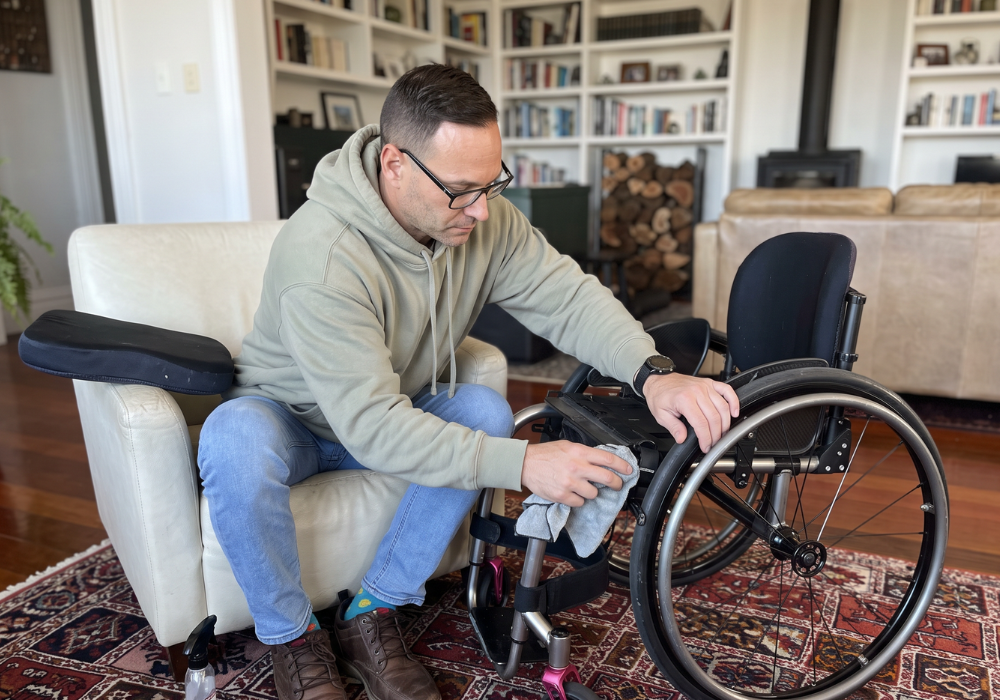
Quick answer: wipe the entire frame with a soft cloth and warm soapy water, working crevices and hardware with a soft brush, then dry it completely before re-lubricating axles and hinges. Soap and water is the default cleaner. Bleach is only ever a last resort, diluted, and kept away from rubber and upholstery.
What you'll need.
- A soft cloth (microfibre is ideal)
- Warm water and mild dish soap
For a deeper clean.
- A soft-bristle brush or an old toothbrush for tight spots
- A wire brush, but only for hardware, never the frame itself
How to clean a wheelchair frame, step by step.
1. Give yourself somewhere comfortable to transfer out.
You'll get a far better clean with the chair empty and yourself free to move around it. Pick a time when you're not rushing, because rushing this is how you end up doing the top half and calling it done.
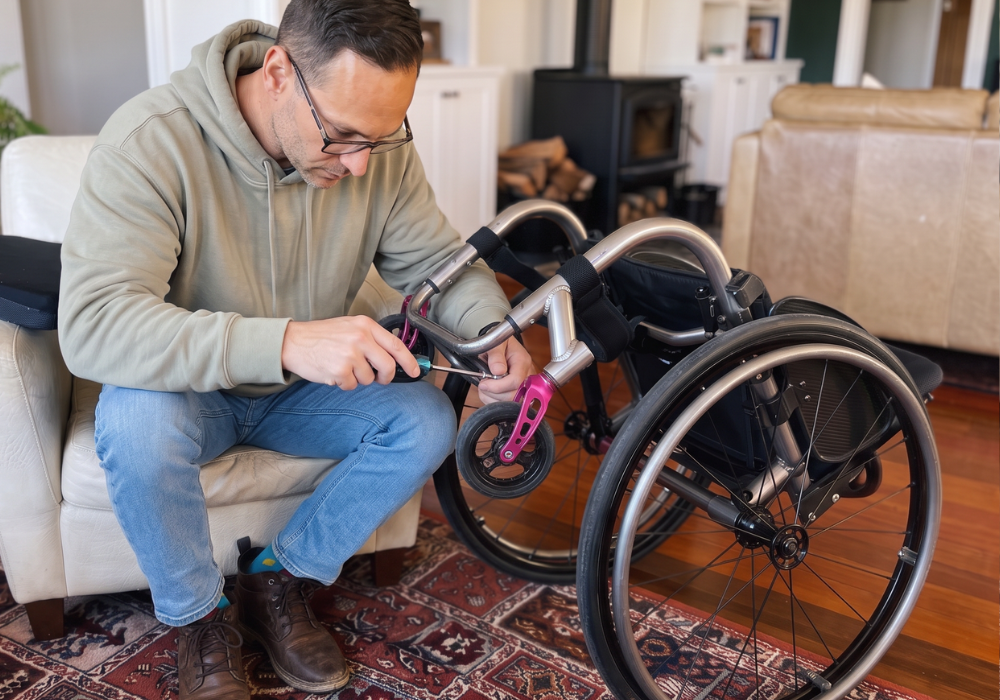
2. Take a wheel off.
With the wheel off you can reach the rim, every individual spoke, and the hub in the middle, instead of wiping the outer edge and pretending. Work around each spoke rather than swiping across all of them at once. Clear out whatever's collected around the axle while you're in there.
What goes wrong: people wipe the quick-release axle pin and put it straight back in wet. Grit and moisture on that pin is what makes a wheel feel notchy going in, and eventually stops the release button seating properly.
3. Do the other wheel.
Same process. Don't skip it because the first one took longer than you expected.
4. Wipe down the whole frame.
With both wheels off, go over the entire chair. The joints and axle housings especially, since that's where grime actually builds up, rather than on the flat surfaces you'd instinctively clean first.
Spray your cleaner onto the cloth, never onto the frame. Moisture sitting in a tight joint is the thing that starts a problem months later.
5. Get into the tight spots.
A soft brush or an old toothbrush handles the seams, weld lines and bolt heads a cloth can't reach.
6. Flip the chair and check underneath.
Turn it upside down and look at what's on the bottom. The underside of your seat sling, the footplate hardware, the base of your underseat bag if you use one. It's the part nobody sees, which is exactly why it collects the most.
7. Dry everything completely.
Not "leave it to air dry." Actually dry it, with a cloth, including the joints. A damp frame is how you hand corrosion a head start for free.
8. Clean the bearings.
Check our guide on how to clean castor bearings. You'll probably find heaps of hair and gunk in them.
How often should you clean a wheelchair frame?
A quick wipe weekly, a proper clean like the one above monthly.
Slot it in beside your castor clean and your tire pressure check, because doing all three in one sitting takes barely longer than doing one, and the whole chair ends up in better shape than doing any of them reactively when something already feels wrong. The full wheelchair maintenance routine lays out what belongs where.
A cloth and a bit of detergent, used regularly, beats an occasional heroic deep clean every time.
Can you use bleach on a wheelchair frame?
Short answer: mostly no. A damp cloth can handle almost everything a frame picks up. If you're dealing with something water doesn’t cut it, a mild soap or detergent can be used on bare metal or hard plastic.
You'll see some sources say never use bleach at all and others say diluted bleach is fine. Both are half-right. It can be fine on the metal or plastic, but it's bad for everything soft attached to that metal. Be careful near rubber, foam, or upholstery, and always rinse off and dry thoroughly afterwards. For me, it's not worth the risk.
If you need to actually disinfect rather than clean, say after illness, use an isopropyl alcohol wipe on hard surfaces and follow your manufacturer's guidance for the upholstery. That's a different job from a monthly clean and it shouldn't become your default.
How to stop your wheelchair frame from rusting?
Most of the advice out there is written for snow and road salt. I live in Christchurch, so my rust risk isn't ice, it's salt air and rain. Same enemy, different delivery method.
Either way, the fix is the same: dry the frame properly after every clean, don't let it sit wet, and keep hardware lubricated so moisture can't settle in and sit there.

Leave a comment
All comments are moderated before being published.
This site is protected by hCaptcha and the hCaptcha Privacy Policy and Terms of Service apply.