

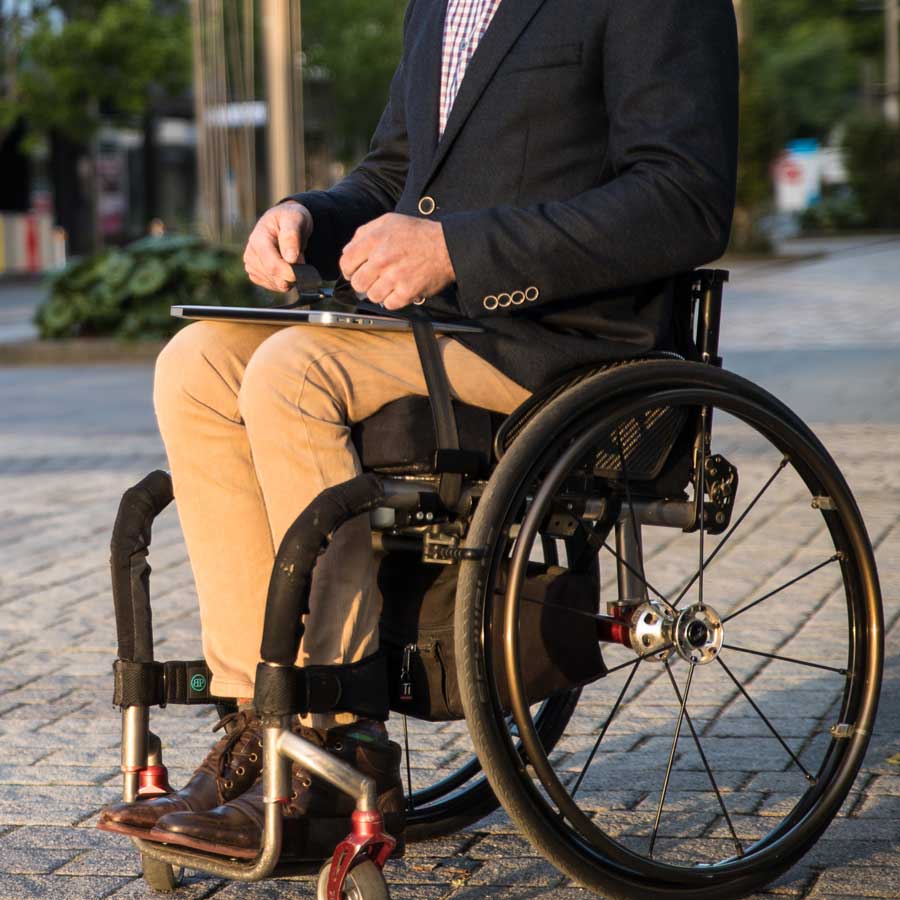
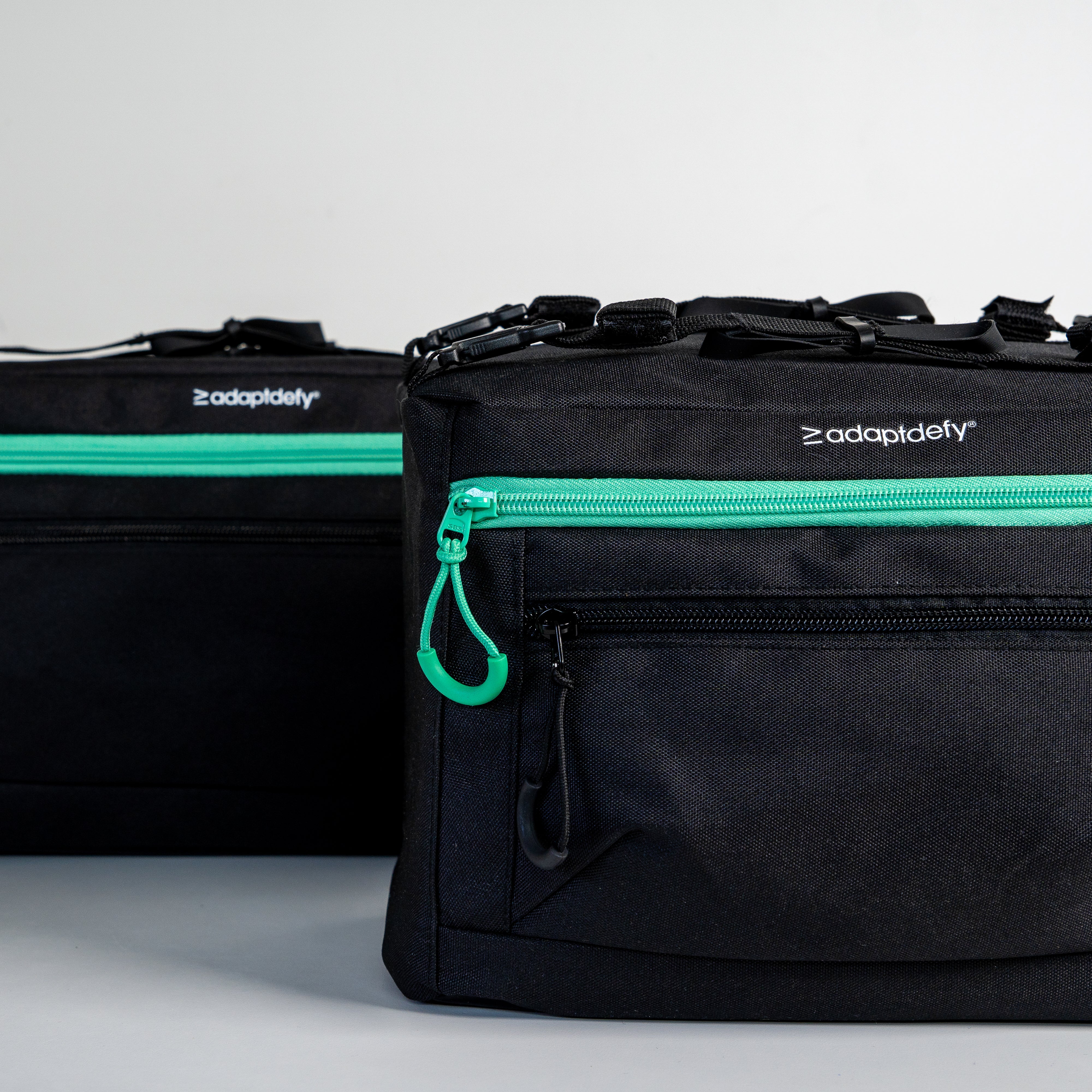
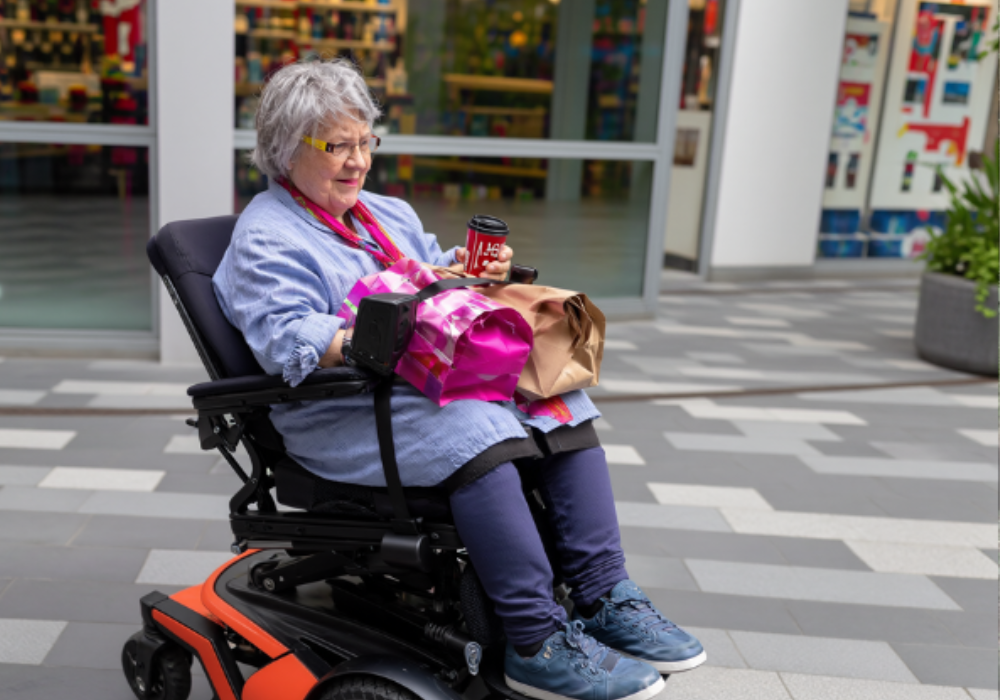
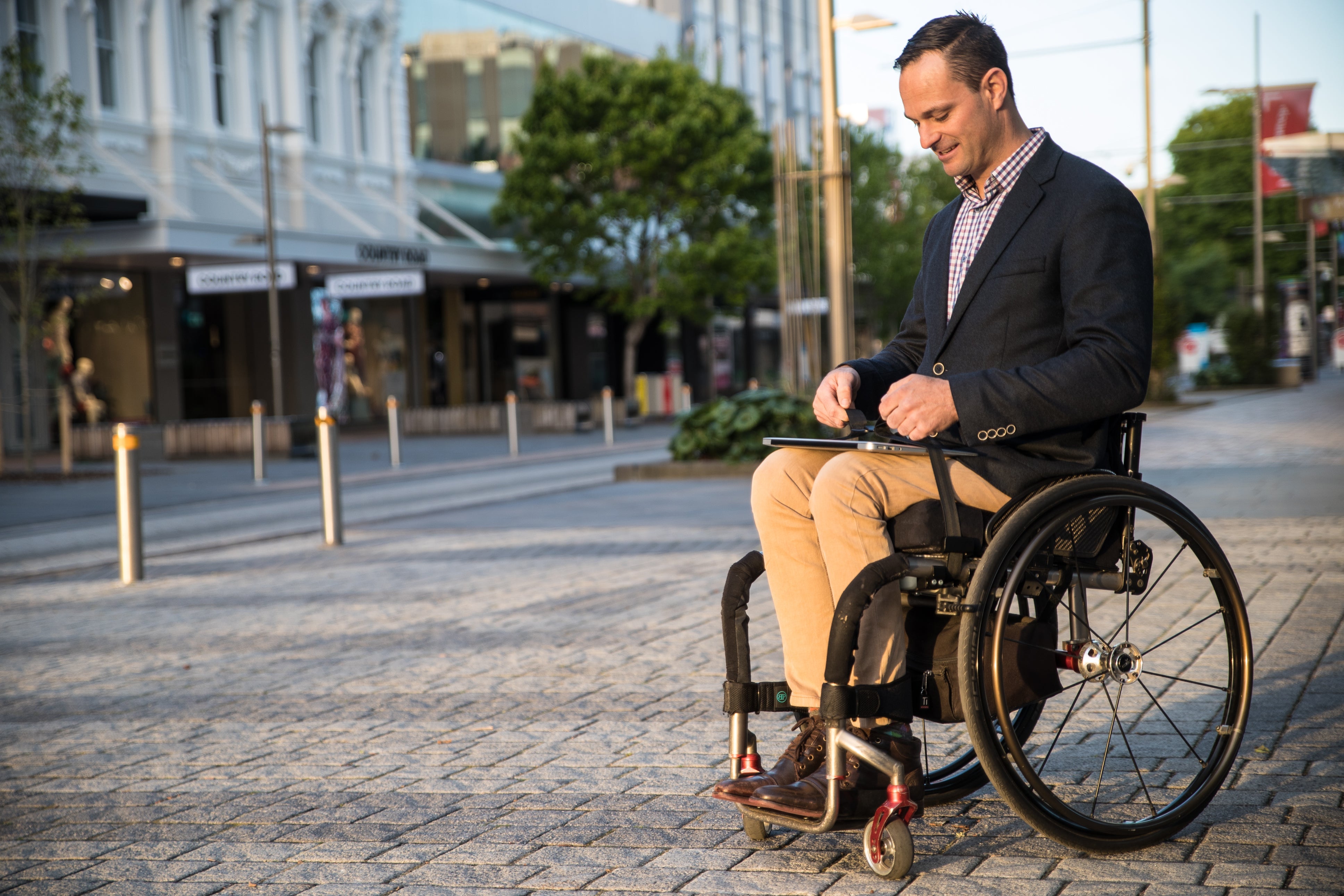
We asked our community of wheelchair users to share their best clothing tips. Over 100 responses came back. Most of the women didn't just want to be comfortable. They wanted to look good.
This article is built from those responses. It covers the wheelchair women's fashion category by category - bottoms, tops, skirts, heels, coats, bags - with the specific tips that actually hold up in a real day out. Some of these tips are counterintuitive. Some are so simple you'll wonder why nobody told you sooner.
Take what works for your chair, your injury level, and your life.
What changes when you're dressing for a seated body?
Most clothing is cut for a standing body. When you sit down in a chair and stay seated all day, a few things shift. Waistbands that felt fine standing dig into your stomach. Shirt backs ride up and expose your waist. Trouser hems that hit your ankle while standing ride up to your calf the moment you push. Sleeves that looked perfectly proportioned trailed close enough to catch in the wheels.
The adjustments that fix all of this aren't complicated. Size up your inseam by one to two inches. Switch to elastic or maternity-style waistbands. Choose tops with a longer back hem. Keep sleeves at 3/4 length or shorter. Everything else in wheelchair women's fashion follows standard style logic - fit, colour, proportion - applied to a seated body.
Leggings, trousers and jeans: where to start.
Leggings are the most wheelchair-friendly mainstream item. No modification, no adaptive spend, no waiting for specialist sizing. High-waist cotton or bamboo works as-is.
Maria explains what makes them work in a wheelchair specifically:
"I wear a lot of leggings because they don't cut into my groin and bugs can't crawl up my legs like in jeans." - Maria
For most of the community, leggings paired with a longer-back top cover 80% of everyday wear. Not glamorous. But it's the foundation everything else builds on.
Maternity-style waistbands are the less obvious option worth knowing about. Designed for an extended seated position and a changing body, they map almost perfectly onto wheelchair use. No digging at the stomach, no rolling, no pressure across the abdomen.
"I like wearing maternity pants. They just feel comfortable." - Steph
For trousers and jeans, the key requirements are stretch in the waistband and seat, a longer inseam than your standing size, and no back pockets. Lane's inseam tip is specific enough to be immediately useful:
"Buy one size larger in inseam because otherwise the pants ride up your ankles when sitting. Standing I would wear a 30" inseam but now that I'm seated I wear a 32" inseam." - Lane
Shannon adds the sizing-up principle across categories, not just trousers:
"I size up in clothes that button up the front, boots, and jeans. Long johns under pants is a good idea. I consider the lengths of pants and skirts as everything rides up when I sit." - Shannon
For mainstream brands that actually work: Mish Mash (very stretchy waist and seat), M&S 360 Flex, Ben Sherman. For longer inseams, G-Star Raw goes up to 38 inches and has thigh pockets accessible while seated. Per's endorsement of Wrangler covers durability - he's been wearing them for 46 years in his chair.
Tops: the detail nobody talks about.
The most important feature in any top for wheelchair users isn't the sleeve length, the neckline, or the fabric. It's the back hemline.
When you're pushing a manual chair, the back of your top rides up constantly. A standard-length hemline ends up exposing your lower back and the waistband of your trousers within minutes of leaving the house. A longer back hem - sometimes labelled "high-low hem" or "longer back" on product pages - keeps you covered and saves you from adjusting every ten minutes.
"I actually prefer short sleeve or 3/4 sleeve shirts. I also live in leggings and shirts that have a long back." - Melissa
The front is a different problem. Too much fabric at the front bunches at the waist when seated, creating a thick, uncomfortable pile of fabric across your lap.
"I like crop tops or shorter length shirts because I don't like the bunching around my waist." - Taylor
So the ideal women's top in a wheelchair has a longer back and a shorter or standard front. Some brands call this a "high-low hem." It solves both problems at once.
For sleeves: loose, long sleeves catch in the wheels. For manual chair users this is a safety issue, not just an annoyance. 3/4 sleeves ending at or near the elbow are the consistent community answer.
"No loose sweaters for women, I always get them caught on the side of my chair." - Kathleen
If you want long sleeves, Emmerson's solution costs nothing:
"Soft snagless hair elastics take care of your long sleeves. I fold my cuffs over them so I can keep my sleeves exactly where I want them." - Emmerson
One more thing to check on every top before you buy: the back. Any zip, hardware, or raised seam on the back of a top digs into your spine when you lean against your chair back. It's not obvious until you've worn it for two hours.
"Tops without zips on the back, sharp on your back. Soft cotton stretch material with soft openings, easy to get on and off without losing balance and no pressure points." - Belle
Skirts and dresses: how to wear them properly.
Skirts and dresses absolutely work in a wheelchair. The women in our community wear them regularly. The details are what matter.
Length: just above the knee. This is the consistent answer across everyone who shared advice. Too short and the skirt rides up to an awkward point the moment you start pushing. Too long and the fabric trails into the wheels or covers your feet in a way that looks untidy. Just above the knee keeps you covered without the management problem.
"Don't wear anything below the knee, not too floaty, and wear 80 to 120 denier tights to keep your legs warm." - Alice
Cut: fitted at the hips, fuller below. A pencil skirt or tight fabric across the thighs will ride up constantly. Fitted through the hips with some flare below gives the skirt structure so it doesn't move when you do.
"With skirts, fitted around hips then fuller to stop them riding up round your thighs." - Val
Fabric: Jersey wins. Cotton jersey, bamboo jersey, any soft knit. Silk, tight spandex, and structured woven fabrics show every seat crease and don't move with the body. Natural fabrics breathe better against the cushion material.
Angela's jersey dress formula is worth writing down. It covers everyday wear and smarter occasions without any modification:
"I wear Jersey dresses that finish just on the knee and are comfy, with some warm soft leggings which keep my injured leg safe and warm, sensible lace ups, a cardy, and if cold, a wool coat, because they are more flexible and stay buttoned up." - Angela
Tights underneath:80 to 120 denier for warmth and coverage. Alice specifies the denier because it matters - anything lighter than 80 denier won't hold warmth for someone who can't feel cold developing in their legs.
For warm weather and shorts, Alice has a practical detail that most people discover the hard way:
"If you're wearing shorts and you're grocery shopping, put a newspaper or something on your knees first or you get grid marks on your legs all day." - Alice
Can wheelchair users wear heels? Yes - with one adjustment.
The short answer is yes. Heels are completely wearable in a wheelchair. The catch is that the footplate height needs to match the heel height, or your knees end up raised at an angle that affects your posture and your skirt coverage.
"Shoes with a heel not a wedge or trainers. The heel stays on my footrest better." - Val
Heels actually sit more securely on a footplate than flat-soled shoes in some cases - the heel edge catches the footplate edge rather than sliding. Wedges don't behave the same way; the sole length means they can slide off.
The grip tape detail from Michelle is the one most people miss:
"Grip tape, either on your heels/shoes or on your foot plate. I wear high heels regularly so it's vital to keep my feet on my chair." - Michelle
Grip tape costs about $5 from a hardware shop. Apply it to the footplate surface and your feet stay in place through the day without adjusting.
For laces:the community has largely moved on. Slip-on shoes or shoes with a rear zip (Vans sk8-hi is the specific recommendation) are more practical and stay done up. Swelling is worth factoring into fit - seated for long periods, feet can change size through the day, so shoes with adjustable closures or generous fit are worth buying for.
Coats and jackets: the most underserved category.
Most women's coats are designed to hang from the shoulders on a standing body. In a wheelchair, a long coat drapes across the lap, trails on the ground, and gets caught in the wheels. Our second community reel focused on coats specifically and produced the most detailed responses in our entire dataset.
Two features come up repeatedly as non-negotiable: short length and two-way zip.
Short length keeps the coat above seat height so it doesn't drag. Two-way zip means you can open the bottom while staying warm at the top - which is exactly what you need when seated for hours.
"Two way zipper jackets are far more practical in a chair." - Nicole
"I need cover right down to the seat at the back to keep my lower back warm and a two-way zip at the front. So many jackets and particularly, fleeces do not have a two way zip so they bunch up." - Anne
Anne also adds two coat details that appear nowhere in standard fashion guides:
"I find sloping zipped pockets easier to use than horizontal. A zipped, breast pocket for keeping items secure." - Anne
Sloping pockets allow natural arm movement when reaching from a seated position. Horizontal pockets require reaching across in a way that often means fumbling or missing the pocket entirely. Chest pockets are accessible when seated in a way that hip-level pockets aren't.
Rosie's version of this applies across tops and jackets:
"Bonus points if the pockets are on the chest not the waist! Makes it so much easier to access when sat down." - Rosie
For manual users, Morvenna's observation about thick coats is worth noting before you buy:
"I hate the way coats bunch up as I'm rolling. Sleeves always get ruined as they rub on our wheels and get covered in mud when the ground is wet. I bought some sleeve protectors last winter, which were helpful to keep sleeves dry and prevent them from tearing. I also find thick coats restrict my speed." - Morvenna
Sleeve protectors are the practical fix. Thick, structured coats restrict the shoulder rotation needed to push efficiently - something almost no coat review mentions. For structured fabrics, wool holds its shape better than a bulky puffer when seated.
"A wool coat, because they are more flexible and stay buttoned up." - Angela
And for users with limited hand function or single-arm use, magnetic closures remove the dressing problem entirely:
"I prefer the magnetic closure garments, as a stroke survivor with only the use of my right arm and leg these work perfectly for me!" - Matt
Bags and accessories: where wheelchair fashion gets interesting.
Cross-body bags worn at the front are the standard answer for bags in a wheelchair. Not handbags on the back of the chair (balance issue, and you can't reach them while moving) and not backpacks (same problem, plus posture).
"Cross body bags worn across the chest, not the back, are reachable quickly." - Nicole
But accessories are also where wheelchair fashion offers a real style opportunity that most guides miss. In a wheelchair, the upper body is the visual focal point. You're at eye level with seated people and below eye level with standing people - which means what you do with your upper body, your neckline, your jewellery, and your accessories has more visual impact than it would standing.
Bold necklaces, earrings, scarves, and upper body prints draw the eye up and express personality without any wheelchair-related compromise. Emmerson takes this practically:
"I also always wear these cheaply made washer necklace to hang my reading glasses around my neck, they never fall off unlike the traditional cords that attach to the arms." - Emmerson
The reading glasses trick is worth knowing regardless of personal style - but the broader principle is that accessories are your friend in a wheelchair, not an afterthought.
Colour and pattern in a wheelchair.
The practical advice is to go dark. Your hands are on your wheels all day. Things land in your lap. Sleeves brush surfaces. Dark colours hide all of it.
"I try to get them dark so they don't look as dirty, cause I wipe my hands on them all the time. My sleeves get so dirty too, try to get darker tops." - Kristy
But dark doesn't mean boring. Upper body prints, patterns, and colour work well in a wheelchair specifically because the upper body is the focal point. A dark trouser with a striking top or patterned top is a practical formula that also looks deliberate and put-together.
Shannon breaks the colour rule when she wants to, and that's a reasonable position:
"I sometimes break some 'rules' and wear white clothes, impractical shoes and sleeves that aren't tight fitting." - Shannon
Wear what you want. The dark clothing advice is for active days out. Save the white for lower-activity occasions.
How do wheelchair users keep warm in winter?
Cold legs without sensation are still getting cold. That's a circulation and skin health issue. The layering approach is what works.
80 to 120 denier tights under skirts and dresses are the starting point. Alice specifies the denier because it matters - thin tights provide almost no protection from the cold when you're not generating heat through movement.
Under trousers, long johns are the consistent recommendation. Shannon:
"Long johns under pants is a good idea." - Shannon
The best cold-weather discovery in our community dataset costs about $15. Angelina:
"If you use a kids sleeping bag in the winter as a lap blanket it prevents the wind and snow from getting on your feet and legs. If you lay a blanket on your chair before transferring into it, you can wrap it around you better." - Angelina
A kids' sleeping bag works better than most commercial wheelchair lap blankets because it has an insulated base, blocks wind from the footplate up, and stays in the lap without slipping. Kate adds a waterproof workaround for rainy days:
"I do carry a dog blanket to stay warm too as it is waterproof." - Kate
Knee-high compression socks cover both warmth and circulation. Joey:
"Compression socks. Knee high at minimum." - Joey
For outerwear in winter, the wool coat formula from Angela covers both style and warmth: wool coat, jersey dress, leggings underneath, sensible shoes. Warm, looks deliberate, and no adaptive spend required.
Frequently asked questions.
Can women in wheelchairs wear skirts?
Yes. The key details are length (just above the knee), cut (fitted at the hip, fuller below), and fabric (jersey or cotton). Add 80-120 denier tights for warmth and coverage. Avoid anything below the knee or in a floaty unstructured fabric.
Can women in wheelchairs wear heels?
Yes. Adjust the footplate height to match the heel height, add grip tape to the footplate, and choose a block heel over a wedge. The heel edge sits more securely on the footplate than a flat sole.
What bags should women in wheelchairs use?
Cross-body bags worn at the front - not handbags on the chair back (balance issue) and not backpacks. Belt bags worn at the waist also work.
How do wheelchair users stay warm in winter?
80-120 denier tights under skirts. Long johns under trousers. A kids' sleeping bag as a lap blanket - it blocks wind and snow better than most commercial lap blankets. Wool coat for outerwear. Knee-high compression socks.
Style in a chair is personal. These tips from our community are a starting point, not a rulebook.
Shannon says it best:
"I sometimes break some 'rules' and wear white clothes, impractical shoes and sleeves that aren't tight fitting." - Shannon
Wear what you like. Know what to watch for. Adapt where it actually matters.

Leave a comment
All comments are moderated before being published.
This site is protected by hCaptcha and the hCaptcha Privacy Policy and Terms of Service apply.