

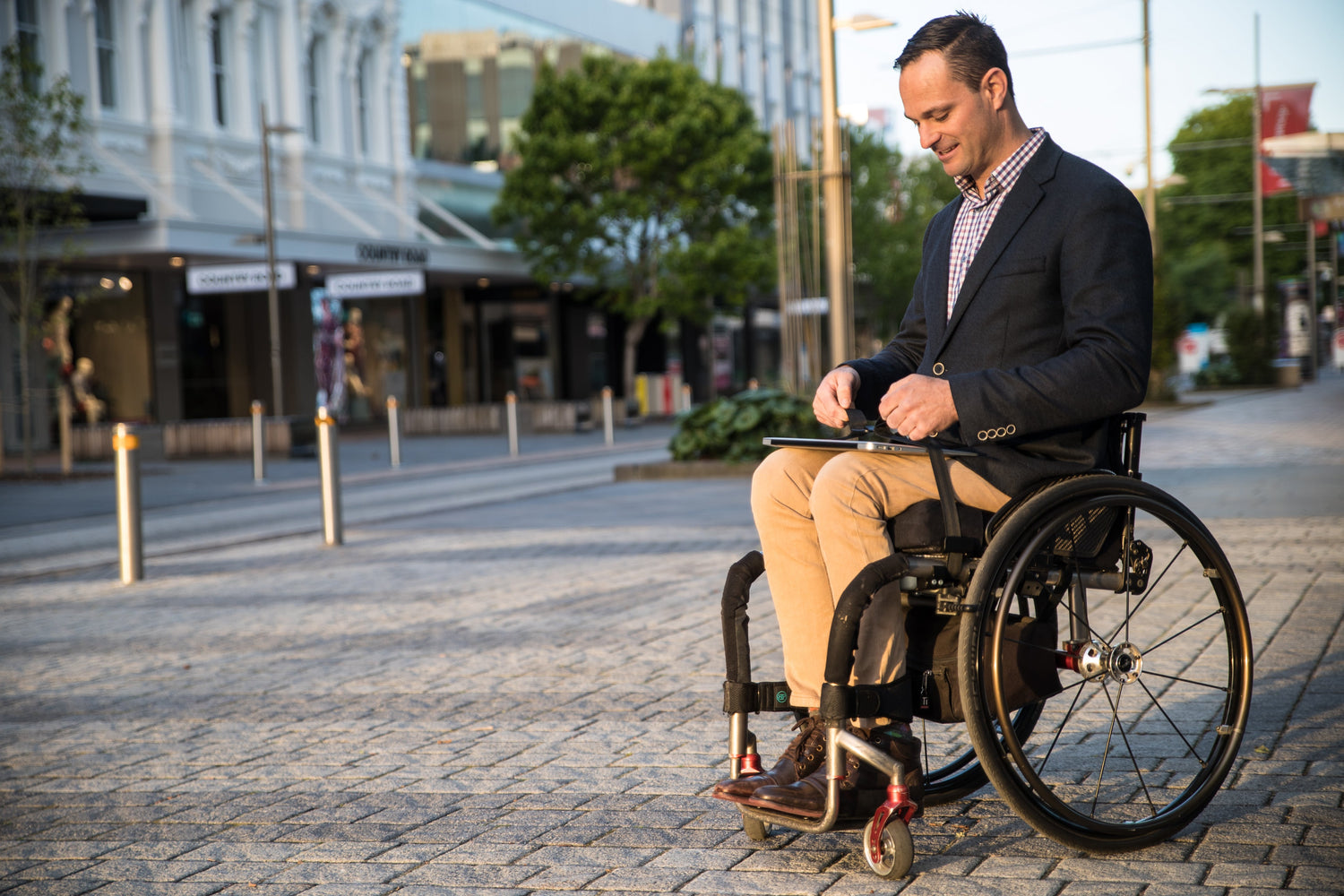
We asked our community of wheelchair users to share their best clothing tips. Over 100 responses came back. A big chunk of them were about pants.
Not adaptive pants from specialist brands at $120 a pair. Just pants. What to buy, what to avoid, which mainstream brands actually work, and what to do with the ones that almost work but don't quite.
This is what they said.
What are the key features of wheelchair-friendly pants?
Before buying any pair, run through this checklist. It applies across leggings, trousers, and jeans - buy before you modify rather than modify after you've already bought the wrong thing.
| Part of pants | Look for | Avoid |
|---|---|---|
| Waistband | Elastic, pull-on, or maternity-style; wide and soft with full-circle stretch | Rigid waistbands, stiff belts, any waistband with no give |
| Inseam / length | One to two inches longer than your standing size | Your standing inseam — hems ride up to mid-calf when seated |
| Seat & thigh | Stretch fabric; spandex or elastane blend that recovers its shape | Stiff fabric with no stretch; hard creases are a pressure injury risk |
| Back pockets | None — buy without or remove with a seam ripper | Any back pocket; sits directly on your cushion and creates a pressure point |
| Front pockets | Thigh-level cargo pockets or chest pockets, accessible when seated | Standard hip pockets on loose-cut jeans — they snag in wheels; inaccessible seated |
| Closures | Elastic pull-on, magnetic, or side zip for easy dressing | Fiddly buttons or standard fly zip if dexterity is limited |
| Fabric | Cotton, bamboo, jersey, or spandex blends that breathe and don't crease | Stiff polyester, rigid denim without stretch; traps heat and folds under pressure |
| Seams & hardware | Flat or minimal seams at cushion contact points | Raised rivets, back zips, thick interior seams at the seat — invisible standing, painful seated |
| Cuffs / hems | Clean hem at the right length for seated wear | Frayed hems that catch in wheels; hemlines that sit at the wrong point when seated |
The one mistake everyone makes buying pants for a wheelchair.
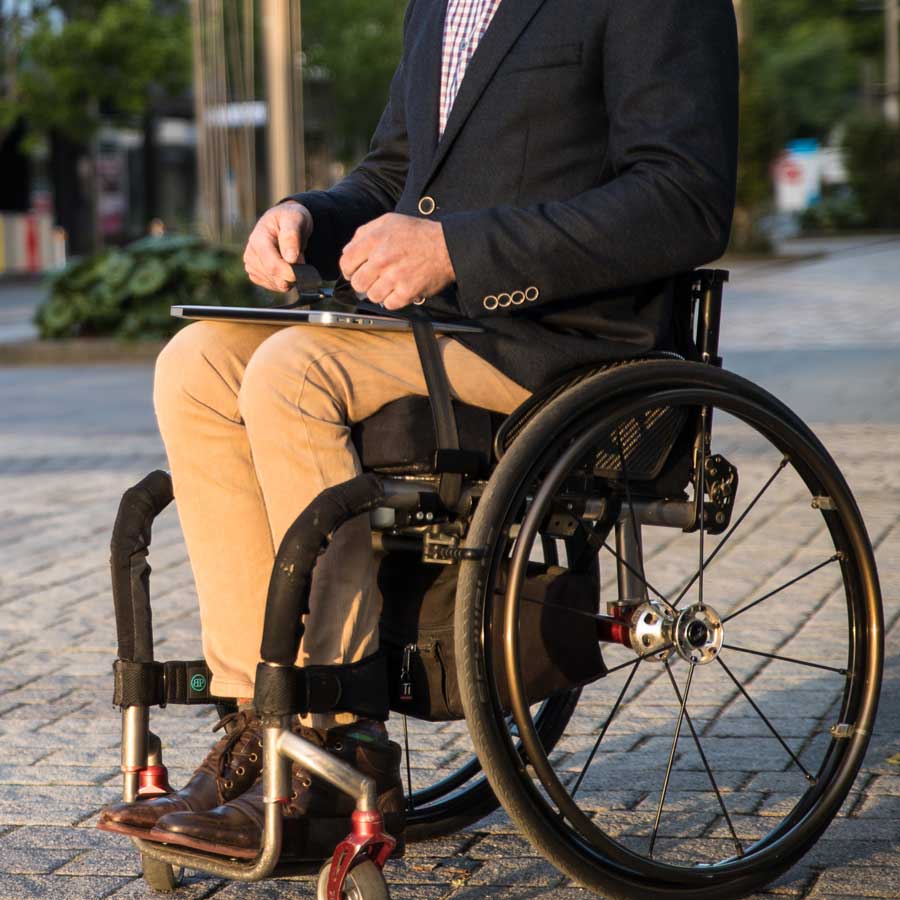
The most common mistake is buying your standing inseam. When you're seated all day, trouser hems ride up - you need one to two inches longer than your standing size. The second mistake is keeping back pockets: they sit directly under you on the cushion and create a hard pressure point. Remove them with a seam ripper. Everything else is secondary.
Lane figured out the inseam issue quickly but wishes someone had told her first:
"Buy one size larger in inseam because otherwise the pants ride up your ankles when sitting. Standing I would wear a 30" inseam but now that I'm seated I wear a 32" inseam." - Lane
Two inches. That's the fix. Nobody tells you this at the shop. You learn it after buying the wrong pair twice.
Shannon applies the same logic across the whole wardrobe:
"I size up in clothes that button up the front, boots, and jeans. Long johns under pants is a good idea. I consider the lengths of pants and skirts as everything rides up when I sit." - Shannon
Size up in length across the board. It applies to everything.
Start here: leggings.
Before getting into trousers, jeans, and adaptive options, it's worth saying clearly: the most wheelchair-friendly mainstream pants are leggings.
High-waist cotton or bamboo. No modification, no adaptive spend, no searching for an inseam in the right length. They work as-is because the waistband stretches, the fabric doesn't crease into hard folds, and there are no back pockets to create pressure points.
Maria's reason for wearing them is specific enough to be useful:
"I wear a lot of leggings because they don't cut into my groin and bugs can't crawl up my legs like in jeans." - Maria
The groin pressure point is real. In jeans or rigid trousers, the seam and waistband sit differently when you're seated than when you're standing. The pressure builds across a long day. Leggings distribute it evenly. For everyday wear - errands, meetings, anything that doesn't require a particular dress code - this is the starting point.
The maternity waistband option.
Less obvious, and worth knowing: maternity-style waistbands are nearly perfect for wheelchair users.
They were designed for a body that's seated for extended periods and a changing shape. Those two design requirements map almost exactly onto wheelchair use. The waistband has significant stretch, sits high enough to cover the lower back, and doesn't dig into the stomach across hours of use.
"I like wearing maternity pants. They just feel comfortable." - Steph
You can find maternity-style waistbands in non-maternity products - some brands label them as "pull-on" or "elastic waist" or "comfort waist." The key feature to look for is a wide, soft waistband with stretch all the way around, not just at the sides.
Trousers and chinos: what to look for in mainstream options.
Standard trousers are cut for a standing body. The back rise is designed to cover you when you're upright; when you sit, it pulls down. The front has more fabric than you need, which bunches across the lap. The waistband, if rigid, sits at a point that becomes uncomfortable within an hour.
Four essential features.
Four features fix these issues, and none of them require buying adaptive specialist clothing.
Elastic or pull-on waistband.
Todd made the switch 32 years ago and hasn't looked back:
"I have not worn jeans since my accident 32 years ago. Always have pants with elastic waist, especially if you are active, or else you will constantly have your pants digging into your stomach." - Todd
Track pants, pull-on chinos, any trouser with a fully elastic waistband.
The difference over a full day in the chair is significant.
Stretch in the seat and thigh.
Not all-over stretch - you still want structure. But a spandex or elastane blend in the seat and thigh means the fabric moves when you do instead of pulling tight. Chester's reason for specifying spandex goes beyond comfort:
"Pants must have spandex. Creases and folds may be painful and are a pressure injury risk." - Chester
Rigid fabric folds into hard creases. Hard creases become pressure points. If you have limited or no sensation, those develop into pressure injuries before you feel them. Stretch fabric doesn't crease the same way.
No back pockets.
This one takes five minutes to fix on any pair of trousers and costs nothing. Erik:
"Remove the pockets of the backside of the jeans. Makes them smoother and reduces risk of pressure sores. You ain't going to use these pockets anyway." - Erik
A seam ripper costs $3. Back pocket removed. Smoother contact surface with your cushion, lower pressure injury risk, done.
Front pocket placement.
Standard front hip pockets can snag in the wheels on a manual chair. Jodi:
"I sew my fiancée's front jean pockets closed as they would snag on the wheels." - Jodi
Cargo pockets at the thigh level, or chest pockets on a jacket, are the practical replacement. Joey keeps a bum bag for everyday carry since trouser pockets are effectively inaccessible when seated:
"A bum bag because I can't use my trouser pockets." - Joey
Jeans: yes, they work. Here's how.
The short answer is yes, you can wear regular jeans in a wheelchair.
The longer answer: buy from the right brand, size up on the inseam, and remove the back pockets. That covers most of what makes standard jeans uncomfortable in a chair.
Inseam. Lane's example is the most specific in our data set: 30" standing becomes 32" seated. If you know your standing inseam, add two inches and start there.
Stretch. A denim with elastane in it is the difference between jeans that work and jeans that don't. Rigid denim won't stretch when your seated position pulls the fabric in a different direction than it was cut for.
When is adaptive clothing worth the cost?
Honestly: less often than adaptive brands would have you believe.
Most wheelchair users in our community shop mainstream and modify. The modifications are cheap, fast, and solve the most common problems. A seam ripper costs $3. Buying a longer inseam costs nothing if you're choosing between two standard sizes.
But there are specific cases where adaptive clothing genuinely earns its price point. The four that came through clearly in our community data:
Side-zip access for catheter use or assisted dressing. This feature doesn't exist in mainstream clothing and can't easily be added. If you need it, adaptive is the answer.
Raised seat cut. Standard trousers have roughly the same front and back rise because they're cut for a standing body. A properly raised seat is difficult to replicate by modifying a standard pair. Some adaptive brands build this in correctly.
Magnetic closures for one-handed dressing. Matt explains why this matters for his situation:
"I prefer the magnetic closure garments, as a stroke survivor with only the use of my right arm and leg these work perfectly for me!" - Matt
If you have one functional arm, standard zips and buttons are a daily dressing challenge. Magnetic closures remove the problem entirely. This is the clearest case for adaptive spend.
Full-length side openings for assisted dressing or hospital use. Some users need pants that can be put on from a reclined or fully assisted position. That's not something mainstream can replicate.
Everything else - inseam length, waistband type, fabric stretch, pocket placement - is solvable in mainstream stores with modifications that cost next to nothing.
Pressure injuries and pants: the health dimension.
This section matters most if you have limited or no sensation below the waist.
Cold legs still get cold. Skin still gets damaged. Pressure points still develop. The difference is you may not feel them doing it.
Clothing is a direct contributor to pressure injuries in wheelchair users. Not in a theoretical way - in a specific, preventable way. Three places where pants cause problems:
Back pockets. The folded fabric and seam of a back pocket creates a raised surface between your skin and your cushion. Even a small amount of material adds up over hours. Remove them.
Rigid fabric that creases. Chester's reason for specifying spandex was the pressure injury risk of hard folds. Stiff denim or polyester with no stretch bunches into creases. Those creases create hard contact points. Spandex blends don't crease the same way - the fabric recovers.
Hardware and seams in the wrong places. Back zips, raised rivets, thick interior seams - all of these can be invisible comfort issues when you're standing but become genuine skin-damage risks when you're seated on them all day. Belle's rule applies to tops but holds for trousers too:
"Tops without zips on the back, sharp on your back. Soft cotton stretch material with soft openings, easy to get on and off without losing balance and no pressure points." - Belle
Run through every new garment before you wear it the first time. Back pockets present? Remove them. Raised rivets at the seat? Don't wear it. Rigid interior seam across the cushion contact zone? Look for something else.
This is a five-minute check that prevents problems that take weeks to heal.
What are the 6 key features of wheelchair-friendly pants?
Before buying any pair, run through these five checks:
Inseam - one to two inches longer than your standing size
Waistband - elastic, pull-on, or maternity-style; no rigid waistbands
Seat and thigh - stretch fabric; spandex or elastane blend
Back pockets - remove them or buy without; they create pressure points on your cushion
Front pocket access - thigh-level or chest pockets; hip pockets either snag in wheels or are inaccessible seated
This checklist works for any pants category - leggings, trousers, jeans. Run through it before you buy rather than after.
Frequently asked questions.
What pants are best for wheelchair users?
High-waist leggings or maternity-style pull-on trousers for everyday comfort. For jeans: G-Star Raw (extended inseam up to 38", thigh pockets), Mish Mash (very stretchy waist and seat), or Wrangler (durability). Buy one to two inches longer inseam than your standing size. Remove back pockets.
Can wheelchair users wear regular jeans?
Yes. Buy one size up in inseam from your standing size. Choose a brand with stretch in the seat - G-Star Raw, Mish Mash, M&S 360 Flex. Remove the back pockets with a seam ripper. Sew front hip pockets closed if they catch in the wheels.
What is the best waistband for wheelchair pants?
Elastic, pull-on, or maternity-style. No rigid waistbands - they dig into the stomach after a few hours seated. Track pants, pull-on chinos, and maternity-style trousers all work well. The key feature is stretch across the entire waistband, not just at the sides.
When should I buy adaptive pants instead of regular pants?
Buy adaptive when you need catheter-access side zips, a purpose-built raised seat cut, or magnetic closures for one-handed dressing. Buy mainstream for everything else - the modifications are cheap and fast.
How do you prevent pressure sores from pants?
Remove back pockets. Buy spandex-blend fabrics that don't crease under pressure. Check every new garment for raised hardware, thick seams, or back zips at the cushion contact zone before wearing. These are a five-minute check that prevents injuries that take weeks to heal.
We've covered this across the full article, but it's worth saying plainly at the end: you don't need to spend adaptive prices to dress comfortably in a wheelchair. Most of what makes pants work in a chair is findable in mainstream stores, or fixable with a seam ripper and 20 minutes.
Know your new inseam size. Remove the back pockets. Find a brand with stretch in the seat. Everything else is personal preference.

Leave a comment
All comments are moderated before being published.
This site is protected by hCaptcha and the hCaptcha Privacy Policy and Terms of Service apply.