

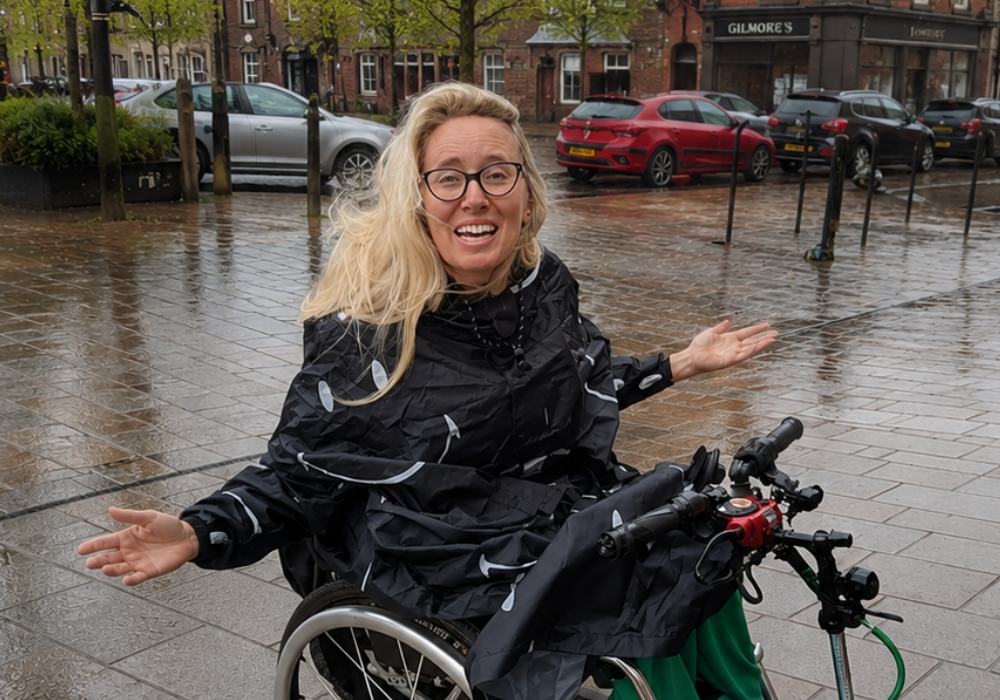
Staying warm is harder in a wheelchair than most warmth advice accounts for. Your legs sit still. They don't generate heat the way walking legs do. For those of us with reduced sensation, cold can quietly damage skin before it registers as uncomfortable. Generic winter tips dress in layers, wear a warm coat don't address any of this.
Over 100 wheelchair users shared their cold-weather tips with our community. What came back was specific: named hacks, particular products, and the kind of knowledge you only get from being cold in a chair for several winters running.
The feature checklist for winter wheelchair clothing.
| Feature | Look for | Avoid |
|---|---|---|
| Coat closure | Two-way zip — opens from bottom for lap access and temperature management | Single-direction zip that requires full opening to adjust at all |
| Coat length | Covers the lower back when seated; longer for power or assisted users who push less | So long it drags on wheels or bunches under the thighs during pushing |
| Leg base layer | Heavyweight merino thermal or 80–120 denier tights as a starting layer | Thin polyester thermals that lose most of their insulation when you're sitting still |
| Lap coverage | Kids' sleeping bag, waterproof dog blanket, or purpose-built wheelchair cozy | Standard blanket — blows off, soaks through, doesn't seal against wind |
| Gloves | Waterproof, full-finger, leather or goatskin; or pogies as an alternative | Fashion gloves that absorb moisture; heated gloves used directly on skin with no sensation |
| Socks | Compression knee-high minimum; heavy wool for very cold conditions | Thin cotton — no insulation and no circulation benefit when legs aren't moving |
| Coat sleeves | Sleeve protectors worn over the coat; shorter sleeves under a vest as an alternative | Unprotected coat sleeves dragging on push rims — expect them to deteriorate within a season |
| Upper layer | Gilet or heated vest that warms the torso without restricting arm movement | Thick heavy jumpers that cause overheating during active pushing and can't be removed mid-journey |
| Pockets | Chest-level, sloped, zipped for security — reachable from seated | Waist or hip-level pockets — effectively inaccessible from a wheelchair |
Why staying warm is different in a wheelchair.
Wheelchair users especially those with SCI face a different cold problem. Legs that aren't moving generate no heat. Cold fabric against skin that can't signal pain can cause pressure injuries before anything registers as uncomfortable. Staying warm isn't a comfort preference; for many wheelchair users it's a health practice.
That changes how you think about layering. Most cold-weather advice is written for people who can simply take a layer off when they overheat. For a manual wheelchair user, the problem is usually asymmetric: hot from the waist up from pushing, cold from the waist down because your legs are doing nothing. Standard warmth strategies don't account for that split.
How do wheelchair users keep their legs warm?
Cold legs in a wheelchair are partly a gear problem and partly a physics one. Your legs aren't producing heat through movement, so every layer you add is doing insulation work your legs would normally share. The solution starts with a proper base layer and builds outward.
Shannon's answer is the simplest starting point:
"Long johns under pants is a good idea." - Shannon
The specific version of this matters, though. Lightweight polyester thermals do less than you'd think when you're sitting still for hours. A proper heavyweight merino or wool thermal makes a meaningful difference across a long outdoor day.
Alice goes one layer further and gives a specific number:
"Wear 80 to 120 denier tights to keep your legs warm." Alice
Denier is the measure of fabric thickness in tights. Standard fashion tights are 10–15 denier. Anything above 60 is genuinely opaque and offers real warmth. 80–120 denier is Alice's range and what makes this tip actually useful is that it gives you a number to filter by on any retail site. Worn under pants or trousers, they add a full-leg layer without bulk.
Joey adds the circulation piece:
"Compression socks. Knee high at minimum." - Joey
Compression socks help manage the swelling that comes from not moving, and they add thermal coverage from foot to calf. If you're going to be outside for more than an hour, they earn their place.
Coat length connects here too. :
"I prefer a little longer coat as my legs get cold so fast. Even though I agree it is harder to get off. I do carry a dog blanket to stay warm too as it is waterproof." - Kate Webster
The trade-off Kate names is real. A shorter jacket gives your arms full range of motion for pushing and is easier to manage. A longer coat covers the thighs but can bunch underneath and be difficult to get on and off. There's no universal answer it depends on whether you're a manual user pushing all day or a power chair user who needs coverage more than mobility. Choose based on your use case, not a blanket recommendation.
Lower back exposure is the other leg-warmth problem. Marie Francis:
"I like my coat to go under my bum otherwise it rides up. Tops need to tuck into pants at the back or go under my bum or they ride up as well. Unattractive look and chilly to boot!" Marie Francis
On a cold day, a rising coat or top means a strip of your lower back exposed to wind for hours. A coat long enough to sit on, or tops long enough to tuck in, solves it without constant adjustment.
The sleeping bag hack.
Angelina's tip is the one most people haven't come across before finding our community:
"If you use a kids sleeping bag in the winter as a lap blanket it prevents the wind and snow from getting on your feet and legs. If you lay a blanket on your chair before transferring into it, you can wrap it around you better." Angelina
A kids' sleeping bag works better than most purpose-built lap blankets for a specific reason: it's already shaped to wrap around legs, it's rated to a temperature, and it seals properly against wind. Standard blankets blow off and collect rain. Wheelchair cozies are effective but can cost $150 or more from specialist suppliers. A kids' sleeping bag from a camping section does the same job for a fraction of the price, and many have a waterproof outer shell.
Technique matters. Lay it across the seat before you transfer in, then pull it up and wrap it around your lap once you're seated. Arranging it after you're in the chair is significantly harder.
Kate Webster's dog blanket is the waterproof alternative for milder conditions particularly useful when it's raining rather than deeply cold, or when you want something that dries fast.
Coats the one feature that changes everything.
Every other coat feature matters less than this one. Nicole:
"Two way zipper jackets are far more practical in a chair." Nicole
Anne goes into the detail:
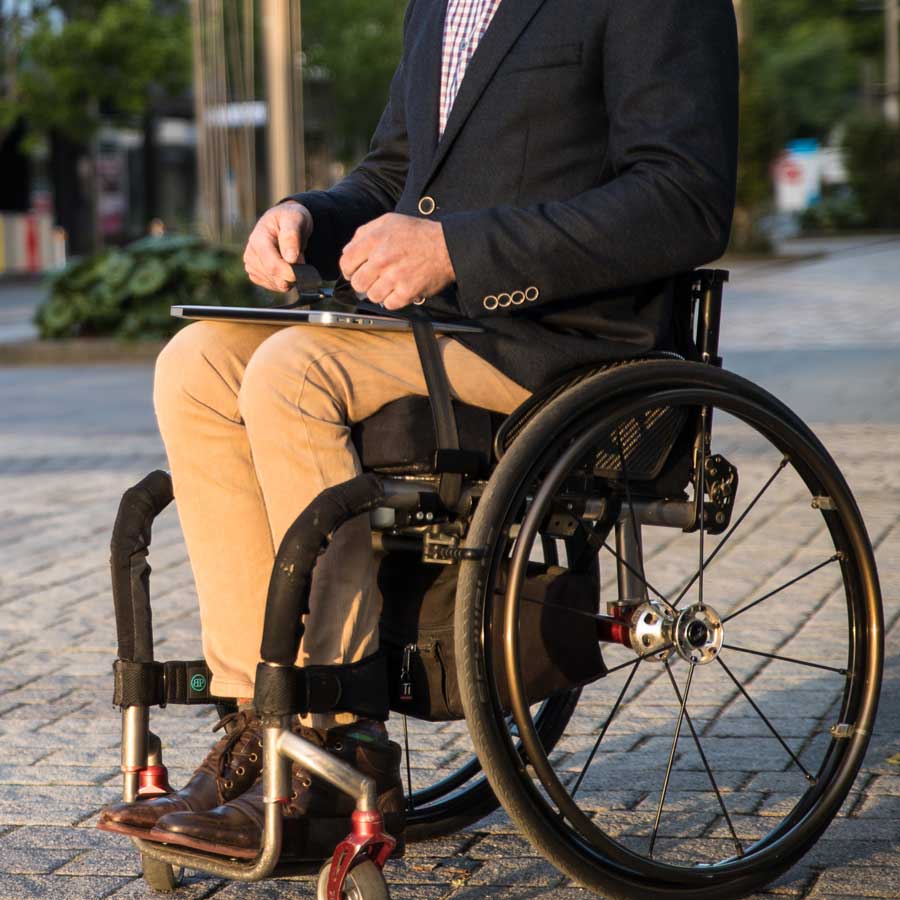
"I need cover right down to the seat at the back to keep my lower back warm and a two-way zip at the front. So many jackets and particularly, fleeces do not have a two way zip so they bunch up." Anne Saunders
A two-way zip opens from the bottom. Seated, this means you can open the coat across your lap without fully unzipping from the top manage the coat around your thighs, access catheter equipment, or adjust for temperature without exposing your whole torso. For wheelchair users, a standard single-direction zip turns coat management into a daily frustration.
David Willome captures what happens when coats don't work:
"I don't even unzip my jackets anymore." David Willome
A person who's stopped unzipping their jacket has made peace with either being cold or being too hot, because managing a standard closure from a wheelchair wasn't worth the effort. That's the case for two-way zip in one sentence.
For manual wheelchair users, sleeves are the other problem. Morvenna:
"I hate the way coats bunch up as I'm rolling. Sleeves always get ruined as they rub on our wheels and get covered in mud when the ground is wet. I bought some sleeve protectors last winter, which were helpful to keep sleeves dry and prevent them from tearing." Morvenna Dorita
Sleeve protectors are sold as a separate accessory essentially a waterproof cover that fits over the end of a coat sleeve. They extend coat life significantly for manual wheelchair users and aren't widely known. Val's DIY version costs nothing:
"Gauntlets to protect sleeves when they can't be tight, that jacket to a meeting etc. I've even cut down rubber gloves for this." Val
Cut-down rubber gloves over the cuffs. Works.
On fabric: Angela recommends wool for a reason.
"A wool coat, because they are more flexible and stay buttoned up." Angela
Wool holds its shape better than stiffer woven alternatives when you're seated for long periods. It doesn't crease into hard folds against a cushion the way structured fabrics do.
The overheating problem hot on top, frozen below.
This is the winter clothing tension that standard advice ignores entirely.
Manual wheelchair users generate real heat through their upper body from pushing. On a cold day, your core can get genuinely hot while your legs stay at ambient temperature. If you're dressed in a single heavy outer layer, you can't reduce the heat at the top without exposing everything below.
The practical solution is a gilet or heated vest as a mid-layer. They cover the torso without adding sleeve bulk that restricts arm movement during pushing. When you overheat from pushing, you remove just the gilet without losing coverage elsewhere.
The two-way zip coat is the other half of this. Open from the bottom when overheating, close from the top when at rest. These two things together adjustable mid-layer and a coat you can partly open without losing warmth make the temperature asymmetry manageable.
Layering for wheelchair users is different from layering for walking. You're building an outfit where the legs are maximally insulated while the upper body can be rapidly adjusted. Start from the legs outward, and treat the upper body as the variable part of the system.
Gloves for manual wheelchair users.
The push rim destroys gloves. Regardless of what you spend, gloves worn while pushing will wear through at the palm within a season. Wheelchair DNA's Cosmo tested this directly: no meaningful difference in lifespan between $25 and $150 gloves.
What you need from winter wheelchair gloves: waterproof, full-finger for warmth, enough dexterity to grip and push, and goatskin or leather that resists abrasion longer than fabric. Expected lifespan is one hard winter, full stop.
If you have limited or no sensation in your hands, heated gloves require caution. Test any heat level on a more sensitive area first, and don't use them on limbs where you can't feel temperature.
Frequently asked questions.
How do wheelchair users keep their legs warm?
Layer from the inside out: heavyweight merino thermals or 80–120 denier tights as a base, compression socks knee-high, and a coat long enough to cover the lower back when seated. For outdoor use, a kids' sleeping bag used as a lap blanket is the most effective low-cost option it wraps properly and keeps wind and rain off the legs in a way standard blankets don't.
Do wheelchair users feel the cold more?
People with SCI or limited sensation below their injury level don't receive cold signals the same way warnings arrive late or not at all. This makes cold more dangerous, not less. Pressure from cold fabric on skin that can't signal distress can cause injury before anything feels wrong. Treating warmth as a health practice rather than a comfort preference is the right frame for anyone with reduced sensation.
What should wheelchair users wear in winter?
Heavyweight base layers on the legs, compression socks, a coat with a two-way zip and no hardware against the back, and a lap blanket or wheelchair cozy for outdoor time. Manual wheelchair users need gloves with grip (or pogies) and sleeve protectors for push-rim contact. A gilet or heated vest helps manage the temperature difference between active upper body and inactive lower body.
Can wheelchair users use heated blankets?
With caution. Anyone with limited or no sensation in their legs should not use heated blankets or pads directly against the skin burns can develop before the heat registers. A heated blanket used over another layer reduces this risk. If you're uncertain about your sensation level, rely on insulation for warmth rather than electrical heating.
Cold legs are the least-addressed part of wheelchair clothing advice. Most of what's written online is for people who can feel when they're getting cold and can move to generate heat. Neither of those assumptions holds for a lot of wheelchair users.
The kids' sleeping bag tip is the one that makes the most difference for the least money. Angelina worked that out, not a gear company. That's usually how the best tips arrive.

Leave a comment
All comments are moderated before being published.
This site is protected by hCaptcha and the hCaptcha Privacy Policy and Terms of Service apply.