

Nobody hands you a clothing guide when you become a wheelchair user.
You figure it out the hard way. Sleeves caught in wheels. Shoes that slide off footplates. Freezing from the legs down on a cold day because you didn't think about what was happening under your jeans.
I've made all of these mistakes. Here's what I've learned.
My 4 top tips for accessible clothing.
Four things worth remembering:
- Tight sleeves, check before you buy
- Footwear that sits flat and slips on easily
- Long johns in cooler weather, don't wait until you're cold
- Buy multiples when you find something that fits
1. Keep your sleeves tight.
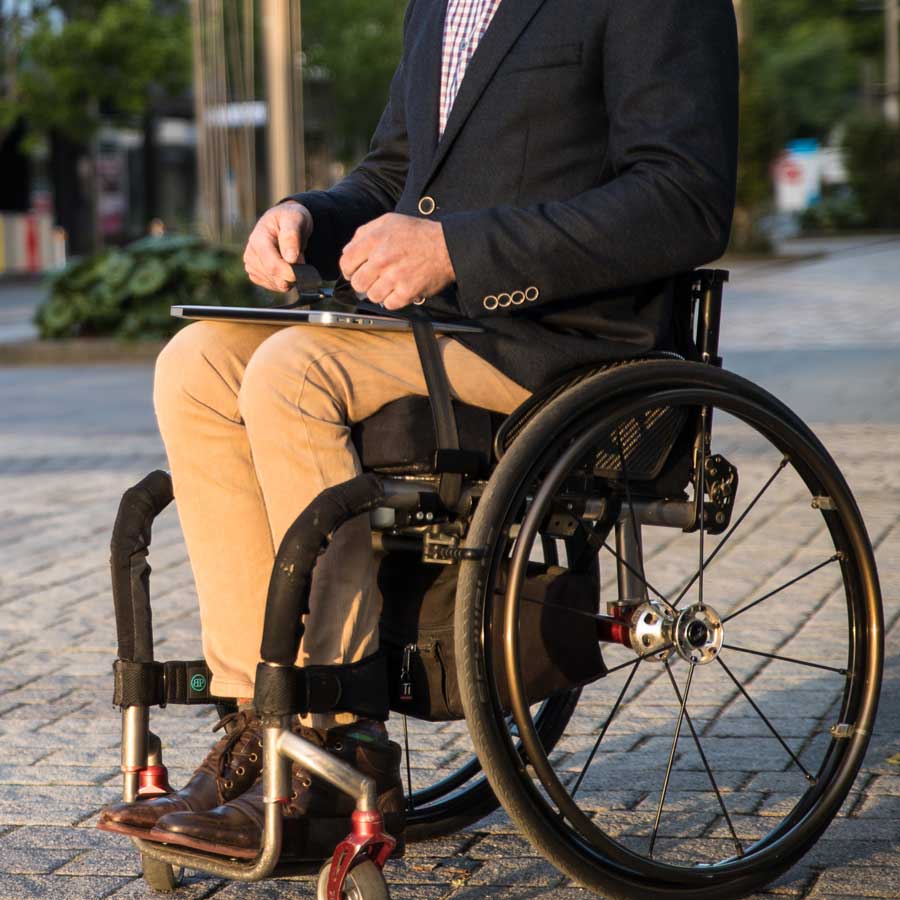
Loose, baggy sleeves catch on your push rims. They wear out faster, they pull you back mid-push, and over a full day of wheeling, the friction adds up. Tight-fitting sleeves stay out of the way and let you push cleanly.
You don’t have to limit your style to short sleeves; there are plenty of long sleeve options out there in every style. Before you buy, check that there's no extra fabric bunching around the wrist and forearm. Try a push with it on if you're in-store, or check the fit carefully before you commit online.
This struggle also continues with other baggy clothing. Think long jackets, or baggy pants or skirts, they can easily get stuck in your wheels if you’re not careful.
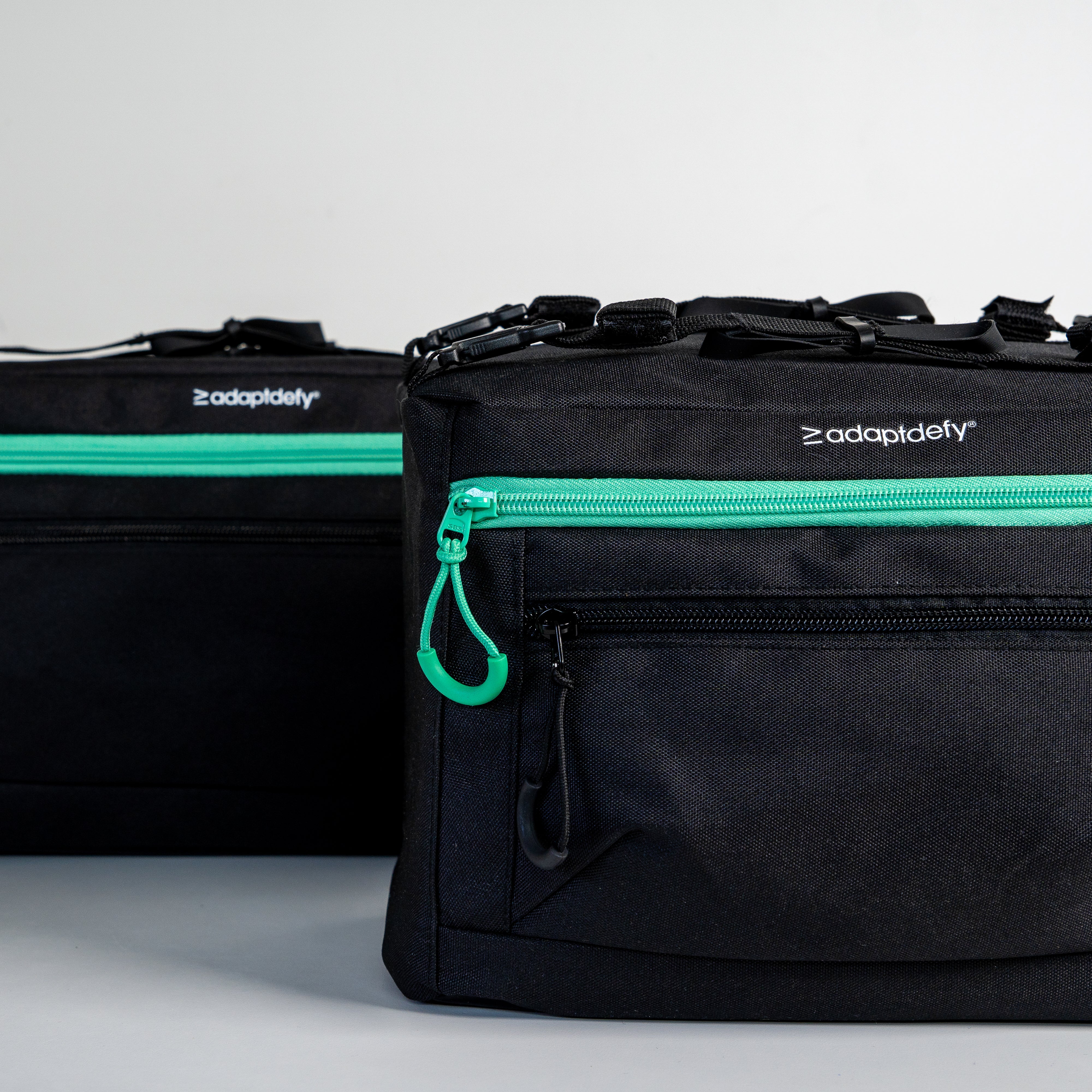
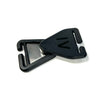
This is where LapStacker comes in. LapStacker is a strap system that clips across your lap, holding the excess fabric flat. Simply clip LapStacker across your lap, and the loose fabric stays out of your wheels.
2. What are the best shoes for wheelchair users?
Shoes are trickier for wheelchair users than most people realise, and it's one of those things nobody thinks to mention.
What you're looking for:
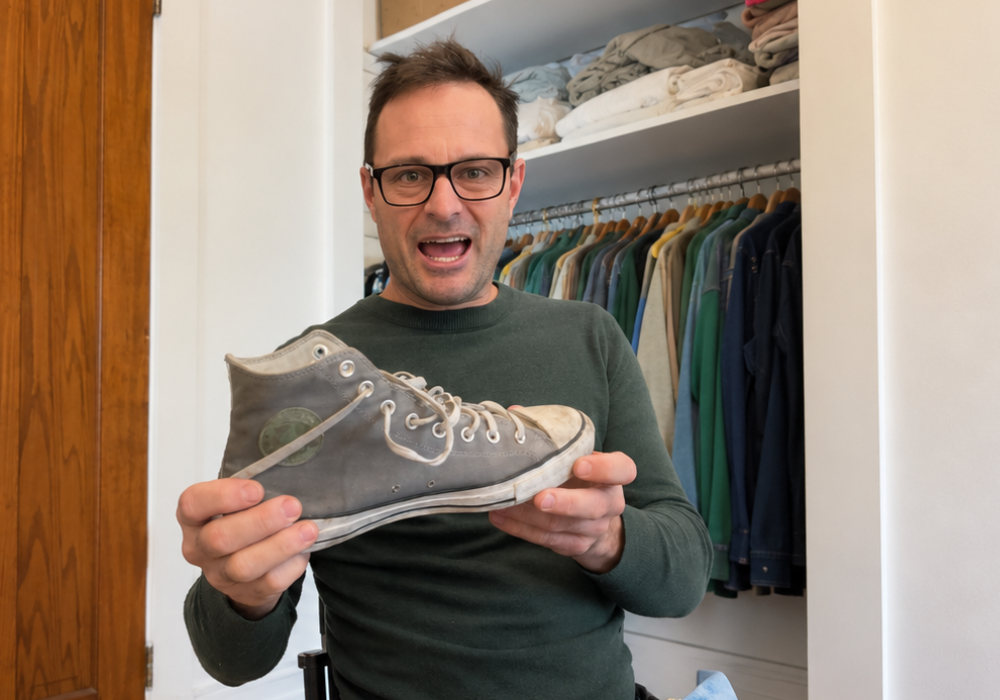
- A narrow profile, easy to slip onto a footplate,
- No sharp edges or protruding buckles that could catch on things or damage your chair.
- Avoid bulky shoes or anything with a thick, rigid sole can be awkward to position and will slide off footplates.
- Slip-on styles tend to work best, especially if putting shoes on independently is part of your routine.
3. How do wheelchair users stay warm?
This is the one I wish someone had told me early on.
When you don't have full sensation in your legs, you don't get the usual warning signals that you're getting cold. Cold radiates through the body in ways that are hard to detect until you're already properly cold, which, for people with spinal cord injuries, can create real problems beyond just discomfort.
My answer: long johns under everything. They're a non-negotiable for me in cooler weather. They add warmth without bulk, they sit under your clothes without changing how anything looks or fits, and they make a big difference to how you feel across a long day out in the cold.
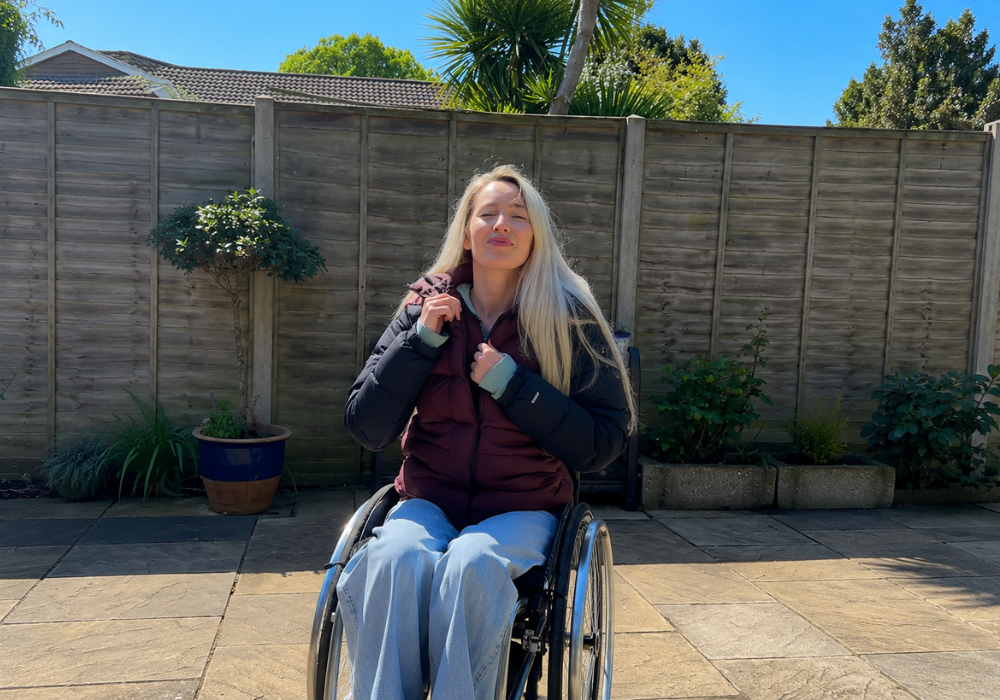
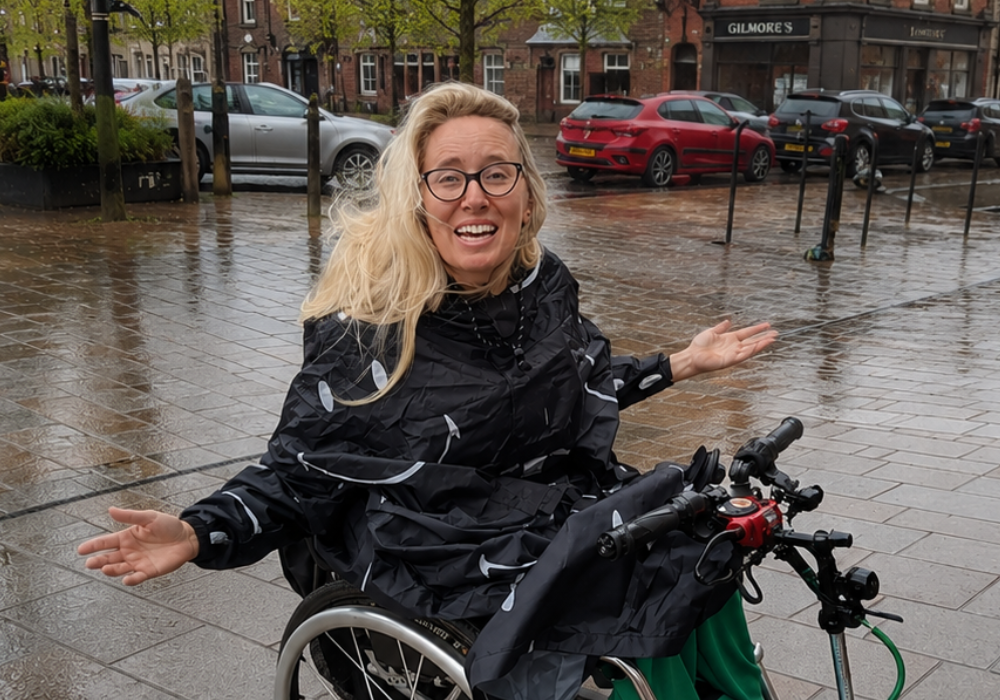
And if it's really cold outside, you’ll want a good coat. Gem recently shared her tips for finding the right coat as a wheelchair user. Learn more about how to choose the right coat here.
4. When you find something that fits, buy multiples.
This sounds obvious until the one pair of jeans that fits perfectly gets discontinued and you can't find them anywhere.
Finding clothing that works for wheelchair users, that fits a seated posture, doesn't bunch or pull, and holds up to the physical demands of daily life in a chair, takes real effort. When you find something that works, don't just buy one.
My go-to jeans are Wranglers. The material is flexible, moves well, and the fit works for me seated. The moment I found them, I bought several pairs. I'd encourage you to do the same with anything that genuinely works for your body and your chair.
Gem, an Apdatdefy creator, recently reviewed adaptive jeans. She goes over the features that make these jeans a step up from standard jeans. Read her review of adaptive jeans here.
Quick reference: wheelchair-friendly clothing.
| Category | Look for | Avoid |
|---|---|---|
| Sleeves | Fitted through the wrist and forearm | Loose, baggy fabric that bunches or drapes |
| Tops & jackets | Close-fitting cut, no excess hem length | Long hems or skirts that can catch in wheels |
| Shoes | Narrow profile, flat sole, slip-on or easy fastening | Bulky soles, laces, protruding buckles or hardware |
| Pants | Flexible fabric, seated-posture fit, no tight waistband | Stiff denim, high rise, seams in pressure areas |
| Cold weather | Long Johns (thermals) as a base layer, worn before you go out | Waiting until you feel cold to layer up |
| General rule | When something fits, buy multiples | Missing out on your favourite style. |
Want more clothing hacks?

Check out Gem’s review of adaptive jeans and the features that truly make a difference.
Need help choosing a winter coat? Check out Gem’s guide to choosing the perfect coat for wheelchair users.
What are your go-to clothing hacks?
These are the four that have made the biggest difference for me, but I know I don't have all the answers. Everyone's body, injury level, and chair setup is different, and the collective knowledge in this community is always better than any one person's experience.
Drop your clothing tips in the comments. The more we share, the easier we make it for each other.
Happy Adaptdefying - Mike
About the author.
Mike Brown is a T10 complete paraplegic, co-founder of Adaptdefy, and the inventor of LapStacker, the world's first retractable carry system for wheelchairs. He sustained his spinal cord injury in 2012 and has spent the years since learning how to live well in a chair. Everything he writes comes from his own lived experience, from adaptive fitness and wheelchair skills to mental resilience and daily independence hacks. He is also the host of the AdaptDefy podcast, where he interviews members of the active wheelchair community and advocates from around the world.
FAQs
What is the best clothing for wheelchair users?
For tops, look for tight-fitting sleeves that stay clear of the wheels and let you push cleanly. Loose or baggy sleeves catch on your push rims as you wheel, causing friction, slowing you down, and wearing out the fabric faster.
For pants, look for styles that sit nicely for a seated posture. Be careful of seams or tight-fitting waistbands, especially if you have no or limited feeling in your legs. And more importantly, if you find something that works for you, buy multiples.
What are the best shoes for wheelchair users?
Look for shoes with a narrow profile, no sharp edges or protruding buckles, and a flat or low-profile sole that sits flush on a footplate. Slip-on styles are ideal if you're dressing independently from a seated position; the less you're fighting with laces or fastenings, the better. Avoid bulky or rigid soles that can slide off footplates.
How do wheelchair users stay warm when they can't feel the cold?
For wheelchair users with reduced or no sensation in their legs, cold is a real health risk, not just a comfort issue. The key is to layer from the bottom up before you go out, not when you already feel cold. Long johns under jeans or trousers are the most practical solution: they add serious warmth with no bulk and don't change how your outfit looks. Don't wait for a signal that isn't coming.
What is adaptive clothing?
Adaptive clothing is any clothing designed or modified to work better for wheelchair users, or for anyone who dresses differently due to disability. That can mean specialist garments built from the ground up for seated posture, or simple modifications to regular clothing, like adding a zip pull or choosing a slip-on shoe over a lace-up. You don't need to buy specialist gear to dress adaptively; you just need to know what to look for.
How do I dress more independently as a wheelchair user?
Start with the basics: choose clothing that's easy to put on and take off from a seated position. Slip-on shoes, elastic waistbands, and accessible zips all reduce the effort of dressing. Tight sleeves keep fabric out of your wheels. Long johns regulate temperature when sensation is limited. And when you find items that genuinely work, stock up. Independence in dressing is mostly about removing friction, one small decision at a time.
Where can I buy adaptive clothing?
Finding adaptive clothing has become significantly easier in recent years, with a growing number of options available to suit various needs and preferences. While many stores specialise in adaptive clothing, both online and in person, offering items specifically designed with features like magnetic closures, flat seams, or adjustable waistbands, it's also worth noting that accessibility is increasingly being incorporated into mainstream fashion. As such, you may also find accessible clothing styles in regular clothing stores.
The key is to look beyond just the "adaptive" label and consider the functional features of any garment that might simplify dressing, increase comfort, or accommodate medical devices or mobility aids.

Leave a comment
All comments are moderated before being published.
This site is protected by hCaptcha and the hCaptcha Privacy Policy and Terms of Service apply.