

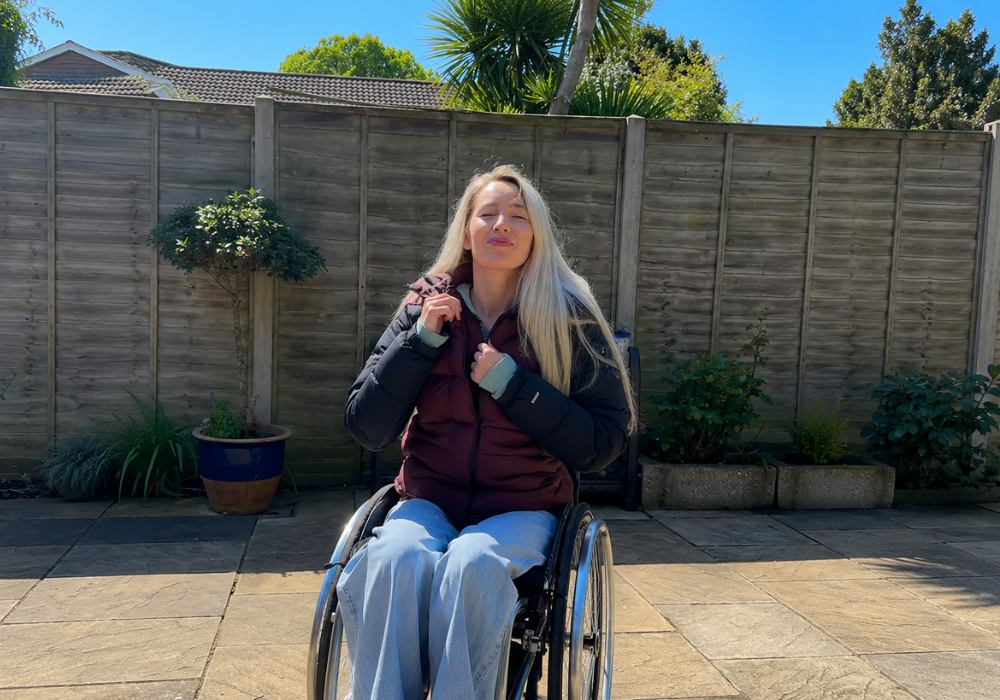
I’ve been a wheelchair user for over 30 years, and living in the UK, I'm well used to cold, drizzly weather.
Everyone in the UK knows the importance of having a good coat, but as a wheelchair user, I struggled to find one that actually worked. Not because I'm particularly fussy about fashion (though a stylish coat is always a bonus), but because some things just don't work for wheelchair users when it comes to coats.
After three decades, I've figured out what actually works. Here are the four things I look for now when choosing my coat.
Four questions to ask before buying a coat.
If you're a wheelchair user shopping for a coat, run it through these four checks before you commit:
- Does it have a zip I can actually grip, and ideally a double-ended zip?
- Is it waist-length, or close to it?
- Is there a proper hood that covers well and doesn't block my vision?
- Do the pockets have horizontal zips?
1. The right zip makes or breaks the coat.
Standard zip pulls are tiny, and if your hand function is reduced at all, they're a nightmare.
The fix is simple: add a small tab, loop of ribbon, or keyring to the zip, something you can hook a finger through and pull without having to pinch. You, or a carer, can make this adaptation in two minutes, or look for coats that already come with a decent-sized pull.
But here's the better tip: look for double-ended zips. A regular zip only opens from the top down. A double-ended zip also opens from the bottom up, which means you can unzip the lower part of the coat so it drapes properly across your lap when you're seated.
2. Go for waist-length.
Longer coats look great on a hanger. For a wheelchair user, they can quickly become an obstacle.
The moment you sit down, you're sitting on the back of the coat, which makes it uncomfortable, awkward, if not impossible, to take off. Longer coats can also get caught in your wheels if the fabric is baggy, which is a real safety hazard, not just an inconvenience.
Waist-length coats avoid all of this. They're easier to put on and take off independently, they don't bunch under you, and they give your arms a full range of motion when you're pushing.
3. A good hood isn't optional.
Here's something non-wheelchair users don't have to think about: carrying an umbrella while using a manual wheelchair is essentially impossible. Both hands are on the wheels. So if it rains and you don't have a hood, you simply get wet.
A good hood is an essential part of adaptive clothing for any UK wheelchair user. Look for one that's large enough to fully cover your head, but doesn't block your peripheral vision when it's up. Good visibility matters when you're wheeling in traffic or on busy pavements.
There's another battle wheelchair users face in harsh weather. If you're wearing a longer coat or a baggy rain poncho, the fabric catches the wind and flies around, exposing your legs to the cold and creating a hazard if the excess material gets caught in your wheels. It's one of those things you only appreciate after it's happened to you.
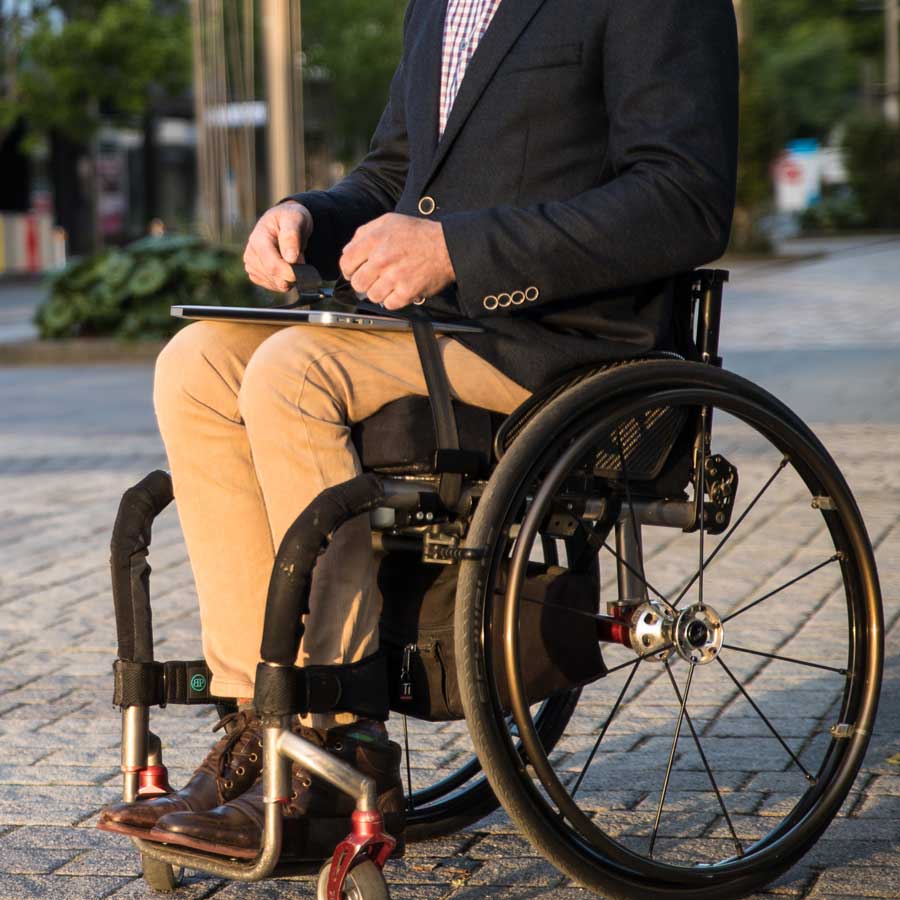
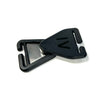
This is where LapStacker comes in. LapStacker is a strap system that clips across your lap, holding the excess fabric of your coat flat against your legs. Spread your coat over your lap as normal, then clip LapStacker across the top, the sides and front stay put, wind can't get underneath, and loose fabric stays out of your wheels.
If you're dealing with a coat that's slightly too long, or a rain poncho that has a mind of its own, LapStacker is the fix.
4. Horizontal zipped pockets only.
Vertical pockets, open pockets, and pockets with flimsy snaps are all risky for wheelchair users. When you're moving, transferring, or leaning to reach something, things fall out of unsecured pockets. I've lost more items than I care to admit to poorly designed pockets.
Horizontal zipped pockets solve this. The zip runs across the opening, which means gravity works with you rather than against you; things stay put through transfers, rough terrain, and everything in between.
They're also much easier to access when you're seated. No need to wrestle around your side guards to get to your phone or keys.
It's a small detail that saves a lot of frustration.
Quick reference: what to look for in a coat.
| Feature | Look for | Avoid |
|---|---|---|
| Length | Waist-length or just below | Mid-thigh and longer |
| Zip type | Double-ended; large pull or magnetic closure | Standard small zip pull |
| Shoulder seam | Ends at the shoulder edge | Sits on or past the arm |
| Hood | Generous coverage, good peripheral vision | No hood, or hood that blocks sight lines |
| Pockets | Horizontal zipped | Vertical, open, or snap-closure |
| Lining | Smooth fabric for easy arm movement | Fleece lining that grabs on clothing |
I'd love to know what coat features matter most to you. Drop a comment below and let's help each other out. The more we share what works, the easier it gets for everyone.
Happy Adaptdefying – Gem
Gem is a wheelchair user of over 30 years and a creator for AdaptDefy, sharing lived-experience reviews and tips on adaptive clothing, gear, and daily life in a chair.
Want more fashion tips?
Check out my review of adaptive jeans and the features that truly make a difference.
Read about Mike’s four clothing hacks for wheelchair users.
FAQs
What's the best coat for wheelchair users?
Opt for a shorter coat, around waist length. If you choose a long coat, when you sit down, you're sitting on the back of a long coat, which makes it uncomfortable and hard to remove when you arrive somewhere. Longer coats can also catch in your wheels, which is a real safety hazard. Waist-length coats are much easier to put on and take off independently, and keep fabric out of your wheels.
I am sick of getting wet in the rain as a wheelchair user!
We hear you. It's pretty much impossible to hold an umbrella when out and about in your wheelchair. You can use a big jacket or a rain poncho to help prevent the wet from seeping in, and hold it in place with a LapStacker. It's a retractable strap system that clips across your lap and keeps things secure. For coats, the LapStacker can hold the excess fabric of your coat flat against your legs. This keeps the sides and front from catching the wind and blowing up, and prevents loose fabric from getting tucked into your wheels.
How do wheelchair users stay dry when they can't use an umbrella?
Holding an umbrella while propelling a wheelchair is virtually impossible, so if it rains and you don't have a hood, you simply get wet. Look for a hood that's large enough to fully cover your head but doesn't block your peripheral vision when it's up.
Why do things keep falling out of my pockets?
Standard vertical pockets are awkward to reach when you're seated, and items are more likely to fall out during transfers. Horizontal zipped pockets run across the coat opening, so gravity keeps things inside. They're also much easier to access without reaching around your side guards.
Can I adapt a regular coat instead of buying a specialist coat?
Absolutely. Adding a ribbon or keyring to a standard zip pull takes about two minutes and makes a real difference. Pairing a regular coat with LapStacker is another great way to get good function without needing specialist adaptive clothing. The key is knowing what to look for, the right zip, the right length, a solid hood, and horizontal pockets, and working with what you can find.

Leave a comment
All comments are moderated before being published.
This site is protected by hCaptcha and the hCaptcha Privacy Policy and Terms of Service apply.