

When I first got into my chair, I kept coming back to one question.
“How do I carry things in my wheelchair?”
If you've spent any time in a wheelchair, you will know; It's nearly impossible to carry things on your lap without dropping them the second you hit a bump or go around a corner. There has to be a better way. And there is.
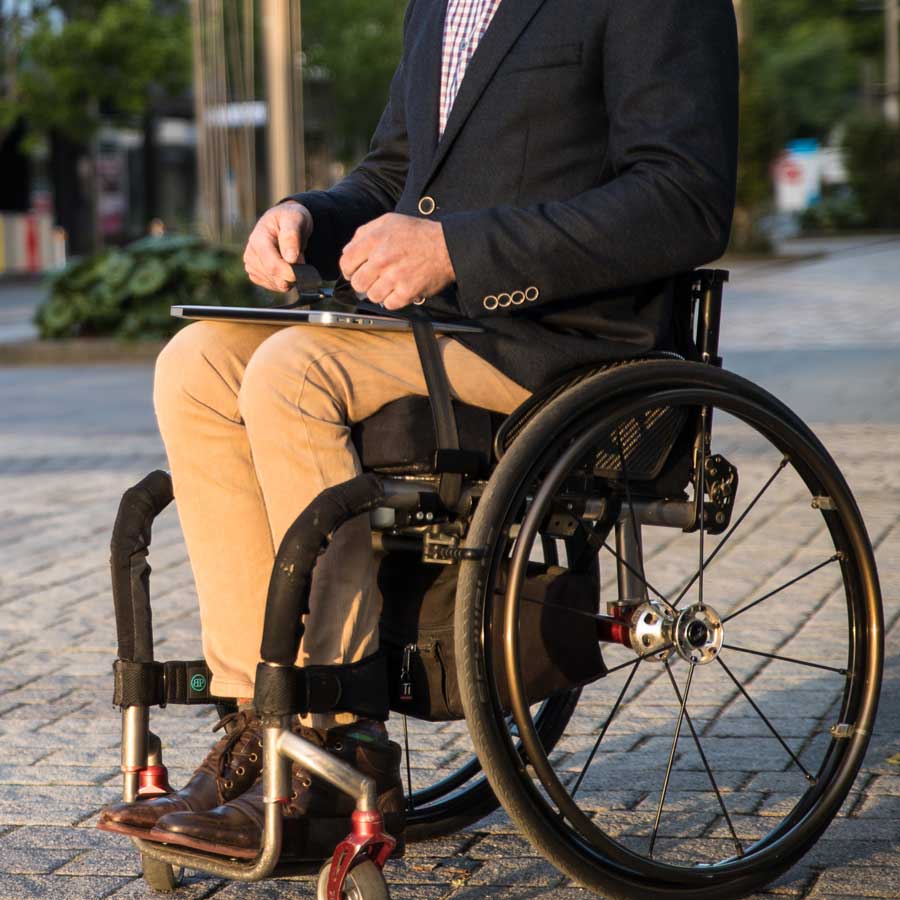
I invented LapStacker because I was sick of dropping things. It's a retractable strap system made for wheelchairs that holds items securely and safely on your lap.
How do wheelchair users carry things?
There are a number of methods wheelchair users can use to carry things. I've rounded them up, and here are my thoughts.
LapStacker is the best solution for carrying things while you're actively moving: hands free, load secure, balance intact. No single option works for every situation, and other options have their merits. But LapStacker outdoes them in a number of ways.
LapStacker: the best way for a wheelchair user to carry things.
LapStacker is the world's first and only purpose-built carry system for your wheelchair. Designed by a wheelchair user, for wheelchair users.
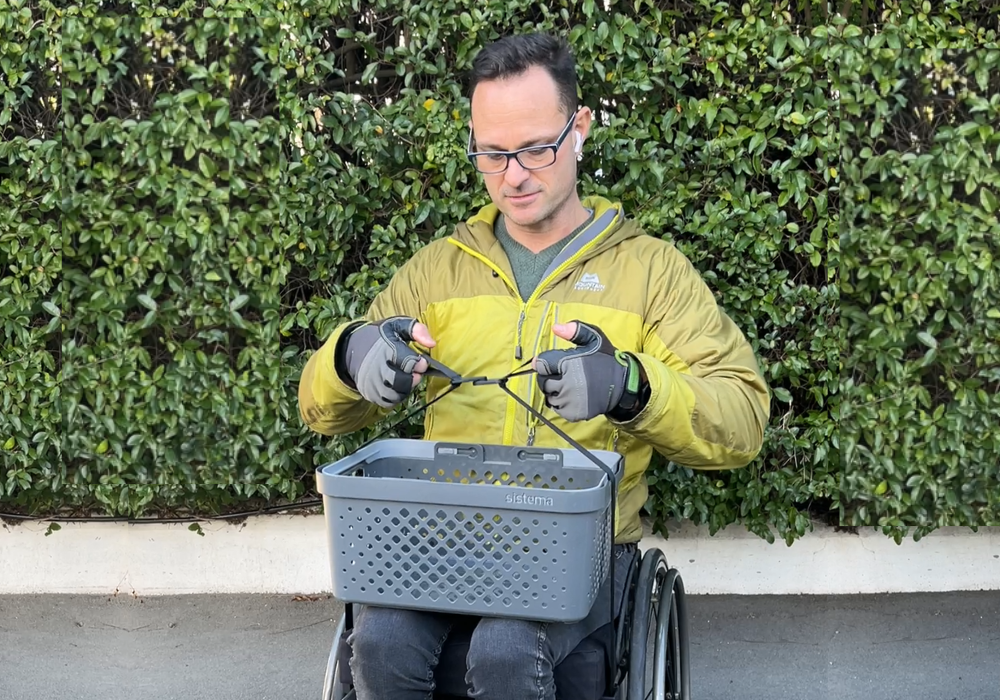
The retractable straps sit on either side of your chair, pull out when you need them, and clip together with magnetic buckles across your lap to hold shopping bags, a coffee, your laptop, a box, books, and whatever else you need in your day.
What is LapStacker best for:
- Carrying items while rolling.
- Grocery shopping and running errands.
- Around the home, carrying things between rooms.
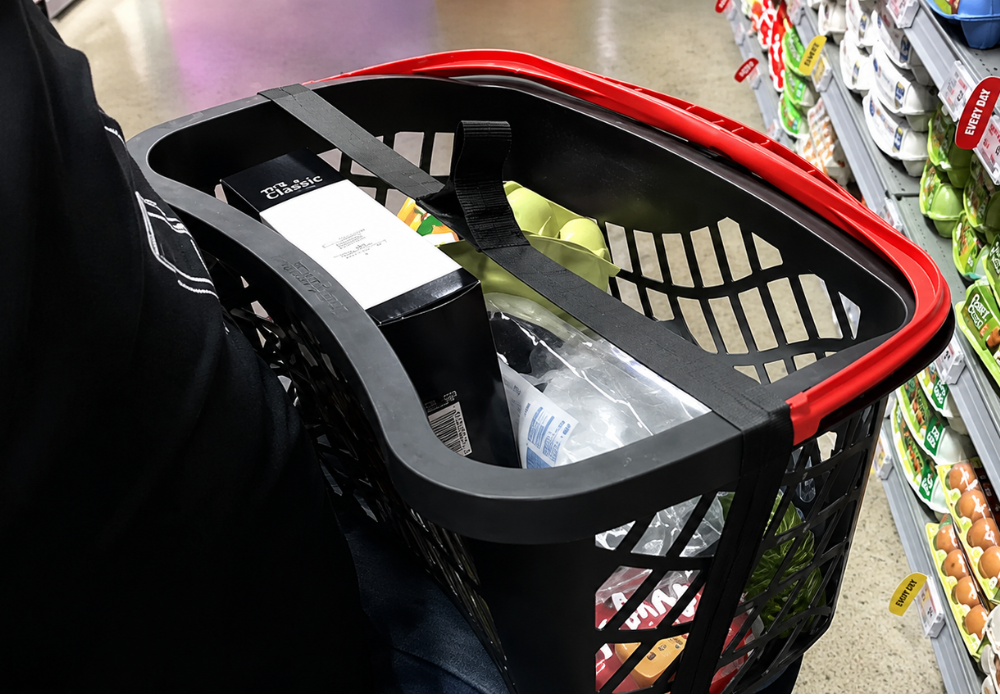
- Securing a basket to your lap.
- Holding your phone or laptop when out and about.
- Anything where you need your hands free and your lap clear.
The real-world case: Before I had LapStacker, grocery shopping meant balancing items on my knees and hoping for the best. Now I clip the buckles at the trolley, load up, and roll. I stopped dropping things and started securing them.
What it doesn't do: It's not a bag. It's not a storage compartment you zip up and forget about. It holds items actively on your lap, then retracts when you don't need it.
Verdict: If you self-propel, this is the most useful carry solution you can add to your chair. Nothing else solves the hands-free problem as cleanly.
Under-seat wheelchair bag: the best storage for wheelchair users.
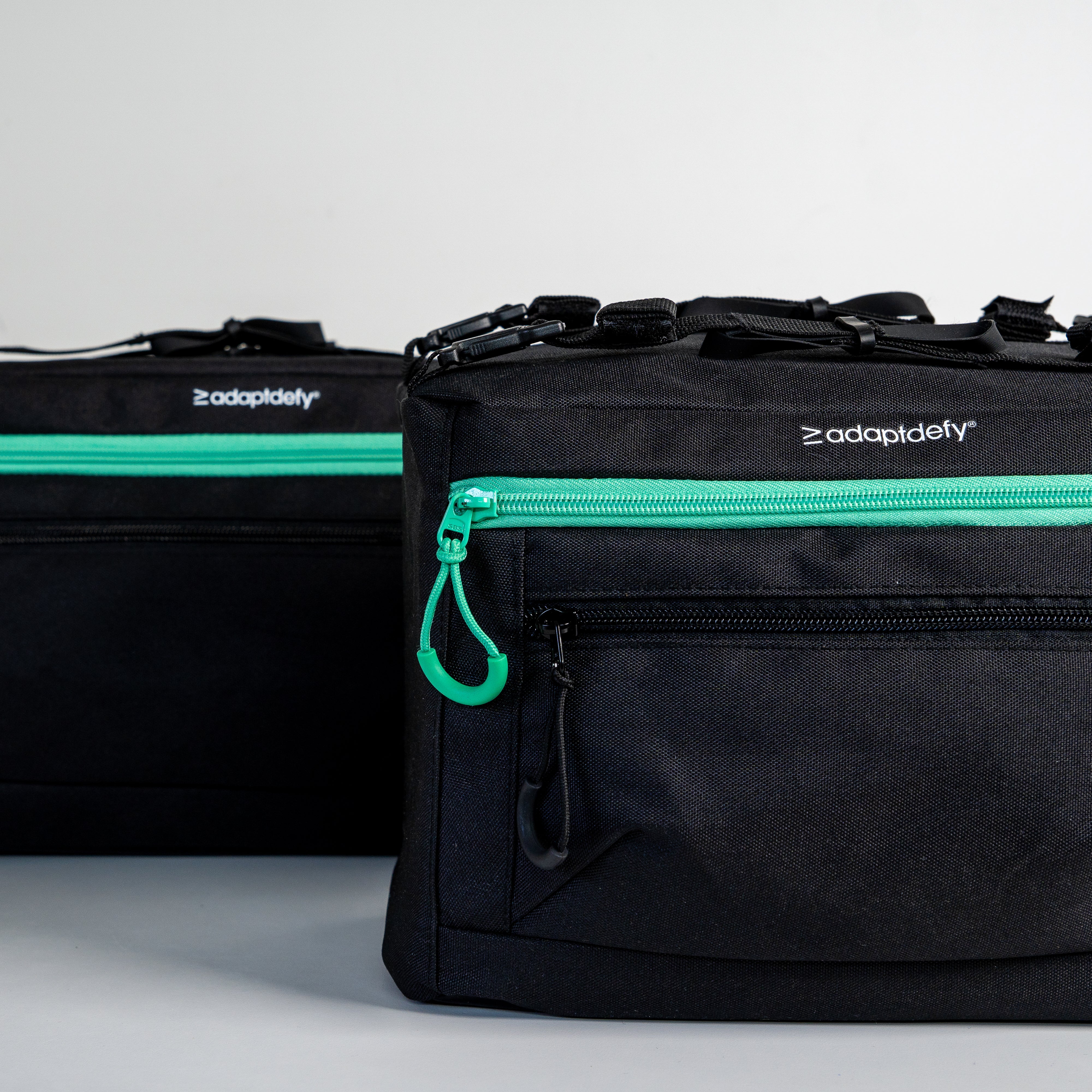
An underseat bag is the best solution for carrying everyday essentials in a wheelchair. It mounts beneath the seat frame, which keeps the weight low and centred. That matters more than most people realise. It doesn't shift your balance, it doesn't sit behind you where you can't reach, and it's hidden from view, making it more secure in busy areas with high theft potential.
Weight distribution on a wheelchair matters. High loads behind the seat make you easier to tip, especially on inclines. A bag under the seat keeps the weight low and centred; better for your chair's handling.
What are underseat bags best for:
- Everyday essentials.
- Keys, charger, medication, and a snack.
- Things you need access to throughout the day, but can be stored away when not in use.
- Loose items you need, but don't want on your lap.
What it doesn't do: Limited capacity. Not the right choice for carrying groceries or bulky items from A to B.
Verdict: Every wheelchair setup should have one. Pair it with LapStacker, and you've solved both problems: essentials storage and active carrying.
Side pouch or armrest bag: at your side, always.
Attaches to the side of the frame or armrest. Fast access is the main advantage; things you need to grab quickly without digging around.
What is a side pouch best for:
- Items you reach for constantly throughout the day.
- Phone or wallet.
What it doesn't do: Not much capacity. Doesn't work well for anything bulky. Can be difficult to find one that fits your chair.
Watch for arm clearance. Some side pouches sit in a position that interferes with your push stroke or gets in the way during transfers. Worth checking before you commit to one.
Verdict: Useful as part of a broader system. Not a standalone solution.
Lap tray: great for stationary tasks.
A flat surface that mounts across the armrests, creating a table over your lap. For carrying multiple small items around the house, it's actually very practical. Items stay flat, nothing slides, and you can move from room to room with a full lunch, a laptop, or a craft project without juggling anything.
What is a lap tray best for:
- Indoor use and meals.
- Paperwork and laptop work.
- Carrying multiple small items within the home or at a desk.
The limitation: Outside the home, a lap tray creates real problems. It blocks access to your wheels, meaning you can't self-propel with a rigid tray across your lap. It's not something you pop on at the supermarket and roll around with.
What it doesn't do: Active carrying outdoors. Anything that requires propelling yourself.
Verdict: Genuinely useful for specific tasks at home or at a desk. Not a substitute for a carry system when you're on the move.
Backpack: great for larger items.
Attaches to the push handles or backrest frame. Decent capacity, and it keeps everything off your lap.
Backpacks can be a great option for wheelchair users; they're low-cost, available in many styles and colours, and easy to install on the back of your chair.
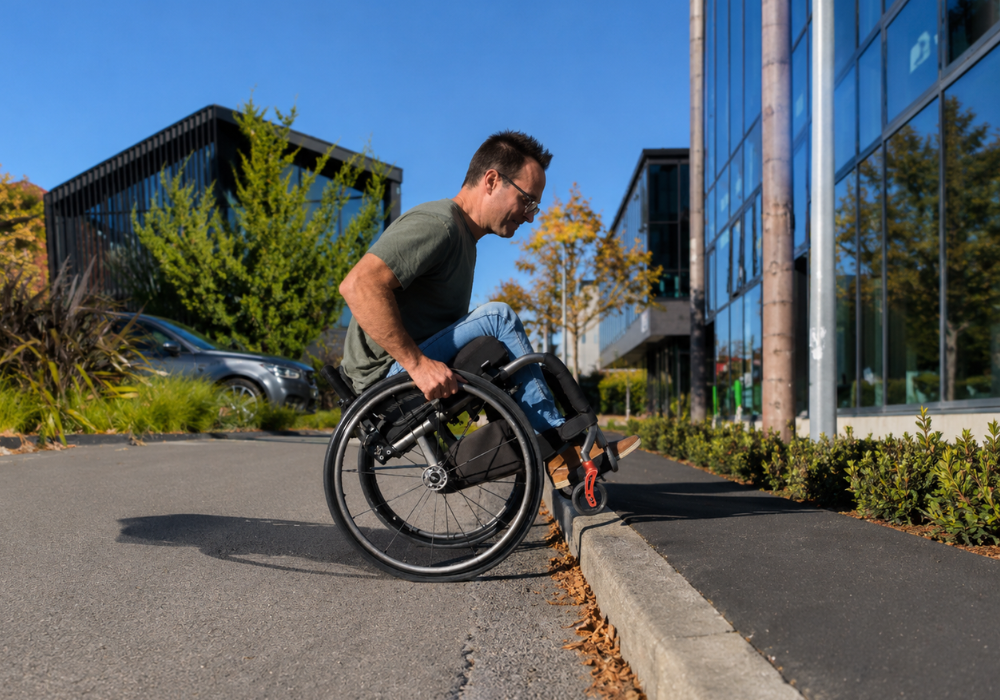
This is where most people get caught out. A heavy backpack behind your chair shifts your centre of gravity backwards. If you self-propel, you're working against that shift on every push, especially uphill. And if your chair's balance is already set fairly far back, an overloaded backpack raises the tipping risk significantly.
What is a backpack best for:
- Bulkier items.
- Change of clothes.
- Rain jackets.
- Items you won't need access to mid-trip.
What it doesn't do: Doesn't work well with heavier loads for self-propellers. Can also make transfers awkward if the bag is mounted at a height that gets in the way.
Verdict: Useful for specific situations with light loads. Know the weight limits for your chair setup.
Crossbody bag or waist pack: always with you.
The carry solution that goes with you, not with the chair. Stays on your body during transfers. Useful when you're moving between chairs, getting into a car, or anywhere the chair isn't coming with you for a stretch.
What are cross-body bags best for:
- Transfers and situations where your chair isn't with you.
- Carrying essentials that need to move with your body, regardless of what the chair is doing.
What it doesn't do: Can get in the way when you're actually propelling. A shoulder bag in particular adds an asymmetric load that can increase shoulder strain over time. It all depends on the bag style and how much weight you carry.
Verdict: Worth having for transfers and body-carry situations. Not the right tool for daily rolling.
Cup holders and hooks: best for single items.
Simple. Effective for what they do. A cup holder keeps your drink accessible without it going on your lap. Hooks off the push handles can hold a shopping bag for short distances.
What are cup holders best for:
- Single-item add-ons.
- A drink or a water bottle.
What it doesn't do: Hold much other than what they were designed for. Cup holders, especially, can be bulky and get in the way when not in use.
Verdict: Useful accessories for specific items, but not a primary carry system.
So, what is the best way to carry things in a wheelchair?
The best option depends on a few factors:
- Weight distribution matters. Heavy bags on the back can affect tipping stability on manual wheelchairs.
- Keep frequently needed items within easy reach.
- Consider how the solution affects propelling ability if you're a self-propeller.
The setup that covers most situations: LapStacker for active carrying, and an underseat bag for everyday essentials. That combination handles roughly 90% of what comes up in a regular day.
Everything else is situational. A lap tray earns its place at a desk. A backpack works for the right trip with the right load. Hooks and cup holders are useful accessories, not systems.
| Option | Best use | Works for powerchairs | Impact on your stability |
|---|---|---|---|
| LapStacker | Carrying a wide range of items in different sizes and shapes. | ✅ Yes | Minimal; the weight is centred on your lap and secured. |
| Under-seat bag | Smaller items and daily essentials | ❌ No | Weight low and centred under your chair. |
| Side pouch | Phone, wallet, keys | ⚠️ Maybe Depends on mounting. | Minimal impact |
| Lap tray | Indoor tasks, meals, desk | ✅ Yes | Stable when not moving. Impossible to use while propelling. |
| Backrest backpack | Light loads | ⚠️ Maybe, can be difficult to access. | Shifts weight back; use carefully |
| Crossbody / waist pack | Transfers | ✅ Yes | Depends on load and shoulder placement |
| Cup holders / hooks | Single items | ⚠️ Maybe depends on mounting. | Can be bulky when not in use. |
Frequently asked questions.
What do wheelchair users use to carry things?
For active carrying while self-propelling, LapStacker is the most practical solution. It holds bags, shopping, and everyday items securely across your lap with retractable straps and magnetic buckles, keeping your hands free and your balance stable. For storing everyday essentials, an underseat wheelchair bag works best, keeping weight low and centred.
Is a lap tray useful for wheelchair users?
Yes, but primarily indoors. Lap trays are practical for meals, paperwork, laptop use, and carrying multiple small items around the home. They're not suitable for active outdoor use because they block your push stroke. For outdoor carrying, LapStacker is the better option.
How to carry things without a lap tray.
Lap trays are rigid and obstruct self-propulsion. More importantly, they don't address the core challenge for wheelchair users: preventing items from sliding off your lap.
LapStacker solves this. It's the world's first and only retractable carry system for your wheelchair. Load your items, secure the straps, clip the buckles. Zip. Clip. Go.
Can you carry a bag on the back of a wheelchair?
You can, but it comes with trade-offs for self-propellers. A backpack on the push handles or backrest shifts weight behind the chair, which affects balance and increases tipping risk on inclines. Light loads are manageable; heavy loads aren't recommended. Low-mounted options like an underseat bag are better for stability.
What should a wheelchair user prioritise when choosing a carry solution?
In order: free hand movement (hands need to be on the wheels), low shoulder strain, weight distribution and balance, and then storage capacity. Most people default to thinking about how much they can carry rather than how carrying affects their movement. Getting that priority order right makes a real difference.
Best lap accessories for wheelchair users.
For active, on-the-go carrying, LapStacker is the clear winner. It's a retractable, magnetic strap system that mounts to your wheelchair frame and holds items securely on your lap, keeping your hands free to roll. For stationary tasks at home or a desk, a lap tray works well. But if you're moving, LapStacker is the one to have.
About the author.
Mike Brown is a T10 complete paraplegic and co-founder of Adaptdefy, a New Zealand-based company helping wheelchair users adapt, defy, and thrive. He sustained his spinal cord injury in 2012 and built LapStacker after getting tired of carry options that didn't work.
LapStacker is the world's first and only retractable carry system for wheelchairs, used by wheelchair users across New Zealand, Australia, the United States, and the United Kingdom.
Mike writes about wheelchair skills, independent living, and adaptive fitness at adaptdefy.com/blogs/wheelchair.

Leave a comment
All comments are moderated before being published.
This site is protected by hCaptcha and the hCaptcha Privacy Policy and Terms of Service apply.