

For a quick shop in a wheelchair, skip the cart. Use your lap space with a securing system like LapStacker or a strapped basket, choose smaller product sizes to keep the load manageable, and use the right bag to get your groceries home.
Gem and I recently shared a comparison between accessible and regular shopping carts.
But sometimes the shop doesn't call for a full shopping cart. When you're just getting the essentials, there's a better way to carry your groceries.
When you're grabbing five or six things, a full trolley is more trouble than it's worth. You don't need the capacity. What you need is a way to carry a small load safely, reach what you came for, and get out without it turning into a half-hour ordeal.
Here's exactly how we do it, including the parts that took some trial and error to figure out.
Check out the video first if you want to see it all in action, then read on for the breakdown.
When to skip the cart entirely.
Not every shop calls for a trolley. If you're getting fewer than eight to ten items, or you're doing a quick top-up between bigger shops, a cart adds bulk and complexity without adding much value.
The decision is simple: if everything fits securely on your lap or in a bag, leave the cart. If you're doing a full weekly shop, or carrying anything heavy and bulky, the wheelchair accessible vs regular cart comparison has that covered.
For a quick shop, your lap is your cargo space. The question is how you use it.
Carrying your groceries: LapStacker vs a basket.
Your lap works well as a carrying surface. Items that aren't secured don't work as well.
If you have spent any time in a wheelchair, you will know the struggle of dropping things off your lap. One sharp corner, one moment of distraction, and you're watching your groceries roll across the aisle. Anyone who's chased a loose apple through a grocery store in a wheelchair knows exactly what I mean.
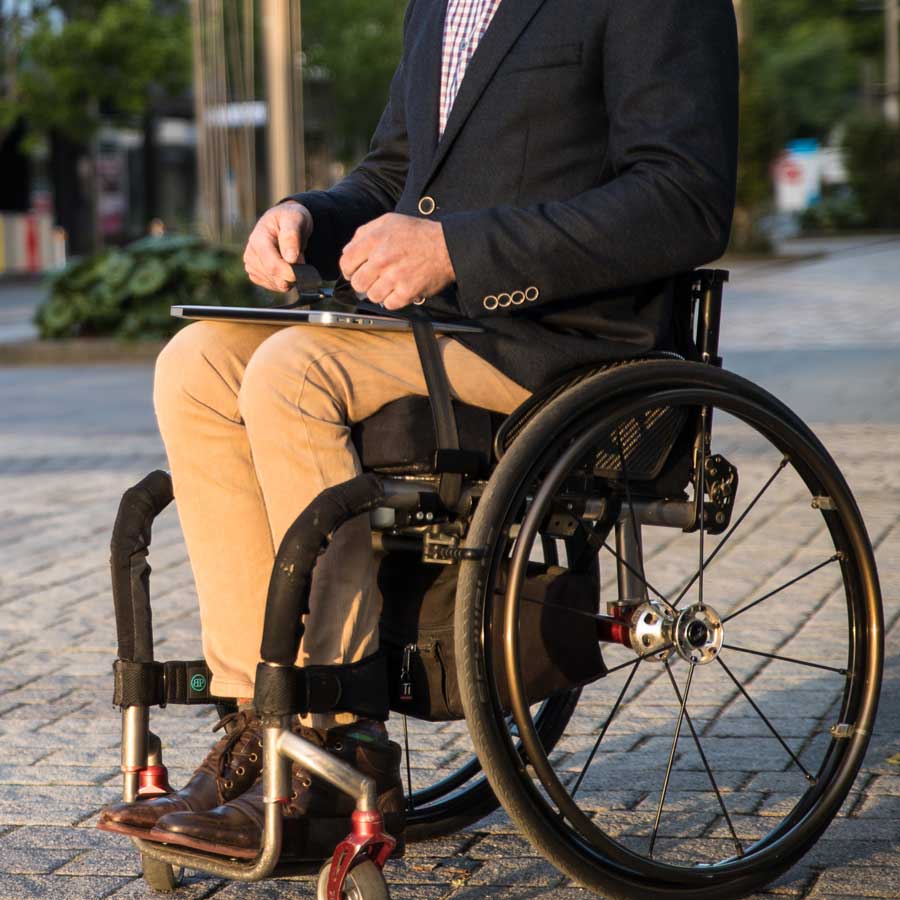
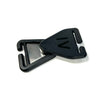
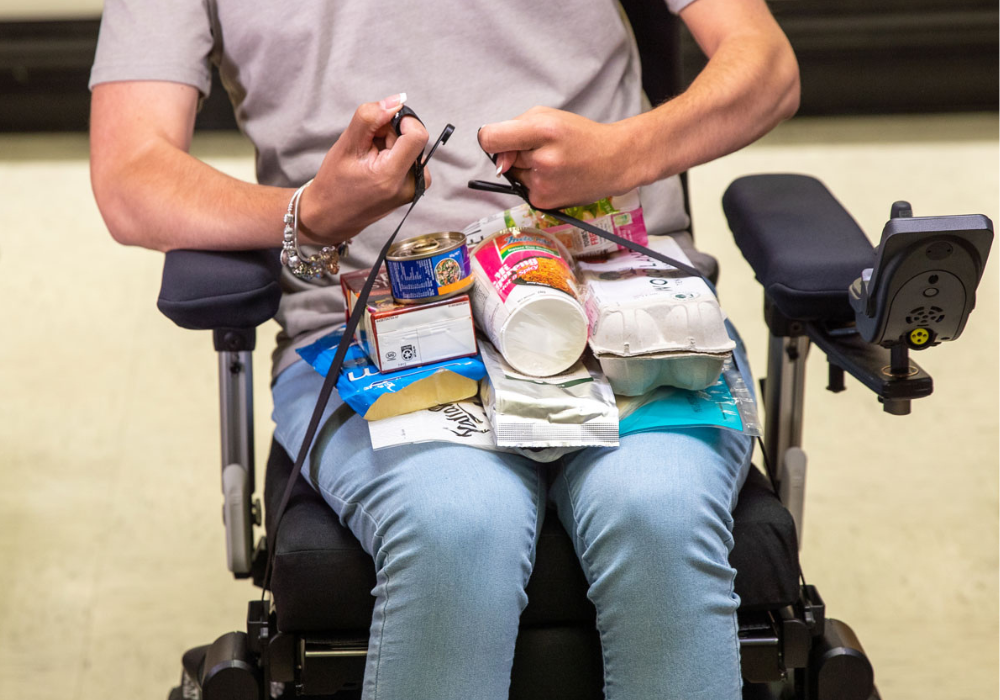
LapStacker fixes that. The retractable straps pull out from each side, clip together with a magnetic buckle across your load, and hold everything locked in place while you push. Loose items, a hand basket, a reusable bag full of produce; it doesn't matter what you're carrying, it stays put. You get to focus on navigating the store instead of babysitting your groceries.
Using LapStacker : I load items directly onto my lap and use LapStacker to secure them in place with the retractable straps. Everything stays locked down while I push. I can move through the store at normal pace, take corners, navigate around other shoppers, and the groceries come with me. The hot cross buns made it home intact. That's the benchmark.
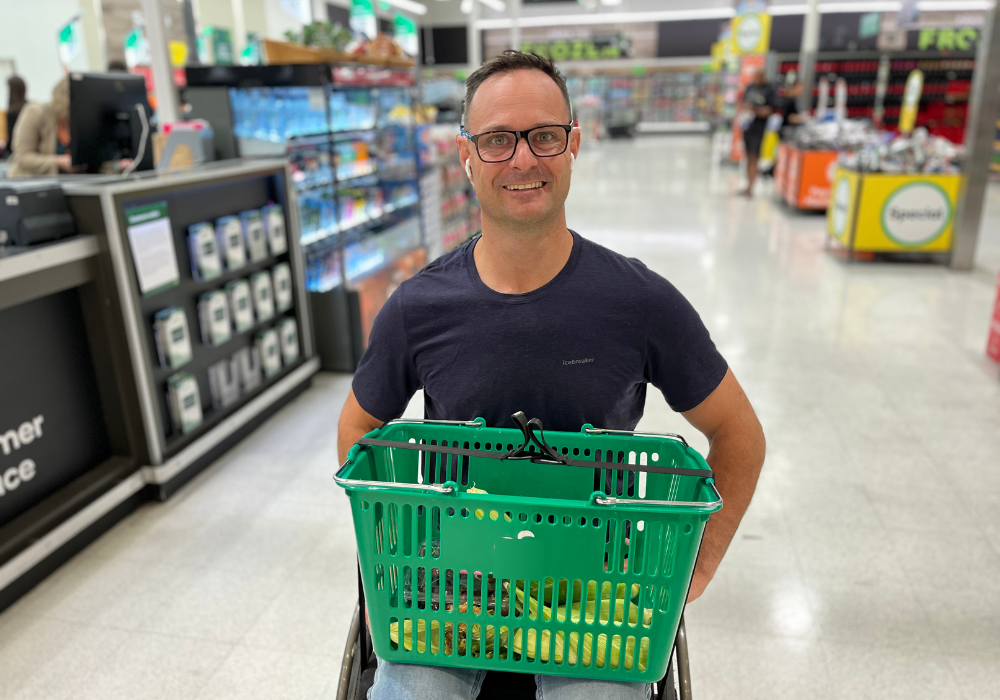
Using a basket with LapStacker: Gem's approach is slightly different. She uses a basket on her lap and clips the LapStacker straps across the top of the basket, holding it in place. This works especially well if you prefer having items contained rather than loose on your lap. It also makes checkout faster; lift the basket straight to the counter rather than unloading item by item.
Both methods work. The basket approach has an edge if lap pressure is something you manage, since the basket itself distributes the weight differently to items sitting directly on your legs. Worth trying both and seeing what suits you.
How to reach low items safely.
Bottom shelf items are awkward. You're leaning forward, your chair wants to roll, and you're trying to grip something while keeping your balance. Here's the technique that removes most of that risk.
- Move your chair in close to the shelf first. Proximity matters more than reach. The closer you are, the less you need to lean, and the more control you keep.
- Grip the push rim or wheel before you reach down. This is the step most people skip. Gripping the wheel stops the chair from rolling as you shift your weight forward. Don't reach first and brace after.
- Lean with control, slowly. No fast grabs. Take it steady, get the item, and come back upright before you adjust your grip.
How to reach items on high shelves.
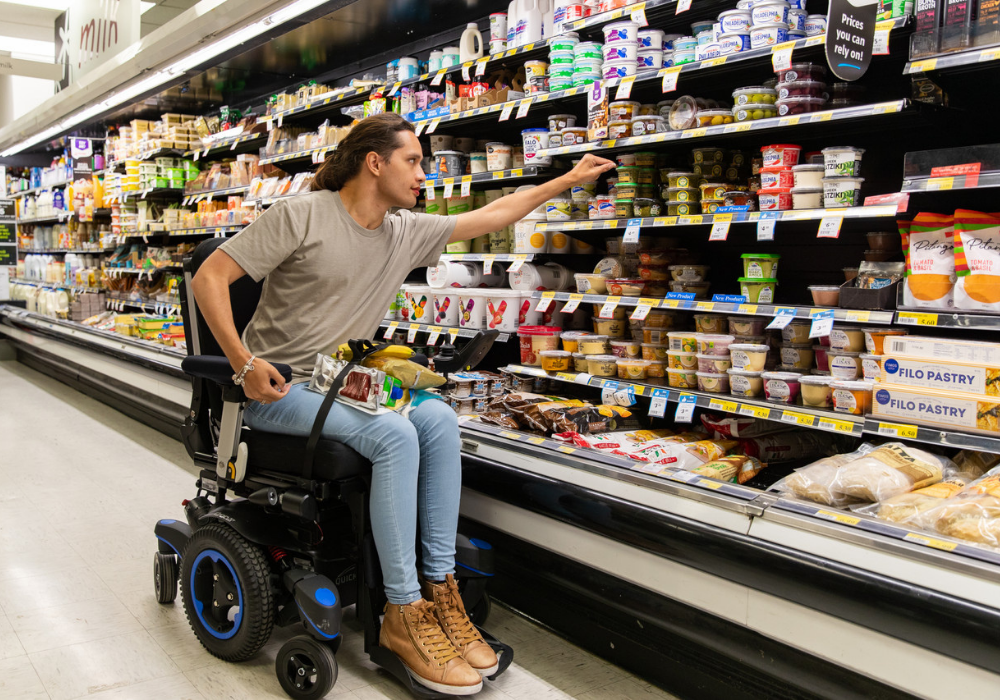
The instinct when reaching up is to stretch from wherever you're sitting. There's a better move that gives you noticeably more height without any extra risk.
- Slide forward in your seat before you reach. Shifting your weight forward raises your effective reach height significantly, more than most people expect.
- Make sure your brakes are on, or your chair is stable, before you move. Reaching up shifts your centre of gravity. You want the chair locked before that happens, not after.
- For anything fragile or awkward, use a reacher tool. A basic grabber handles most items on high shelves without the balance question entirely. Worth keeping one in your bag if high shelves are a regular issue.
If something is genuinely out of reach and the reacher won't cut it, ask a staff member. Most stores are glad to help. It takes ten seconds and saves you the stretch.
Choose the right size, not just the right item.
Milk is heavy. Two litres of it is heavy and awkward, and once it's on your lap, it affects how the chair handles. Overloading your lap with a dense, heavy item is a real mobility problem, not just an inconvenience.
Gem went with the one-litre bottle. For items you buy regularly, smaller sizes often make more sense from a mobility standpoint. You're shopping more frequently, which keeps each trip lighter, and you're not trying to balance a heavy load while navigating a checkout lane.
Save the bulk buying for online delivery. That's what it's for.
The right bags get your groceries home.
Getting to the checkout with your items is one thing. Getting them out of the store and home is another.
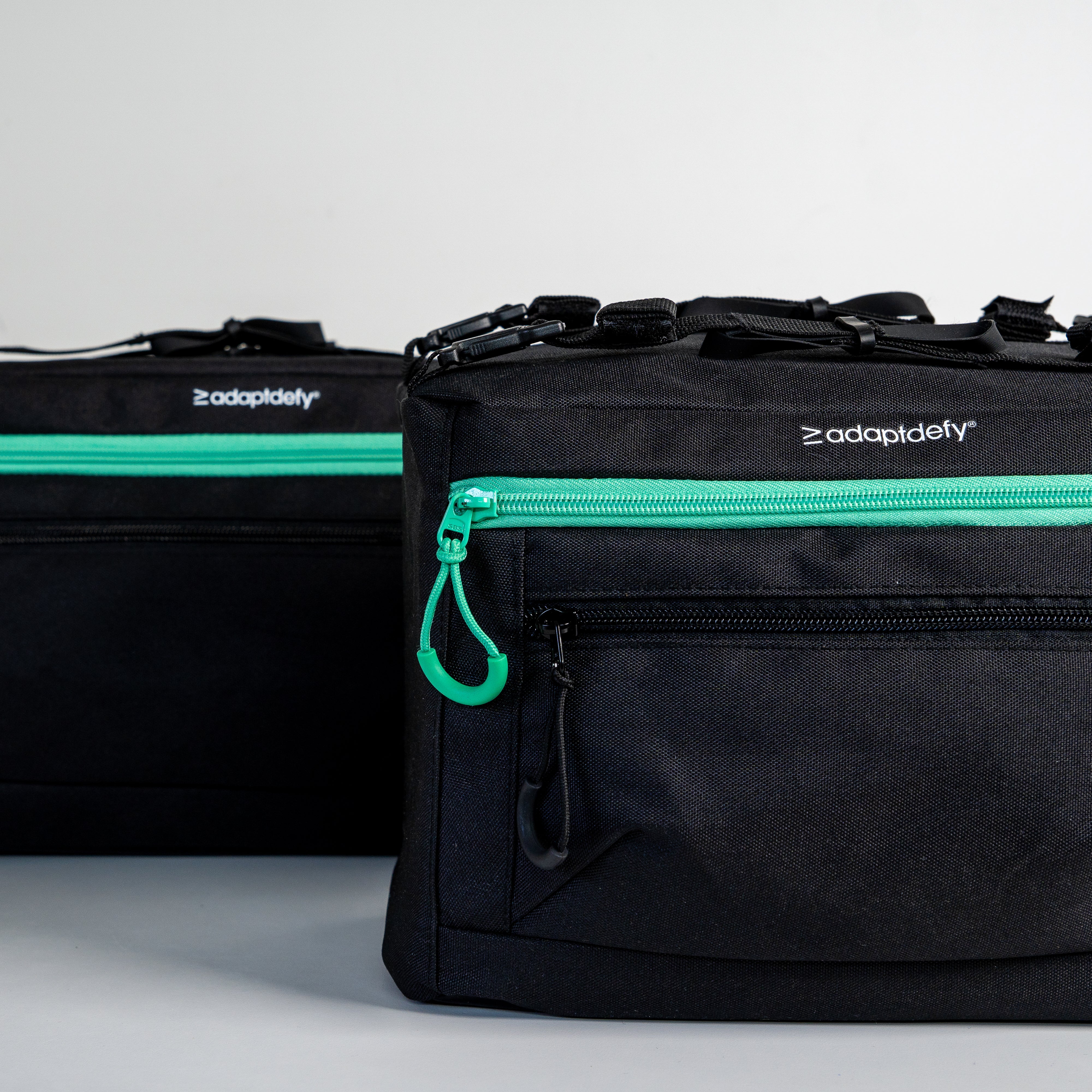
I use Adaptdefy's underseat wheelchair bag, for my wallet, phone, and small essentials. It sits under the seat, completely out of the way. When I get to the checkout, everything I need is in one place. I'm not digging around on my lap or fishing through a bag while people queue behind me. Checkout is fast.
Gem keeps a collapsible reusable bag in her chair as a backup for overflow items. It's not a replacement for a proper wheelchair bag, but it packs down to nothing and it's there when you need it.
One practical note: bags hung on the back of your chair work, but watch the weight. A heavy bag on the back changes your chair's balance, particularly on inclines. Keep the weight forward where you can manage it.
Putting it together.
A quick shop in a wheelchair doesn't need to be slow, exhausting, or stressful. The tools matter, LapStacker for carrying, the Defiance bag for your essentials, the right size products for a manageable load. But so does the technique: move in close before you reach, grip the wheel before you lean, slide forward before you stretch up.
Get those two things working together and a quick grocery run is exactly that. Quick.
For everything involved in a larger shop, including the full breakdown of wheelchair accessible carts vs standard carts, read the complete guide to grocery shopping in a wheelchair.
FAQ
What is the best way to carry groceries in a wheelchair without a cart?
LapStacker secures items directly on your lap with retractable straps, keeping everything in place while you push. Alternatively, a hand basket on your lap with LapStacker straps clipped across the top contains items and makes checkout easier. For very small shops, a bag hung on the back of the chair or worn across the body also works.
How do wheelchair users reach items on low shelves safely?
Move the chair in close to the shelf first to reduce how far you need to lean. Grip the push rim or wheel before reaching down to stop the chair rolling as your weight shifts. Then lean slowly and with control. This sequence removes most of the balance risk.
How do wheelchair users reach high shelves?
Sliding forward in the seat before reaching up gives noticeably more height than reaching from a reclined position. Brakes should be on before shifting weight. A reacher or grabber tool handles most high shelf items and removes the balance question entirely.
Is it better to buy smaller quantities when grocery shopping in a wheelchair?
For heavy or dense items, yes. A 2-litre bottle of milk on your lap affects how your chair handles in a way a 1-litre bottle doesn't. Keeping individual items lighter makes each trip more manageable. Bulk buying works better through online delivery, where weight isn't your problem.
What bag is best for wheelchair grocery shopping?
An underseat wheelchair bag, like the Adaptdefy Defiance, keeps your essentials secure and easily accessible without taking up lap space. A collapsible reusable bag stored on the chair handles overflows. Avoid heavy bags on the back of the chair on any route with inclines.
About the author.
Mike Brown is a T10 complete paraplegic and co-founder of Adaptdefy, a company helping wheelchair users adapt, defy, and thrive. He sustained his spinal cord injury in 2012 and has been refining his approach to everyday tasks, including the weekly grocery run, ever since.
Mike co-created LapStacker after getting tired of carrying options that didn't work. LapStacker is now the world's first and only retractable carry system for wheelchairs, used by wheelchair users across New Zealand, Australia, the United States, and the United Kingdom.
He writes about wheelchair skills, independent living, and adaptive fitness at adaptdefy.com/blogs/wheelchair.

Leave a comment
All comments are moderated before being published.
This site is protected by hCaptcha and the hCaptcha Privacy Policy and Terms of Service apply.