

You'll find dozens of guides out there, from different perspectives, an adaptive clothing brand, or a caregiver.
So we did something different.
We asked our community.
We put the question out and got back over 100 tips, hacks and hard-won lessons from real wheelchair users, split across every clothing category you can think of. Sleeves, bottoms, shoes, warmth, pressure injury prevention, what to spend money on, what to buy from a mainstream store and modify yourself.
Here's clothing hacks from 100 wheelchair users.
Why standard clothing doesn't work in a chair.
Most clothes are designed for a standing body. That creates a specific set of problems the moment you sit down.
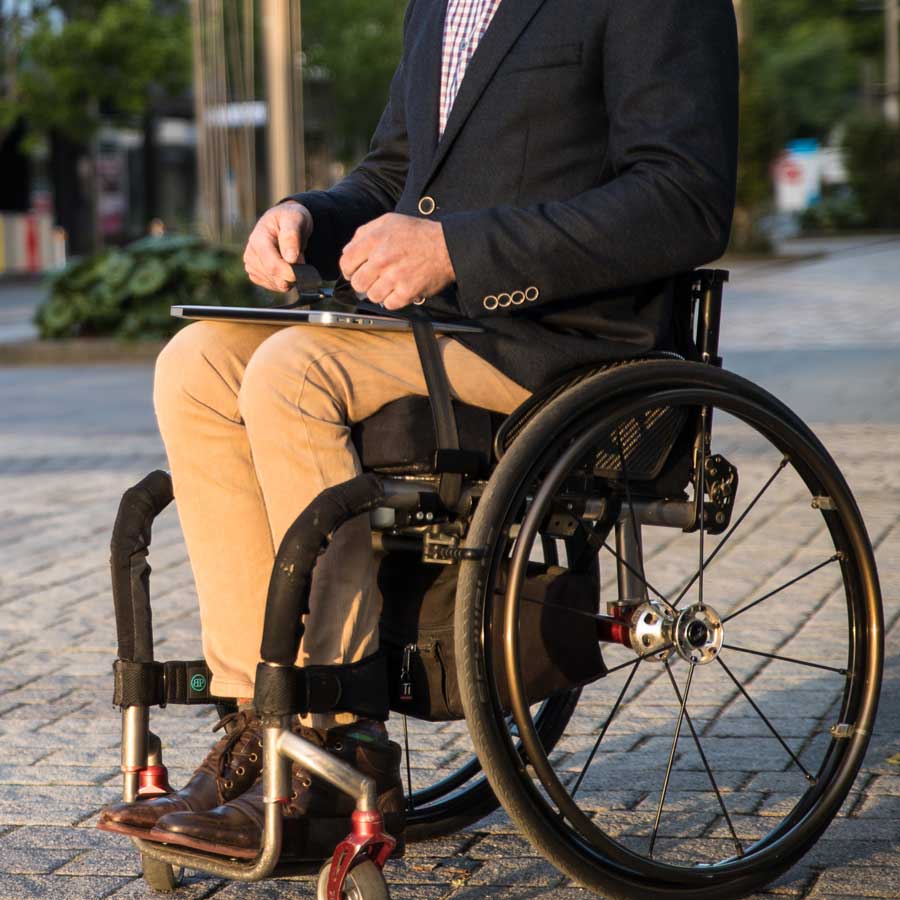
Waistbands that sit fine when you're upright dig into your stomach when you're seated all day. Shirts ride up at the back and expose skin. Sleeves that look neat when you're standing get caught in your wheels the moment you push. Back pockets, the kind everyone has on their jeans, sit directly under where pressure builds between you and your cushion.
None of this is obvious until you're in the chair. And nobody really tells you.
That's why the advice in this article matters. Not because there's a perfect pair of pants out there waiting for you, but because knowing what to look for, and what to avoid, saves you a lot of wasted money and unnecessary discomfort.
What to look for in wheelchair clothing.
Before we get into specifics, here's the short version. The best clothing for wheelchair users has:
An elastic, stretchy, or pull-on waistband with no rigid belt or digging waistband
A longer back rise to stop pants riding down and exposing your lower back
Thigh or side pockets you can actually reach while seated
No back pockets, which create pressure points directly under your seat
Sleeves that end at or above the elbow to keep them clear of your wheels
Natural or stretchy fabric, cotton, bamboo, jersey, or spandex blends
Dark colours that hide the reality of a mobile day
What are the best pants for wheelchair users.
Waist first. Rigid waistbands are the enemy. Todd has been in his chair for 32 years and says it plainly:
"I have not worn jeans since my accident 32 years ago. Always have pants with elastic waist, especially if you are active, or else you will constantly have your pants digging into your stomach." - Todd
Track pants, leggings, maternity-style waistbands, anything with real stretch at the waist, are your friend. Steph agrees:
"I like wearing maternity pants. They just feel comfortable." - Steph
Chester adds the reason it matters beyond comfort:
"Pants must have spandex. Creases and folds may be painful and are a pressure injury risk." - Chester
Inseam length. Here's one most people don't think about until they're sitting in pants that show their ankles. When you're seated, the same inseam that fits you standing will ride up. Buy longer.
"Buy one size larger in inseam because otherwise the pants ride up your ankles when sitting. Standing I would wear a 30" inseam but now that I'm seated I wear a 32" inseam." - Lane
Leggings are consistently one of the most popular options across our community, and for good reason.
"I wear a lot of leggings because they don't cut into my groin and bugs can't crawl up my legs like in jeans." - Maria
Pockets. The front pockets on most jeans snag on wheels. Sew them closed.
"I sew my fiancée's front jean pockets closed as they would snag on the wheels." - Jodi
And remove the back pockets entirely, they sit right where pressure builds.
"Remove the pockets of the backside of the jeans. Makes them smoother and reduces risk of pressure sores. You ain't going to use these pockets anyway." - Erik
For accessible pockets, go to the thigh.
"Cargo style trousers, the pockets further down are better than trying to get into jean pockets." - Chris
"My husband likes cargo pants so that he can reach his wallet while sitting in the wheelchair." - Patricia
Mainstream brands that work. You don't have to spend $100 on adaptive pants. Here's what our community has found in regular stores:
"Im using the same Wrangler jeans, got 46 years in chair now." - Per
"Two pairs of jeans I always look for: Mish Mash, they are really stretchy around the waist and buttocks. M&S 360 Flex. Another pair I like are Ben Sherman." - Simon
"G-Star Raw jeans offer inseams as long as 38". They also have a variety of unique pockets on different models. I have several with thigh pockets you can access while seated." - David
"Modern hiking trousers are soft, a bit stretchy and they have thigh pockets. I wear Fjern trousers mostly." - Ramjam
Colour. Dark is practical.
"I try to get them dark so they don't look as dirty, cause I wipe my hands on them all the time. My sleeves get so dirty too, try to get darker tops." - Kristy
Tops: shirts, jumpers and jackets.
Sleeves are the most dangerous part of your top. Loose, flapping fabric and spinning wheels are a bad combination.
The most popular solution in our community is the 3/4 sleeve.
"I love wearing 3/4 sleeve shirts. If they end at the elbow it's much less likely to interfere with the wheels." - Hannah
"I actually prefer short sleeve or 3/4 sleeve shirts. I also live in leggings and shirts that have a long back." - Melissa
If you want to wear long sleeves, Emmerson has a clever fix:
"Soft snagless hair elastics take care of your long sleeves. I fold my cuffs over them so I can keep my sleeves exactly where I want them." - Emmerson
Val takes it further for smarter occasions:
"Gauntlets to protect sleeves when they can't be tight, that jacket to a meeting etc. I've even cut down rubber gloves for this." - Val
No loose sweaters. This came up repeatedly.
"No loose sweaters for women, I always get them caught on the side of my chair." - Kathleen
Back hemlines matter. Shirts ride up constantly when you're seated and pushing. A longer back hemline keeps you covered.
"I actually prefer short sleeve or 3/4 sleeve shirts. I also live in leggings and shirts that have a long back." - Melissa
"I like crop tops or shorter length shirts because I don't like the bunching around my waist." - Taylor
There's no single right answer on length, it depends on your body and what you find bunches or rides. The key is knowing the problem before you buy.
Fabric. This one affects your skin directly.
"I find clothes made of natural fibres, like cotton/cotton jersey or bamboo, are much more comfortable for sitting on the synthetic material that covers my wheelchair cushion." - Nicki
No back zips on tops. They dig into your spine.
"Tops without zips on the back, sharp on your back. Soft cotton stretch material with soft openings, easy to get on and off without losing balance and no pressure points." - Belle
Best shoes for wheelchair users.
Laces are a significant source of frustration. Most of our community has moved away from them entirely.
"I do not have laces in my shoes. Slip on dress shoes." - Kathleen
"Padded high tops with zippers on the side or back. My go-to shoes are Vans sk8-hi with a rear zipper. Never have to tie your shoes again." - David
"Slip on shoes are easy but sometimes getting my right foot onto the footplate means I lose my shoe." - Heather
If you wear heels, grip matters more than anything.
"Grip tape, either on your heels/shoes or on your foot plate. I wear high heels regularly so it's vital to keep my feet on my chair." - Michelle
"Shoes with a heel not a wedge or trainers. The heel stays on my footrest better." - Val
Wide-fit shoes with adjustable closures solve this. It's worth trying before you default to bare feet.
How do wheelchair users stay warm?
Legs that don't have sensation still get cold. And cold legs are a real problem in a chair, whether you feel them or not.
Layer underneath. Shannon puts it simply:
"Long johns under pants is a good idea." - Shannon
Tights for women. Alice recommends being specific about denier:
"Wear 80 to 120 denier tights to keep your legs warm." - Alice
The sleeping bag hack. This is one of the best practical tips in our entire community:
"If you use a kids sleeping bag in the winter as a lap blanket it prevents the wind and snow from getting on your feet and legs. If you lay a blanket on your chair before transferring into it, you can wrap it around you better." - Angelina
Compression socks do double duty, warmth and circulation.
"Compression socks. Knee high at minimum. Also, a bum bag because I can't use my trouser pockets." - Joey
Best adaptive clothing for women.
Skirts and dresses work in a chair, with some adjustments.
Length matters more than you think. Anything too long gets caught in the chair. Anything too short rides up when you're seated.
"For women and anyone who wants to wear a skirt, don't wear anything below the knee, not too floaty, and wear 80 to 120 denier tights to keep your legs warm. If you're wearing shorts and you're grocery shopping, put a newspaper or something on your knees first or you get grid marks on your legs all day. If you're wearing heels make sure to alter the foot plate to suit the height or you'll be sat with your knees up and everyone can see up your skirt." - Alice
Angela has a consistent formula that works:
"I wear Jersey dresses that finish just on the knee and are comfy with full length sleeves, with some warm soft leggings which keep my injured leg safe and warm, sensible lace ups, a cardy, and if cold, a jacket or a wool coat, because they are more flexible and stay buttoned up." - Angela
Fitted at the hip, with some flare below, stops the riding-up problem.
"With skirts, fitted around hips then fuller to stop them riding up round your thighs." - Val
For modesty when wearing skirts, Nicole's tip is practical:
"Two way zipper jackets and cross body bags worn across the chest, not the back, are reachable quickly." - Nicole
Pressure injury prevention: what your clothes are doing to your skin.
Your clothing is in contact with your skin for hours at a time, under constant pressure from your cushion and your body weight. The wrong fabric or design decisions compound over time.
Remove back pockets. This is the single most impactful modification you can make to standard jeans.
"Remove the pockets of the backside of the jeans. Makes them smoother and reduces risk of pressure sores." - Erik
Spandex blend is not optional. Hard fabric creates creases. Creases create pressure points.
"Pants must have spandex. Creases and folds may be painful and are a pressure injury risk." - Chester
Natural fibres against the skin. Synthetic fabric traps sweat. Sweat against skin under pressure is a pressure sore risk.
"I find clothes made of natural fibres, like cotton/cotton jersey or bamboo, are much more comfortable for sitting on the synthetic material that covers my wheelchair cushion." - Nicki
No rivets, rough seams, or back zips against skin you may not be able to feel. Belle covers the zips. Check every garment for raised hardware on the back before you buy.
If you have reduced or no sensation in your lower body, these details matter more than anything else in this article.
Is adaptive clothing worth it?
Adaptive clothing is expensive. That's the reality. One commenter in our community thread put it directly:
"I know it is hard to find clothing to adapt to what you need in the regular stores but I believe most of us have to because of the price point." - Community member
Here's a practical framework.
| Worth buying adaptive: | DIY modifications: |
|
Pants with side-zip access for catheter or assisted dressing Pants with a raised seat and no back pockets (hard to find mainstream) Magnetic closure shirts if buttons are a dexterity issue |
Sew front pockets closed to stop wheel snagging Remove back pockets on pants. Apply grip tape to footplate or shoe heel Use hair elastics to hold long sleeves at the elbow You don't need to spend a lot to dress well in a chair. You need to know what to change. |
Frequently asked questions.
What kind of clothes should a wheelchair user wear?
Clothes with elastic or stretchy waistbands, longer back rises, thigh or side pockets, and sleeves that end at or above the elbow. Natural fabrics like cotton and bamboo are more comfortable against wheelchair cushion material. Dark colours are practical for hiding everyday grime.
What is adaptive clothing for wheelchair users?
Adaptive clothing is designed specifically for seated wear. Key features include higher back rises, side or front zip access, no back pockets, easy-to-use closures like magnets or Velcro, and stretch fabric. It's useful but not always necessary. Many wheelchair users get excellent results from mainstream clothes with small modifications.
Can wheelchair users wear jeans?
Yes. The key is buying a longer inseam than you'd wear standing (jeans ride up when seated), choosing a stretch or spandex blend, and removing back pockets to reduce pressure sore risk. Brands like G-Star Raw, Mish Mash, and M&S 360 Flex work well for many in our community.
How do wheelchair users keep warm?
Long johns under pants, 80-120 denier tights for women, knee-high compression socks, and a kids' sleeping bag used as a lap blanket in winter. Legs without sensation still get cold.
What pants are best for wheelchair users?
Elastic or stretchy waist, thigh pockets, no back pockets, spandex blend fabric, and a longer inseam than your standing size. Track pants and leggings work well for daily use. For smarter occasions, try M&S 360 Flex, Mish Mash, or G-Star Raw.
Clothing in a chair is something you figure out through trial, error, and a lot of wasted money on things that don't work. What this community shared changes that. Over 100 tips from people who have already done the figuring out for you.
I am a T10 complete paraplegic and acknowledge that not everyone has the function I do. Do your best with what you've got and continually look to improve your skills.
Happy Adaptdefying. – Mike

Leave a comment
All comments are moderated before being published.
This site is protected by hCaptcha and the hCaptcha Privacy Policy and Terms of Service apply.