

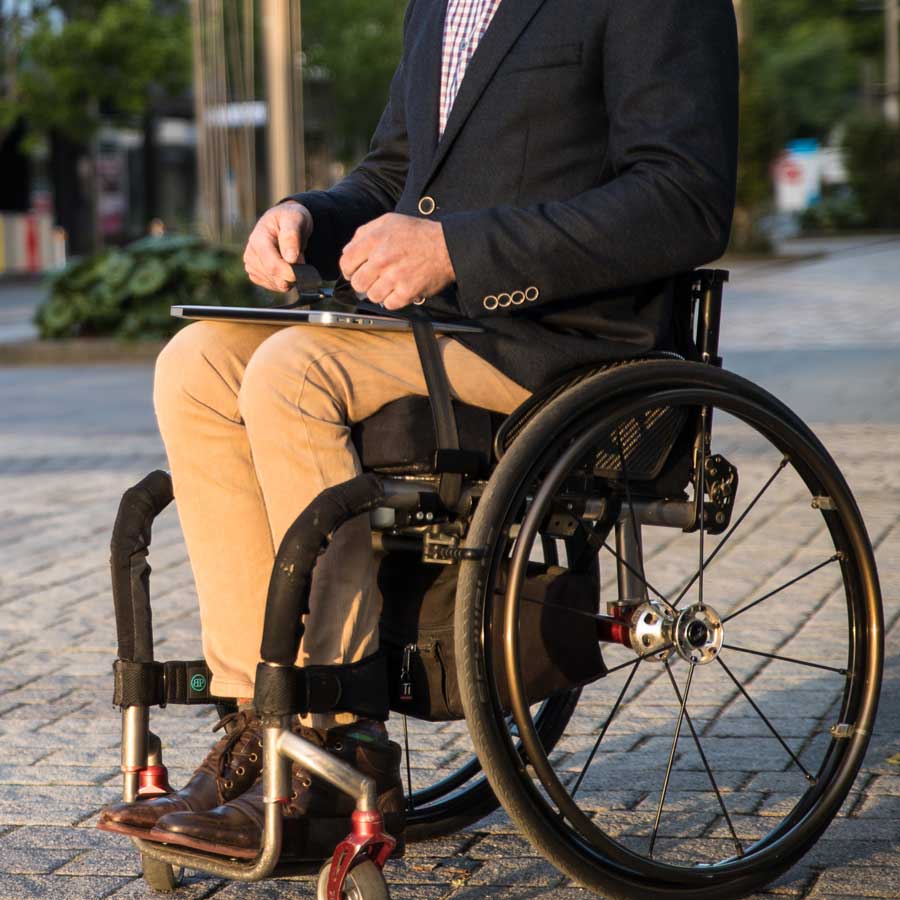
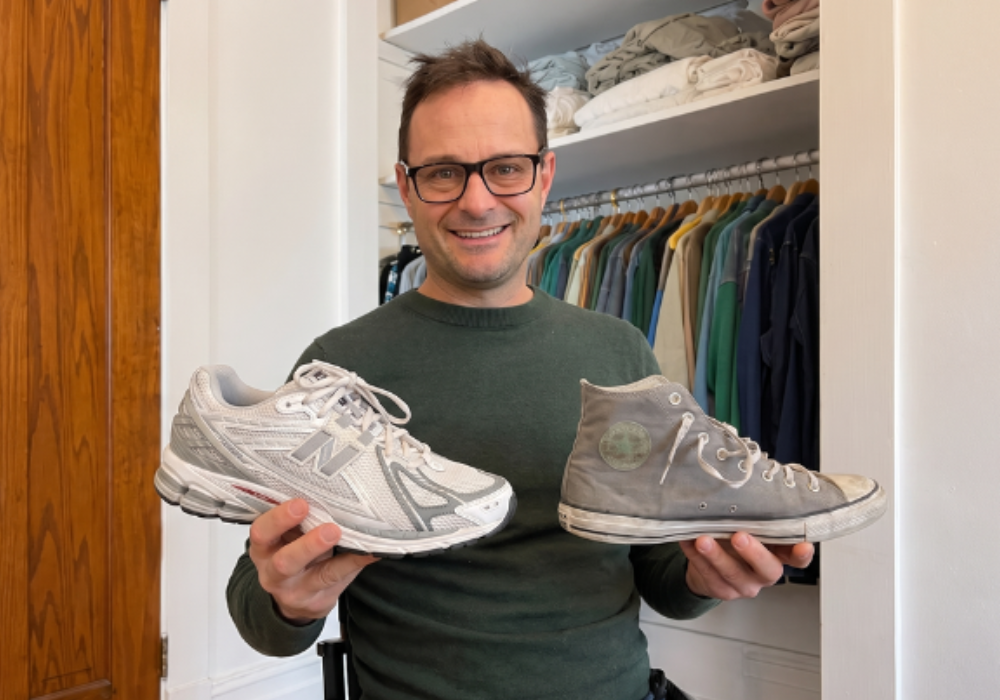
We asked our community of wheelchair users to share their best clothing tips. Over 100 responses came back. Shoes came up more than I expected-not in a generic "wear comfortable shoes" way, but with specific brand names, $5 hardware shop fixes, and the exact problems nobody warns you about before you figure them out yourself.
This covers the laces problem, swelling, how to keep your shoes on the footplate, and whether you can actually wear heels. You can.
The feature checklist for wheelchair-friendly shoes.
Run through this before buying. Works for dress shoes, sneakers, and boots.
| Feature | Look for | Avoid |
|---|---|---|
| Closure | Side zip, rear zip, velcro, magnetic, or elastic stretch laces | Standard laces that need retying each day |
| Width | Wide or extra-wide; adjustable to accommodate daily swelling | Narrow fits that tighten as the day progresses |
| Heel type | Flat sole or block heel-edge catches the footplate | Wedge sole-slopes off footplates with nothing to catch |
| Footplate grip | Add grip tape to footplate surface; rubber outsole on shoe preferred | Smooth synthetic soles on smooth footplate surfaces |
| Upper height | Padded high-top for ankle stability and footplate security | Very low-cut slip-ons that drift off the foot during positioning |
| Weight | Lightweight-no unnecessary load on legs | Heavy, rigid structured uppers |
| Toe box | Rounded and roomy; no seam pressure on toes | Pointed or narrow toe boxes; seams at the toes create pressure points |
| Sizing | Half to full size up from standing measurement; try on in the afternoon | Standing size only; morning fitting before feet swell |
| Insoles | Removable-allows orthotics or custom insoles if needed | Glued-in insoles with no flexibility |
What wheelchair users actually need from a shoe.
Wheelchair users need shoes that are easy to put on without bending far forward or using both hands. Wide enough to accommodate seated swelling. Secure on the footplate without sliding off during transfers. And bought at least a half size larger than your standing measurement-feet expand differently when they're not bearing weight across a long day.
Kathleen solved this with the simplest possible answer:
"I do not have laces in my shoes. Slip on dress shoes."-Kathleen
No laces. That's the foundation the rest of this builds on.
The laces problem-and what people actually do.
Standard laces require clear sightlines to your feet, two hands, and the ability to bend forward comfortably. In a chair, none of those are particularly easy. And even if you can manage them, tying shoes every morning is one more friction point in a routine that already has enough of them.
The community doesn't solve this by exclusively buying adaptive shoes at specialist prices. There are four practical options, each with a different use case.
Slip-on. The most straightforward answer. Works for dress shoes and casual wear. The trade-off is that slip-ons can come off the footplate during transfers-more on that below.
Side or rear zip. David's pick is specific enough to act on immediately:
"Padded high tops with zippers on the side or back. My go-to shoes are Vans sk8-hi with a rear zipper. Never have to tie your shoes again."-David
The Vans sk8-hi gives you a padded ankle collar, high-top coverage that keeps the shoe on during footplate positioning, and a zip that converts it to a slip-on once set up. Available at standard retail pricing.
Elastic stretch laces. These convert any lace-up into a slip-on. Thread them once, tie them once-after that the laces stretch and the shoe slips on and off. It looks like a normal lace-up from the outside. Any existing pair of lace-up shoes can be converted for a few dollars.
Magnetic closures. Products like Zubits use magnets instead of laces, opening the shoe wide for easy foot insertion. Particularly useful for users with limited grip or single-arm dressing.
Why your standing shoe size doesn't work.
Here's what most shoe guides miss: your feet don't sit the same way they stand. When you're not bearing weight for hours, circulation changes. Feet swell differently. The shoe that fits at the shop gets tighter across a full day in the chair.
Judy's experience shows how significant this can get:
"My feet swell up when I sit for hours resting them on my foot plate. I can no longer wear narrow shoes, the more they swell, the more neuropathy and spasms I get."-Judy
For Judy, narrow shoes don't just become uncomfortable. They actively worsen symptoms. The swelling is a health issue, not a preference.
Two buying practices follow from this. First: try shoes on in the afternoon, not the morning. Feet peak in size around 3 or 4pm. If the shoe fits at that point, it'll fit all day. Second: go up at least half a size from your standing measurement and choose wide or extra-wide widths where available. Adjustable closures (velcro, zip, or magnetic) handle daily size variation better than fixed ones because they can be loosened as the day progresses.
Which brings up the tension Heather named:
"Slip on shoes are easy but sometimes getting my right foot onto the footplate means I lose my shoe."-Heather
Easy to get on versus stays on during transfers. That tension is real. The grip tape fix in the next section resolves most of it.
Can wheelchair users wear heels?
Yes. The community answer isn't "wear flats." It's a specific system with two adjustments and one cheap addition that most people don't know about.
Heels vs. wedges on the footplate. This is the insight that changes how you shop. Val:
"Shoes with a heel not a wedge or trainers. The heel stays on my footrest better."-Val
The geometry is simple. A block heel has a defined edge that catches the footplate. A wedge sole is a flat ramp-nothing to catch, and the shoe slides forward. Most advice says to wear flat shoes in a wheelchair. The real issue is wedge soles, not heels specifically.
Footplate height adjustment. Alice's warning is the safety detail most people don't encounter until they've already made the mistake:
"If you're wearing heels make sure to alter the foot plate to suit the height or you'll be sat with your knees up" -Alice
Heel height changes the angle of your foot on the footplate. If the footplate stays at its standard position, your knee rises and your posture shifts. Get your chair fitter or physio to walk you through the adjustment-most wheelchairs allow footplate height changes. The footplate height needs to match the heel height.
Grip tape. Michelle wears heels regularly and has the system dialled:
"Grip tape, either on your heels/shoes or on your foot plate. I wear high heels regularly so it's vital to keep my feet on my chair."-Michelle
Grip tape from a hardware shop is about $5. Applied to the footplate surface, it stops feet sliding regardless of shoe type. Self-adhesive non-slip pads on the shoe sole itself give the same result from the other direction. Between the adjusted footplate and the grip tape, most shoes stay put.
How to keep shoes on the footplate.
Heather's problem-the shoe coming off during footplate positioning-is more common than people tend to admit. The foot pushes forward during a transfer and the shoe stays behind, particularly with lightweight slip-ons.
Two approaches address this: shoe choice and footplate modification.
For shoe choice: higher-top shoes stay on better than low-cuts. The Vans sk8-hi recommendation isn't a coincidence-the padded ankle collar holds the foot in the shoe through transfers and positioning. Shoes with adjustable closures can be snugged down before a transfer and loosened again after.
For footplate modification: grip tape is the universal fix. Applied to the footplate surface, it gives any shoe something to grip against. Self-adhesive non-slip pads on the sole of the shoe work from the other direction. Either approach works; using both is the most reliable setup for people who've had the shoe-loss problem repeatedly.
Warmth and circulation-the health dimension.
Feet without movement don't generate heat. Cold doesn't just feel uncomfortable-for users with limited or no sensation, cold feet are a circulation and skin health issue before they register as a comfort problem.
Shoe insulation matters more in a wheelchair than it does walking. When you're not moving, the shoe handles all the thermal work your legs would normally share. Footwear that leaves the ankle uncovered loses significant warmth across a long day outside.
Compression socks connect directly to shoe choice.:
"Compression socks. Knee high at minimum."-Joey
Compression socks manage both swelling and circulation, which means they affect how a shoe fits. If you wear them regularly, size shoes with them on. The extra fabric at the ankle and foot changes the fit enough to matter.
One more practical detail: wear socks inside out. The seam runs along the outside of the foot rather than pressing against the toes. For anyone with reduced sensation, this removes a pressure point that might not be felt until it becomes a problem.
Check feet the same way you check skin elsewhere. Shoes that looked fine in the shop can create pressure points on feet that don't register the warning signal in the usual way.
Frequently asked questions.
What shoes are best for wheelchair users?
Slip-on, zip-close, or velcro shoes that don't need retying. Bought wide and at least half a size larger than standing measurement. Flat sole or block heel rather than wedge. Grip tape on the footplate keeps any shoe secure. Vans sk8-hi with rear zip is a community pick for casual wear; Drew Rose Mary Janes with velcro for dress occasions.
Can wheelchair users wear heels?
Yes. Choose a block heel rather than a wedge-the heel edge catches the footplate where a wedge sole slides off. Adjust the footplate height to match the heel height; skip this and your knees rise and posture shifts. Add grip tape to the footplate surface to keep feet secure.
How do you keep shoes on in a wheelchair?
Grip tape on the footplate is the most reliable fix-$5 from a hardware shop, self-adhesive, applied to the footplate surface. High-top shoes stay on better than low-cuts because the ankle collar holds the foot in during transfers. Adjustable closures can be snugged down before a transfer and loosened after.
Why do wheelchair users need to wear shoes?
Shoes protect feet during transfers-doors, footplates, and thresholds contact feet first when you're moving through tight spaces. They prevent toes from curling under the footplate. They insulate for legs that don't generate heat through movement. And for users with limited sensation, a foot dragging against a surface without a shoe causes skin damage before you feel it.
What shoe size should wheelchair users buy?
Go up half to full size from your standing measurement, and choose wide or extra-wide where available. Feet swell across the day when not bearing weight. Try shoes in the afternoon at the daily swelling peak. If the shoe fits then, it fits at all hours.
Shoes are the clothing category where wheelchair users get the least specific advice. Most guidance lands at "wear comfortable and supportive shoes" and stops there. The community went further-to named brands, specific fixes, and the footplate geometry that determines whether heels work.

Leave a comment
All comments are moderated before being published.
This site is protected by hCaptcha and the hCaptcha Privacy Policy and Terms of Service apply.